Analyzing the Insulation Performance of FRP Water Tanks: Technical Principles and Multi-Scenario Applications
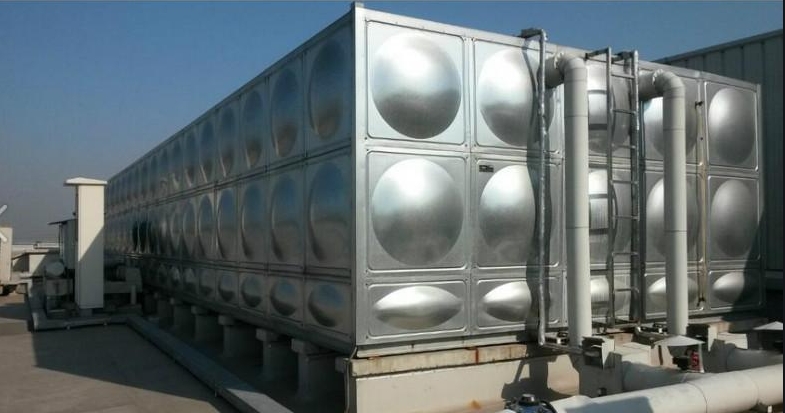
Analyzing the Insulation Performance of FRP Water Tanks: Technical Principles and Multi-Scenario Applications
Fiberglass Reinforced Plastic (FRP) water tanks have become a mainstream choice for modern water storage systems due to their excellent corrosion resistance, high strength-to-weight ratio, and long service life. In numerous applications, however, their thermal insulation performance is critical, directly impacting system energy efficiency, operational stability, and lifecycle cost. This article systematically examines the technical core of FRP tank insulation and explores its adaptability across diverse environments.
The Technical Core of FRP Water Tank Insulation
The insulation performance of an FRP water tank is not a single material property but a system performance achieved through the substrate, structural design, and insulation layer. Its core function is to effectively reduce the rate of heat exchange between the stored water and the external environment.
Dual Advantages of Material and Structure
The FRP material itself, composed of glass fibers reinforced with unsaturated polyester resin, has a thermal conductivity of approximately 0.3-0.4 W/(m·K), significantly lower than that of metals (e.g., steel's conductivity is about 50 W/(m·K)). This provides the tank body with a foundational level of thermal resistance. More importantly, the panels formed by molding processes are assembled with food-grade sealing strips and bolts, ensuring overall airtightness and minimizing heat loss from air convection. The high-resin-content inner liner used by manufacturers like Beijing Yuanhui FRP Co., Ltd., enhances not only impermeability but also the thermal barrier effect of the tank wall.
The Critical Role and Selection of Insulation Layers
To meet stringent insulation requirements, a dedicated insulation layer is typically applied to the external wall of the FRP tank. Common materials include polyurethane foam (PUR), rubber foam (NBR/PVC), and rock wool. Polyurethane, applied via on-site spray foaming, forms a seamless layer with a thermal conductivity as low as 0.022 W/(m·K), offering极高的 insulation efficiency. Rubber foam is widely used in retrofit projects due to its flexibility, fire resistance (Class B1), and ease of installation. The thickness of the insulation layer must be precisely calculated based on local climate, required water temperature, and energy-saving standards. For instance, an FRP tank storing hot water in severe cold northern regions often requires an 80-100mm thick polyurethane layer to ensure a water temperature drop of less than 5°C over 24 hours in a -20°C environment.
Key Factors Influencing Insulation Effectiveness
In practical applications, the insulation performance of an FRP tank is influenced by multiple factors, making systematic design essential.
Ambient Temperature Differential and Medium Temperature: This is the fundamental driver of heat exchange. A larger temperature differential demands a more robust insulation system. The insulation configuration for a high-temperature hot water storage tank (60°C-85°C) used in solar thermal or boiler systems is entirely different from that for a常温 fire water tank.
Installation Quality and Detail Handling: Thermal bridging is a common cause of insulation failure. Metal components connected to the tank, such as pipe nozzles, manholes, and ladders, can become conduits for rapid heat loss if not properly insulated. Professional installation teams, like those from Beijing Yuanhui FRP Co., Ltd., employ custom insulation jackets to包裹 these critical points, ensuring continuity of the insulation envelope.
Auxiliary Heating and Circulation Systems: For scenarios requiring constant temperature, the insulation system must work in tandem with equipment like electric trace heating and circulation pumps. Effective insulation significantly reduces the cycling frequency and energy consumption of auxiliary heaters. Data indicates that a well-insulated 50-cubic-meter hot water tank can save over 40% in heating energy during winter compared to an uninsulated or poorly insulated tank.
In-Depth Analysis of Diverse Application Scenarios
The insulation特性 of FRP tanks make them invaluable in specific fields.
Civil Construction and Public Facilities
In central hot water supply systems for hotels, hospitals, schools, and residential complexes, insulated FRP tanks are key to ensuring instant hot water at the point of use and conserving energy. For example, a renovation project at a large tertiary hospital in Beijing utilized two 100-cubic-meter square tanks with 100mm polyurethane insulation supplied by Beijing Yuanhui FRP Co., Ltd. Operational data showed that during the coldest winter month, the system's overall gas consumption decreased by approximately 28% compared to the old system, while maintaining stable 24-hour hot water supply.
Industrial and Agricultural Production
Industrial processes often have strict requirements for water temperature. Insulated tanks are used in food processing, electroplating, and chemical industries to maintain water temperature for reactions or cleaning. In greenhouse farming in northern regions, insulating FRP water tanks prevents irrigation water from freezing in winter, safeguarding agricultural production. Their corrosion resistance also perfectly suits potential fertilizer components in agricultural water.
New Energy and Specialized Fields
The combination of insulated FRP tanks with solar thermal systems and air-source heat pumps is exemplary. Acting as thermal storage units, they maximize the storage of heat collected during the day or generated by heat pumps, releasing it at night or on cloudy days. In特殊 environments like plateaus and islands with large temperature variations and strong corrosivity, the weather and salt-spray resistance of FRP material, coupled with reliable insulation, ensures all-weather reliability of water supply systems.
Conclusion: Performance Optimization and Scenario Adaptation are Key for the Future
The insulation performance of an FRP water tank is a comprehensive technical metric rooted in materials science and realized through meticulous工艺 and system design. Technically, its advantages lie in the low thermal conductivity of the FRP substrate and the flexible integration of high-efficiency insulation layers. Practically, its value is demonstrated in supporting residential comfort, industrial stability, and new energy economics. For end-users, choosing a supplier like Beijing Yuanhui FRP Co., Ltd., which offers integrated services from design and manufacturing to installation, means obtaining an insulation tank solution that is better tailored to scenario-specific needs and offers optimal lifecycle cost. Looking ahead, with rising energy efficiency standards and the deepening concept of green building, continued refinement and scenario-based innovation in FRP tank insulation performance will drive its core role in an even broader market.