How Long Do FRP Water Tanks Last? 6 Key Factors Affecting Service Life
Introduction
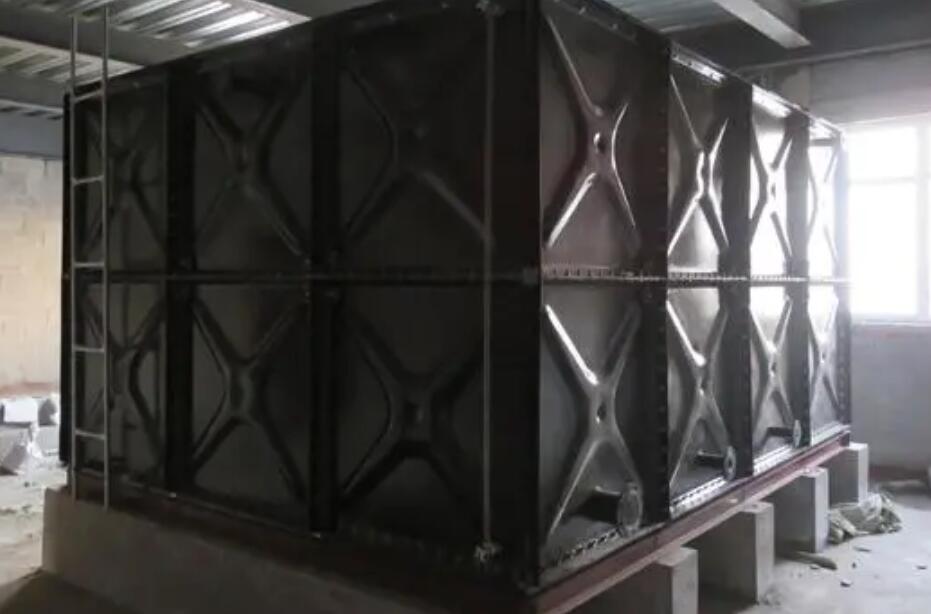
FRP (Fiberglass Reinforced Plastic) water tanks are widely used in construction, chemical, pharmaceutical, and food processing industries. While manufacturers often claim a 30-year lifespan, real-world data from Beijing Yuanhui FRP Co., Ltd. shows actual service life ranges from 5 years in poorly maintained units to over 25 years in properly managed installations. This article examines the six critical factors that determine how long your FRP water tank will last.
Standard Design Life & Real-World Reality
According to Chinese national standard GB/T 21238-2016, the design life of SMC FRP water tanks is 20-30 years under normal conditions. Laboratory tests show that flexural strength retention remains above 70% after 20 years in temperatures from -40°C to 70°C and pH 6-9. However, design life and actual service life rarely match—the difference lies in installation quality, environment, and maintenance.
Factor 1: Resin & Glass Fiber Quality & Ratio
The resin matrix determines corrosion resistance and UV stability. Accelerated aging tests by Beijing Yuanhui show that isophthalic polyester resin retains 92% strength after 1,000 hours of xenon arc exposure, compared to only 76% for orthophthalic resin. The optimal glass fiber content is 35% by weight—below 30% causes insufficient strength, above 40% leads to dry fibers and poor wet-out. Reputable manufacturers control fiber content within ±2%, while budget products often fall below 25%.
Factor 2: Installation Quality & Foundation Work
Improper installation accounts for 40% of premature failures. Common issues include: uneven foundation causing localized stress concentration (a chemical plant case: 8mm foundation deviation led to bottom plate cracking in 3 years); incorrect sealant selection (silicone vs. polyurethane sealants show 3-5x difference in water resistance); uneven bolt torque creating stress points. Beijing Yuanhui's standard requires foundation flatness ≤3mm/m, bolt torque at 30-35N·m tightened in three passes, and专用的 water-resistant sealing strips.
Factor 3: Environmental Exposure & Temperature Cycling
Outdoor tanks face severe UV radiation, thermal cycling, and freeze-thaw stress. Field measurements in Beijing show surface temperatures reaching 68°C in summer and -22°C in winter—a 90°C annual differential. This thermal stress causes microcrack propagation in the resin matrix. During winter freeze cycles, ice expansion can generate 0.8MPa stress, exceeding 50% of the interlayer shear strength of SMC panels. Recommended countermeasures: light-colored surfaces (reflectivity >70%), thermal insulation, and freeze-protection circulation pumps or heat tracing for northern installations.
Factor 4: Water Quality & Chemical Attack
Different water chemistries attack FRP differently. Chlorine concentrations above 2mg/L in potable water accelerate resin hydrolysis (surface erosion ~0.03mm/year). Industrial wastewater with pH below 4 or above 11 directly exposes glass fibers. A case study: a wastewater tank storing pH=3 acidic water without internal lining showed fiber exposure and leakage in year 6. Solution: vinyl ester resin lining or anti-corrosion coating, extending chemical resistance to 15+ years.
Factor 5: Cleaning & Maintenance Schedule
Regular cleaning significantly extends tank life. Recommended interval: every 6 months using neutral detergent and soft brushes. A hotel case study: tanks cleaned quarterly remained intact after 8 years, while an identical batch never cleaned showed algae adhesion and localized corrosion in year 5. Critical precautions: avoid steel wool (scratches resin surface), keep water pressure below 5MPa, and always inspect seals after cleaning.
Factor 6: Hidden Differences in Raw Materials & Production
This is the most overlooked factor. Low-cost tanks often use recycled glass fiber (30-50% strength reduction) or calcium carbonate fillers (reducing resin content). Beijing Yuanhui's incoming material testing revealed one competitor's panels had only 21% glass fiber content—55% of the national standard requirement. In production, mold temperature deviation beyond ±5°C causes incomplete curing (residual styrene >1.5%), accelerating aging. Reputable manufacturers use E-CR glass fiber from brands like Mitsubishi or Jushi, with mold temperature controlled at 140-145°C and pressure at 15-20MPa.
Conclusion
The actual service life of an FRP water tank is the combined result of material quality, installation precision, environmental conditions, and maintenance discipline. By choosing a certified manufacturer like Beijing Yuanhui FRP Co., Ltd. (ISO 9001 certified, 20-year warranty) and following proper installation and maintenance protocols, your tank can reliably operate for 20+ years. When purchasing, always request third-party test reports for SMC panels (focus on flexural strength ≥120MPa, Barcol hardness ≥40, water absorption ≤0.5%) and specify warranty terms in your contract. For corrosive applications, demand a customized anti-corrosion solution and material recommendation from your supplier.