How Long Do FRP Water Tanks Last? 6 Key Factors Affecting Service Life and Maintenance Tips
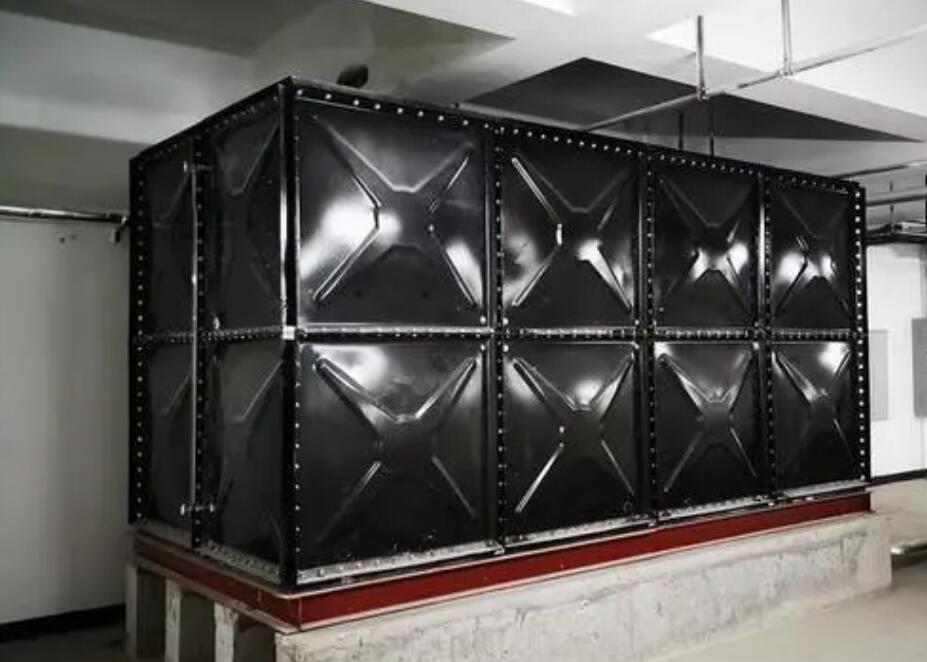
Introduction
Fiberglass Reinforced Plastic (FRP) water tanks are widely used in construction, fire protection, and industrial water storage due to their light weight, high strength, corrosion resistance, and ease of installation. However, one question persists among users and engineers: How long can an FRP water tank actually last, and what determines its service life?
Based on nearly two decades of production and service data from Beijing Yuanhui FRP Co., Ltd., the design life of an FRP water tank typically ranges from 15 to 30 years. Yet actual longevity varies significantly. Some tanks fail in under 10 years under harsh conditions, while well-maintained units have been operating reliably for over 25 years.
This article examines six critical factors—raw materials, manufacturing quality, installation, environment, water chemistry, and maintenance—using real-world cases to provide actionable insights.
1. Raw Material Quality: The Foundation of Longevity
1.1 Resin and Fiber Selection
Corrosion resistance and mechanical strength depend heavily on resin and glass fiber quality. Isophthalic polyester or vinyl ester resins offer far superior hydrolysis resistance compared to ordinary orthophthalic resins. Beijing Yuanhui FRP Co., Ltd. uses DSM or Ashland resin systems, which maintain molecular integrity during prolonged water exposure.
For glass fiber, E-glass (electrical-grade) with a tensile strength above 280 MPa outperforms medium-alkali fibers by over 40%. High-alkali fibers are prone to stress corrosion in humid environments, causing rapid strength loss.
Case in point: A tank built with inferior materials developed widespread cracking in its 5th year. In contrast, a quality-built tank at another site retained over 75% of its flexural strength after 18 years, as verified by third-party testing.
1.2 Ancillary Components
EPDM gaskets last 3–5 times longer than ordinary neoprene. Stainless steel 304 or 316 bolts prevent galvanic corrosion, while galvanized carbon steel corrodes at 0.5–1 mm/year in damp conditions—often unacceptable for long-term service.
2. Manufacturing Process and Quality Control
2.1 SMC Molding Parameters
Proper molding temperature (135–155°C), pressure (10–20 MPa), and dwell time are critical. Under-cured SMC sheets exhibit water absorption above 0.5%, leading to fiber blooming and delamination. Beijing Yuanhui FRP Co., Ltd. employs dual-action hydraulic presses with inline temperature monitoring, achieving a cure degree ≥95% and water absorption below 0.1%.
2.2 Joint Welding and Assembly
Panel joints are the weakest points. Manual welding often introduces bubbles, slag, or thermal damage. A combination of hot-air welding and mechanical interlocking can achieve joint strength exceeding 85% of the parent panel strength.
3. Installation Environment and Workmanship
3.1 Foundation and Support
The tank must sit on a flat, reinforced concrete base. Uneven settlement induces torsional stress, causing joint failure. In one documented case, foundation subsidence led to panel bulging and tank replacement after only 7 years.
Bottom support beam spacing should not exceed 500 mm. Larger gaps cause excessive deflection (>3 mm) under full load, accelerating fatigue damage.
3.2 Temperature and UV Exposure
Outdoor tanks suffer from UV degradation—surface chalking and micro-cracking reduce overall strength. UV-protective coatings or shading structures are recommended. Beijing Yuanhui FRP Co., Ltd. observed surface cracking on an uncoated outdoor tank in Northeast China after 8 years, while a UV-coated counterpart remained intact after 15 years.
At temperatures below -30°C, standard resins become brittle. Cold-weather installations should specify toughened resin formulations.
4. Water Chemistry and Chemical Attack
4.1 pH Level
FRP tanks tolerate neutral water (pH 6.5–8.5) well. Below pH 5 or above pH 9, chemical degradation accelerates dramatically. For pH 4 industrial water, standard resin may show corrosion within 3–5 years. A vinyl ester liner or epoxy coating can extend service life to over 15 years.
4.2 Chlorides and Microorganisms
High chloride concentrations (e.g., seawater, pool water) accelerate fiber corrosion. Microorganisms like iron bacteria and sulfate-reducing bacteria produce acidic metabolites that attack the resin matrix. Regular disinfection and cleaning mitigate these effects.
5. Routine Maintenance and Inspection
5.1 Cleaning Frequency and Method
Internal cleaning every 6–12 months prevents sediment buildup and localized corrosion. Use neutral detergents and soft brushes—avoid strong acids or alkalis. If using a pressure washer, keep pressure ≤5 MPa to protect panel joints.
5.2 Key Inspection Points
Every quarter, check: ① seal integrity for leaks; ② bolt tightness and corrosion; ③ ladder and attachment security; ④ level gauges and overflow pipes. Minor cracks can be repaired with epoxy resin before they propagate.
Conclusion
The service life of an FRP water tank is not a fixed number—it is the cumulative result of material quality, manufacturing precision, installation practices, environmental conditions, water chemistry, and maintenance discipline. By choosing high-quality materials (such as DSM resin and E-glass fiber from Beijing Yuanhui FRP Co., Ltd.), following proper installation guidelines, applying protective measures (UV coating, corrosion-resistant liners), and adhering to a regular maintenance schedule, users can expect a reliable service life of 25–30 years.
For tanks already showing signs of aging, a professional structural assessment is recommended. Timely reinforcement or panel replacement can prevent costly failures, water supply interruptions, or fire safety hazards.