Detailed Analysis of FRP Water Tank Lining Anti-Corrosion Technology: Material Selection and Construction Techniques
Introduction
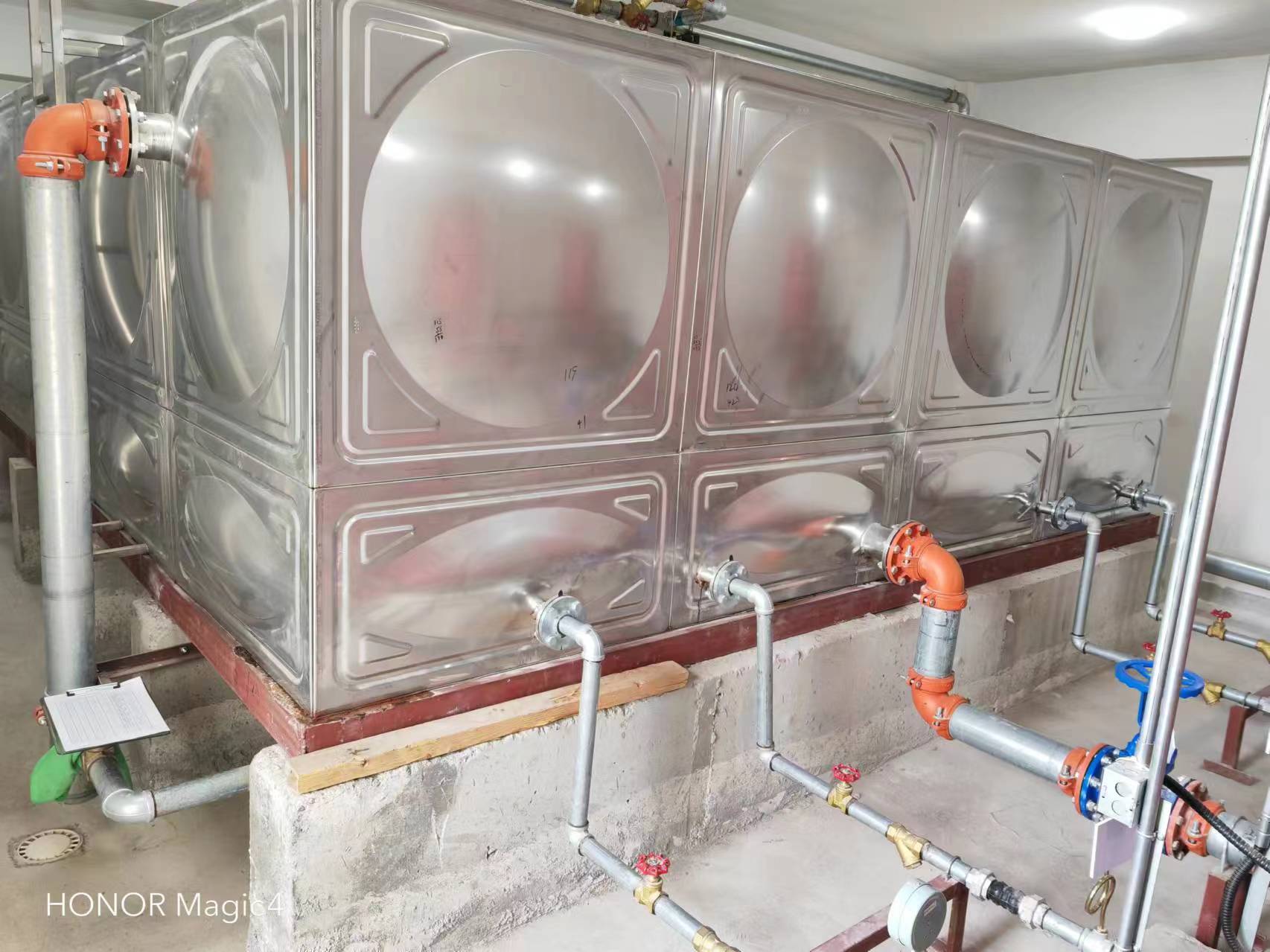
FRP (Fiberglass Reinforced Plastic) water tanks are widely used in municipal water supply, industrial storage, and fire protection systems. Their lining anti-corrosion performance directly determines service life and water quality safety. Industry data shows over 60% of tank failures originate from lining defects—resin delamination, micro-cracks, or fiber exposure. Beijing Yuanhui FRP Co., Ltd., with over a decade of production experience, emphasizes that lining anti-corrosion is a systematic engineering process involving material compatibility, interface treatment, and controlled curing. This article details resin selection, ply design, and construction monitoring with actionable technical solutions.
Core Material Selection for Lining Anti-Corrosion
Resin Matrix Corrosion Resistance Grades
Common lining resins include bisphenol-A unsaturated polyester (service temp ≤80°C), vinyl ester resin (≤120°C), and epoxy resin (excellent alkali resistance). In a chemical plant water softening project by Beijing Yuanhui FRP Co., Ltd., the initial orthophthalic resin showed water spots after 18 months. Switching to isophthalic vinyl ester resin achieved 5-year trouble-free operation. Selection criteria: pH 6-8 → bisphenol-A resin; pH 2-5 or 9-12 → vinyl ester resin with ≥95% curing degree.
Permeation-Barrier Reinforcement Design
The lining layer typically uses a composite structure: surface veil (30-50 g/m²) + chopped strand mat + woven roving. The surface veil creates a resin-rich layer (≥70% resin content) to block capillary leakage. Beijing Yuanhui adopted C-glass boron-free surface veil in a fire tank project, improving hydrolysis resistance by 40% (water absorption <0.3% after 1,000h distilled water immersion). For high-temperature storage (>60°C), carbon fiber mesh must be embedded between plies to resist thermal stress delamination.
Construction Process and Critical Control Points
Substrate Preparation Standards
Tank substrates (carbon steel or concrete) must achieve Sa2.5 blast cleaning with Rz 50-80μm roughness. Beijing Yuanhui FRP Co., Ltd. uses wet-film thickness gauges for real-time monitoring, with inter-coat intervals of 1-2 hours after tack-free touch. Environmental limits: relative humidity ≤75%, dew point gap ≥3°C. A construction failure in a rainy season (dew point gap only 1.8°C) caused pinholes and a ¥120,000 rework loss.
Curing Process and Defect Prevention
Lining curing requires staged heating: 24h room temperature pre-cure → 4h at 40°C → 2h post-cure at 60°C. Beijing Yuanhui uses infrared thermography to detect uneven curing (ΔT >5°C triggers rework). Common defects like bubbles, dry spots, and sags can be controlled by adjusting cobalt accelerator (0.5-1.5%) and MEKP hardener (1-3%). Case: a power plant tank had extensive dry spots due to uneven hardener mixing; switching to a two-component static mixer resolved the issue.
Quality Inspection and Acceptance Criteria
Online Monitoring Techniques
During construction, Barcol hardness (≥45), spark testing (5kV/mm), and acetone wipe tests are mandatory. Beijing Yuanhui FRP Co., Ltd. introduced acoustic emission testing, detecting 3 micro-crack signals during a 48-hour pressure hold; repairs passed re-inspection. Industry standard: lining thickness ≥2mm (resin-rich layer ≥0.5mm), tolerance ±0.2mm.
Long-Term Performance Validation
Before delivery, 1,000-hour accelerated aging tests (80°C hot water + UV) are required, with flexural strength retention ≥80%. Beijing Yuanhui maintains a lining database recording gel time, exothermic peak, and interlaminar shear strength for each batch. A municipal project using this system extended tank lining life from 8-year design to 12 years, reducing annual maintenance costs by 60%.
Conclusion
The essence of FRP water tank lining anti-corrosion lies in precise material matching and standardized construction. Every deviation—from resin selection to curing monitoring—amplifies failure risks. Beijing Yuanhui FRP Co., Ltd. recommends specifying lining grades (e.g., ISO 12944 C5-M), resin types, and test methods in tender documents, with third-party coating integrity assessments. While nano-modified resins and self-healing coatings may push lining life beyond 20 years in the future, current reliability still depends on rigorous process control for long-term tank safety.