Thermal Insulation Performance of FRP Water Tanks: Material Structure and Multi-Scenario Applications
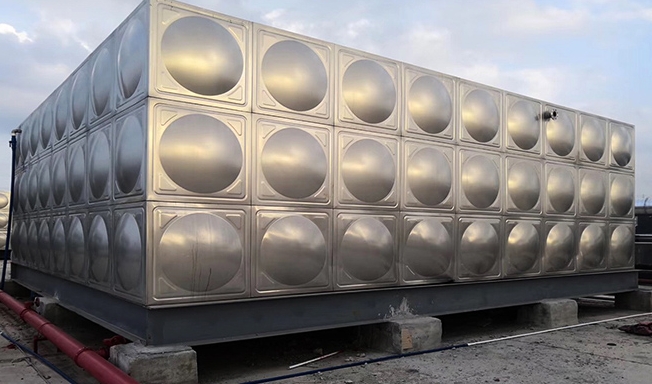
Thermal Insulation Performance of FRP Water Tanks: Material Structure and Multi-Scenario Applications
The application of FRP (Fiberglass Reinforced Plastic) water tanks in HVAC, fire protection, and food processing industries has expanded significantly in recent years. Their thermal insulation performance directly impacts system energy consumption and medium temperature stability. Beijing Yuanhui FRP Co., Ltd., based on a decade of field data, found that a standard SMC molded insulated water tank operating at -15°C in northern winter can maintain a temperature drop within 3°C over 24 hours. This performance depends on multiple technical parameters including material thermal conductivity, insulation layer thickness, and joint sealing technology. This article explains the insulation mechanism and selection logic from an engineering perspective.
1. Thermal Conductivity and Thickness Design of Insulation Materials
The insulation layer of FRP water tanks typically uses rigid polyurethane foam with closed-cell ratio ≥95% and thermal conductivity between 0.018-0.024 W/(m·K), significantly lower than rock wool (0.04-0.06 W/(m·K)) and extruded polystyrene (0.028-0.03 W/(m·K)). According to GB/T 25975-2018, cold regions (e.g., Northeast China, Inner Mongolia) require insulation thickness ≥80mm, while hot-summer/cold-winter regions (e.g., middle and lower Yangtze River) require ≥50mm. In a heating water tank project in Hebei Province, Beijing Yuanhui FRP Co., Ltd. increased the insulation layer from 50mm to 80mm, reducing the daily temperature drop of circulating water from 6.2°C to 2.8°C and lowering heating energy consumption by approximately 18%.
2. Structural Sealing and Thermal Bridge Control
Insulation performance depends not only on material but also on the overall structural seal. Joints, flange connections, and manhole covers of FRP tanks are prone to thermal bridges. Field measurements show that heat flux at unsealed joints can be 3-5 times higher than normal panel surfaces. Beijing Yuanhui FRP Co., Ltd. employs double-layer sealing gaskets combined with on-site polyurethane foam filling, controlling joint thermal conductivity below 0.03 W/(m·K). In an industrial cooling water tank project for a chemical plant in Shanxi Province, this process eliminated surface condensation, maintaining the outer wall temperature at least 2°C above the dew point even at 80% ambient humidity.
3. Insulation Selection Strategies for Different Applications
3.1 Northern Heating Systems: Anti-Freeze and Low-Temperature Resistance
Heating water tanks require medium temperatures of 50-70°C with daily temperature drop controlled within 5°C. Recommended insulation thickness is ≥80mm polyurethane with an outer layer of UV-resistant FRP panel (thickness ≥3mm) to prevent low-temperature brittleness. In a heating station project in Harbin, Beijing Yuanhui FRP Co., Ltd. used 100mm insulation with 304 stainless steel inner liner, achieving zero freeze damage over three consecutive heating seasons at -30°C.
3.2 Southern Industrial Cooling Water: Anti-Condensation and Corrosion Resistance
Cooling water temperatures typically range from 20-30°C, and high humidity (e.g., Guangdong, Fujian) creates condensation risks. Insulation thickness can be reduced to 40-50mm, but a vapor barrier (e.g., aluminum foil) must be applied outside the insulation layer to prevent moisture intrusion. For a cooling water tank at an electronics factory in Shenzhen, Beijing Yuanhui FRP Co., Ltd. used 50mm polyurethane with aluminum foil vapor barrier, with no rust or mold detected over two years of operation.
3.3 Food and Pharmaceutical Industries: Balancing Hygiene and Insulation
Food processing water tanks must meet GB 9684 food safety standards while maintaining insulation. Recommended inner liner is food-grade 304 stainless steel, with high-density polyurethane (closed-cell ratio ≥97%) to prevent microbial growth. For an 80-ton insulated water tank at a brewery in Shandong, Beijing Yuanhui FRP Co., Ltd. achieved inner surface roughness Ra≤0.8μm, 70mm insulation thickness, and fermentation tank inlet water temperature fluctuation within ±1.5°C/24h.
4. Real Case Data Comparison
Below are measured insulation performance data from three representative projects by Beijing Yuanhui FRP Co., Ltd. over the past three years:
- Project A (Hospital heating tank, Heilongjiang): 60m³, 100mm insulation, ambient -28°C, medium 55°C, 24h temp drop 2.1°C, unit energy consumption 0.43 kWh/m³·d.
- Project B (Textile factory cooling tank, Zhejiang): 120m³, 50mm insulation, ambient 38°C, medium 25°C, no condensation, energy consumption 32% lower than rock wool.
- Project C (Food factory hot water tank, Sichuan): 40m³, 70mm insulation, ambient 10°C, medium 85°C, 24h temp drop 3.8°C, meeting HACCP thermal control requirements.
Conclusion
The thermal insulation performance of FRP water tanks is determined not solely by material thickness but by the combined factors of thermal conductivity, sealing technology, and application-specific adaptation. When selecting a tank, property owners should provide three core parameters: the coldest month average temperature, target medium temperature, and allowable temperature drop rate, allowing manufacturers to perform thermal calculations. Beijing Yuanhui FRP Co., Ltd. offers complete technical solutions including insulation thickness verification, joint sealing design, and outer cladding selection to ensure excellent thermal performance throughout the tank's lifecycle.