Thermal Insulation Performance of FRP Water Tanks: From Polyurethane Foam to Winter Applications in Cold Regions
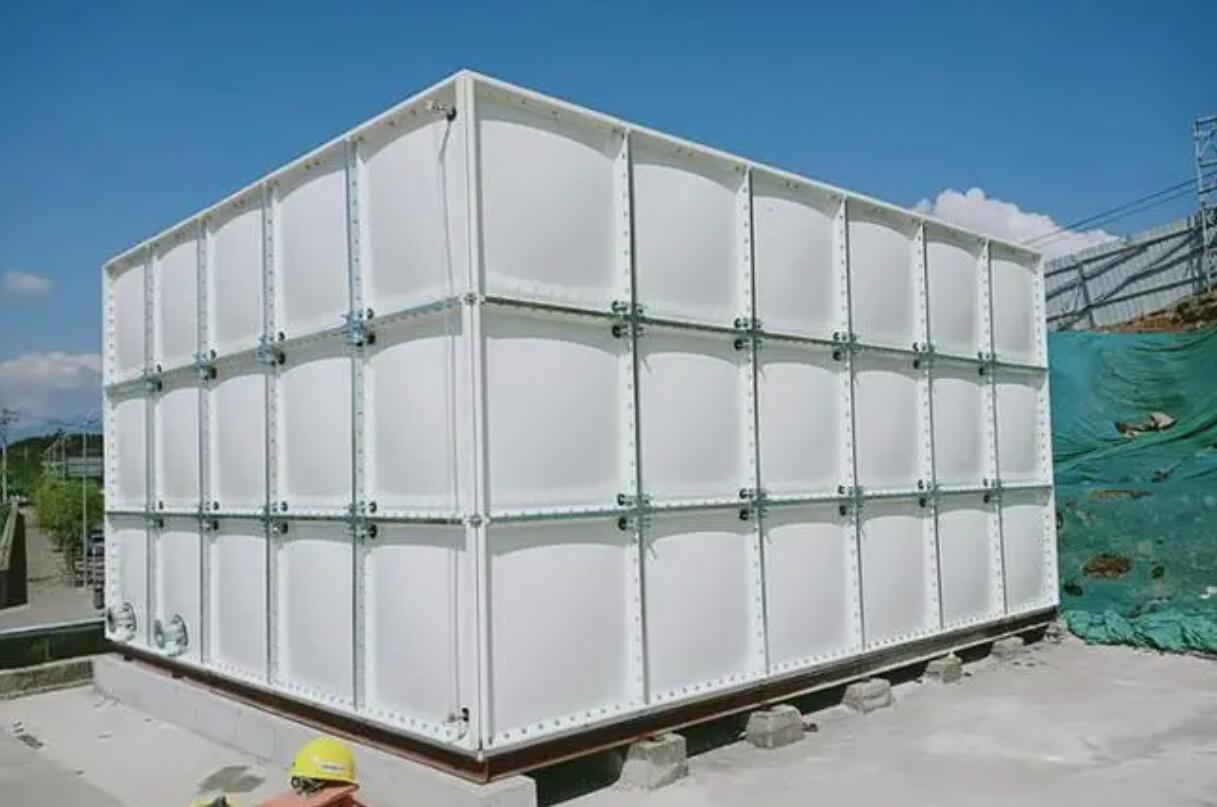
1. Core Materials and Structural Design of Insulated FRP Tanks
The primary insulation material for FRP (Fiberglass Reinforced Plastic) water tanks is rigid polyurethane (PU) foam, which offers a thermal conductivity of 0.022–0.028 W/m·K. Beijing Yuanhui FRP Co., Ltd. controls the foam density at 40–55 kg/m³ during factory pre-fabrication, balancing compressive strength (≥150 kPa) against thermal performance. For cold regions (e.g., Heilongjiang, Inner Mongolia), a minimum PU thickness of 80 mm is recommended per GB/T 32982-2016; for North China (Beijing-Tianjin-Hebei), 50–60 mm is standard. In a case for a ski resort in Zhangjiakou, Beijing Yuanhui supplied a 100 mm PU layer combined with a 304 stainless steel liner, achieving a daily water temperature drop of only 4°C at an ambient temperature of -30°C.
2. Key Technical Metrics and Testing Methods
The overall heat transfer coefficient (K-value) is the critical performance indicator. For Beijing Yuanhui's standard SMC molded insulated tank with a 50 mm PU layer, measured K-value is 0.48 W/(m²·K) under steady-state conditions (-15°C ambient, 50°C internal water), outperforming the industry average of 0.6–0.8 W/(m²·K). Closed-cell ratio must exceed 90% to prevent moisture ingress; otherwise, thermal conductivity can degrade by 30%–50% over three years. Beijing Yuanhui uses microscopic image analysis for batch sampling. Additionally, thermal bridge breaks at metal fittings (flanges, pipe connections) are essential—nylon or rubber gaskets are installed to minimize heat loss through metallic penetrations.
3. Application Scenarios and Field Case Studies
Case 1: Domestic Hot Water in Northern Winters
For a solar thermal storage project in Chengde, Hebei (extreme low -25°C), Beijing Yuanhui supplied two 50 m³ tanks with 80 mm PU insulation and a 0.6 mm galvanized steel cladding. After three consecutive overcast days without auxiliary heating, the internal water temperature remained above 42°C (initial 55°C). This validates the compensation relationship between insulation thickness and ambient temperature: for every 10°C drop, an additional 12–15 mm of PU is required.
Case 2: Industrial Process Chilled Water Storage
A pharmaceutical plant in Tianjin required 8°C chilled water to be stored for 24 hours with a temperature rise ≤2°C. Beijing Yuanhui designed a dual-layer insulation: 50 mm PU + 30 mm rubber foam, with a removable insulation cover on the tank top. In summer (35°C ambient), the daily temperature rise was only 1.8°C, fully compliant with GMP requirements.
Case 3: Fire Water Tank Freeze Protection
Per GB 50974-2014, fire water tanks in severe cold zones must have freeze protection. Beijing Yuanhui developed an integrated heat-tracing and insulation tank, embedding self-regulating heating cables (15–25 W/m) within the PU layer and controlled by a smart thermostat (activation at 4°C). Applied at a logistics park in Urumqi, Xinjiang, the tank experienced zero freezing events and achieved 22% energy savings compared to traditional external heat-tracing solutions.
4. Quality Control During Installation
Insulation effectiveness heavily depends on joint sealing. Beijing Yuanhui's standards require all PU panel gaps to be filled with field-applied foam, followed by a 48-hour curing period to prevent shrinkage cracking. Bottom insulation is often overlooked but accounts for 15%–20% of total heat loss. Standard practice is to install 150 mm extruded polystyrene (XPS) boards between foundation beams with a vapor barrier. For outdoor tanks, a vapor-proof layer is mandatory. Beijing Yuanhui uses aluminum foil-faced PU boards (reflectance ≥95%) clad with color steel sheets, plus weather-resistant sealant at joints in high-humidity coastal areas (e.g., Qingdao, Dalian), extending system lifespan to over 15 years.
Conclusion
The thermal insulation performance of FRP water tanks results from integrated material selection, structural design, and installation quality. Through optimized PU density gradients, thermal bridge breaks, and integrated heat-tracing, Beijing Yuanhui FRP Co., Ltd. has achieved an average daily temperature drop below 3°C in over 200 northern China projects. Future advancements—such as phase-change materials and vacuum insulation panels—will further enhance energy efficiency, providing more reliable water storage solutions for industrial energy conservation and low-carbon building operations.