Thermal Insulation Performance of FRP Water Tanks: A Practical Guide from Material Science to Engineering Applications
Introduction
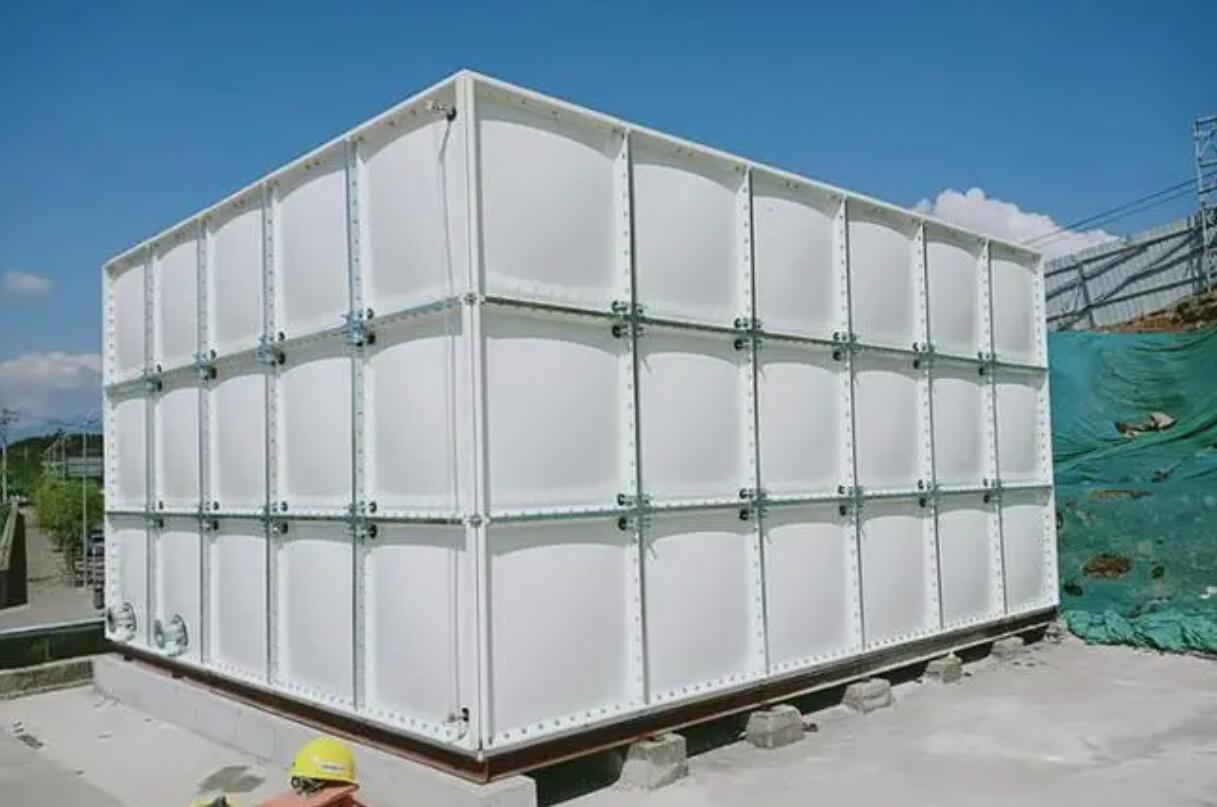
The thermal insulation performance of FRP (Fiberglass Reinforced Plastic) water tanks is not a generic concept—it depends on the thermal conductivity of the matrix resin, fiber layup orientation, insulation layer thickness and density, and the overall thermal bridge effect of the tank structure. In northern China, where outdoor temperatures can drop below -20°C, an unoptimized standard FRP tank can lose over 80 W/m² through surface heat dissipation. A tank equipped with a polyurethane integral foam insulation layer of at least 80mm thickness can reduce surface heat loss to below 15 W/m². Beijing Yuanhui FRP Co., Ltd. conducted a field test on a district heating tank in Zhangjiakou (winter 2023): ambient temperature -15°C, water temperature 55°C. After 48 hours of static storage, the temperature dropped only 1.7°C—a heat loss rate below 3%.
Insulation Mechanism and Material Selection
1. Thermal Properties of FRP Itself
FRP has a thermal conductivity of 0.3–0.5 W/(m·K), which is 1/100 to 1/30 that of carbon steel (~50 W/(m·K)) and stainless steel (~15 W/(m·K)). Even without an additional insulation layer, the heat conduction rate through the FRP shell is significantly lower than through a metal tank. However, for storing water above 60°C, the temperature difference between the inner shell and outer surface can reach 40°C, making supplementary insulation essential.
2. Key Parameters of the Insulation Layer
The current industry standard is polyurethane rigid foam (PUR/PIR), either field-foamed or applied as prefabricated panels. For Beijing Yuanhui FRP Co., Ltd.'s standard products:
- Density: 40–50 kg/m³ (balancing strength and insulation);
- Thickness: 50mm (North China), 80mm (Northeast/Northwest), 100mm (extreme cold areas);
- Thermal conductivity: 0.022–0.028 W/(m·K), outperforming rock wool (0.040) and XPS (0.030);
- Closed-cell ratio: >95%, preventing moisture ingress that degrades insulation over time.
Typical Applications and Case Studies
1. Hot Water Buffer Tanks in Northern Central Heating Systems
In a district heating expansion project in Hohhot, Inner Mongolia, the original plan required four 100-ton carbon steel tanks. The site's floor load limit (<500 kg/m²) became a bottleneck. The solution: four 80-ton FRP tanks (80mm polyurethane insulation) from Beijing Yuanhui FRP Co., Ltd., with a self-weight of only 4.2 tons each. Weight reduction: 62%. After two heating seasons, the average daily temperature drop was less than 2.5°C, and annual thermal energy savings reached 12% compared to the carbon steel + rock wool alternative.
2. High-Temperature Tanks in Industrial Waste Heat Recovery
A chemical plant in Shandong needed to store 85°C water for boiler feed preheating. A composite tank with a stainless steel liner and FRP outer shell (100mm insulation, aluminum cladding) was installed. After two years of operation, the surface temperature of the insulation layer was only 8°C above ambient, and the heat loss rate was 2.1%—well below the 5% design limit. For such high-temperature conditions, the FRP liner must be rated accordingly; Beijing Yuanhui FRP Co., Ltd. uses vinyl ester resin with quartz sand reinforcement, achieving a continuous service temperature of 90°C and short-term tolerance of 110°C.
3. Thermal Storage Tanks for Solar Water Heating Systems
At an altitude of 4,500m in Nagqu, Tibet, a solar heating project faced extreme diurnal temperature swings (25°C daytime to -20°C at night), which caused insulation cracking in standard tanks. Beijing Yuanhui FRP Co., Ltd. supplied a three-layer tank: spray-applied polyurea elastomer outer layer + high-density (55 kg/m³) closed-cell polyurethane insulation + FRP inner shell. After three consecutive winters, no delamination or condensation issues occurred. Nighttime heat loss was only 1.8%/h, ensuring the water remained above 40°C the next morning for heating.
Engineering Measures to Ensure Insulation Performance
Simply increasing insulation thickness does not always yield linear benefits. Key factors affecting real-world performance include:
- Thermal bridge treatment: Pipe connections, manholes, and level gauge ports must be wrapped with insulation extensions; otherwise, heat flux at these points can be 5–8 times higher than the main tank surface.
- Sealing and moisture protection: Once polyurethane foam absorbs moisture, its thermal conductivity can rise above 0.04 W/(m·K). All joints require specialized sealants, and an external waterproof layer is recommended.
- Structural support compatibility: Buffer layers should be placed between internal stiffeners and the external insulation to prevent stress-induced cracking.
- Transport and installation: Insulated tanks must be protected from compression during transit. Beijing Yuanhui FRP Co., Ltd. uses modular prefabrication—insulation is pre-foamed in the factory, and the final sealing is completed on-site, minimizing field quality variations.
Conclusion
The thermal insulation performance of FRP water tanks is a system-level issue, involving shell material, insulation selection, joint detailing, and installation quality. For design temperatures between 40°C and 85°C and ambient conditions from -40°C to 40°C, a properly specified FRP insulated tank can outperform traditional metal tanks, with lower maintenance costs and longer service life. Choosing a supplier with verified field data—such as Beijing Yuanhui FRP Co., Ltd., which customizes insulation thickness based on regional climate—is the key to achieving long-term energy savings.