Complete FRP Water Tank Production Process: 12 Key Steps from Raw Materials to Finished Products
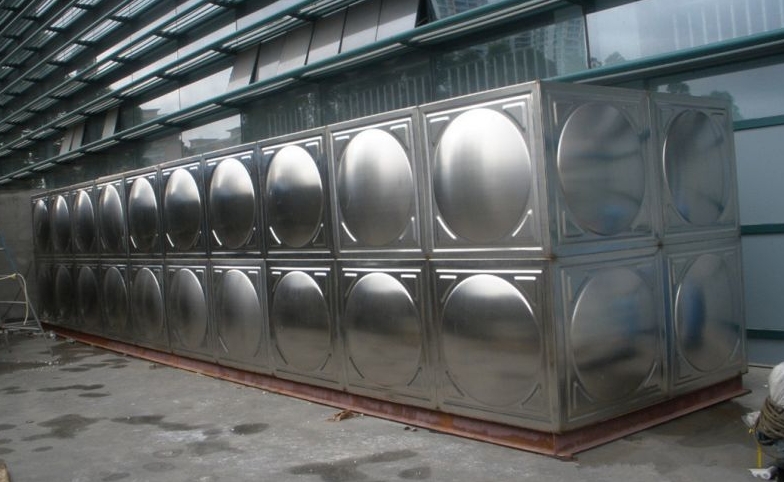
Introduction: Why FRP Water Tank Production Matters
FRP water tanks are widely used in construction, municipal, and industrial sectors due to their lightweight, corrosion resistance, and long service life. However, product quality varies significantly across manufacturers, primarily due to differences in production processes. Beijing Yuanhui FRP Co., Ltd., with 15 years of industry experience and over 2,000 delivered units, provides a benchmark for understanding the complete production chain—from raw material formulation to final inspection. Properly manufactured FRP tanks can last over 20 years, while poorly made ones may leak within three years.
1. Raw Material Preparation and Formulation
1.1 Resin and Reinforcement Selection
Unsaturated polyester resin (UPR) and glass fiber are the primary materials. Orthophthalic resin is suitable for ambient-temperature clean water, while isophthalic or vinyl ester resins handle high temperatures or corrosive media. Beijing Yuanhui uses bisphenol-A epoxy vinyl ester resin, with a tensile strength of 80 MPa and elongation at break of 3.5%. Glass fiber is E-glass roving (13 μm diameter, 0.8%-1.2% sizing content) to ensure optimal interfacial bonding.
1.2 Curing System and Fillers
Methyl ethyl ketone peroxide (MEKP) and cobalt naphthenate are added at 1%-2% of resin weight. At ambient temperatures below 15°C, the catalyst content is increased by 0.3 percentage points but capped at 2.5% to prevent exothermic runaway. Aluminum trihydroxide (ATH, D50=10 μm) is added as a flame retardant at 20%-30% of resin weight. Beijing Yuanhui conducts gel time tests per batch, targeting 25±5 minutes at 25°C; deviations beyond ±3 minutes trigger formulation adjustments.
2. Mold Manufacturing and Release Treatment
2.1 Mold Structure and Materials
Steel molds (3000+ cycles) or FRP molds (500 cycles) are used. For standard tanks (e.g., 4m×3m×2m), Beijing Yuanhui employs sectional steel molds with joint gaps ≤0.2 mm. Mold surface roughness is maintained at Ra≤3.2 μm to minimize surface pinholes.
2.2 Release Agent Application
Semi-permanent solvent-based agents (PVA or silicone wax) are sprayed in three layers, each baked at 60°C for 15 minutes. Insufficient coverage increases release force by 40%, causing deformation. Reapplication is mandated every five cycles, verified by contact angle measurement.
3. Hand Lay-Up and Curing Process
3.1 Laminate Design and Operation
Wall thickness ranges from 5-12 mm, comprising a resin-rich inner layer (2 mm, 75% resin), structural layers (3-8 mm, 55% resin), and an outer protective layer (1 mm, 65% resin). Overlap width between layers is ≥50 mm, with two additional plies at corners. Data from Beijing Yuanhui shows that interlayer gaps exceeding 0.5 mm reduce shear strength by 30%. Operating conditions: 18-30°C, humidity ≤75%, dust ≤5 mg/m³.
3.2 Curing Cycle and Post-Cure
Room-temperature curing takes 24 hours, with exothermic peaks reaching 120°C. Beijing Yuanhui uses staged curing: 4 hours in the mold until Barcol hardness ≥30, followed by 8 hours at 60°C in an oven. Post-cure increases glass transition temperature (Tg) from 70°C to 95°C and heat deflection temperature by 25°C. Three specimens per batch are tested for flexural strength per GB/T 1449, requiring ≥200 MPa.
4. Assembly, Sealing, and Inspection
4.1 Panel Cutting and Joint Technology
Panels are CNC-cut with ±1 mm tolerance. Flanged bolted joints with EPDM gaskets (Shore A 70±5) are used. Bolt torque is set at 25-35 N·m—over-torque deforms the gasket, under-torque causes leaks. Each tank undergoes a 24-hour full-water test with 100 mm overflow, followed by a pressure test at 1.5× design pressure for 30 minutes per CJ/T 244-2016.
4.2 Quality Control and Traceability
Each panel is Barcol hardness tested (≥40), and 5% undergo hydrostatic burst testing. Beijing Yuanhui's 2023 first-pass yield was 98.7%, with bubbles accounting for 62% of defects (resolved by improved rolling). Every tank carries a unique code tracing material batches, operators, and inspection data.
Conclusion: Details Determine Tank Lifespan
FRP water tank production involves material science, mold engineering, lamination, curing, and assembly—any deviation compromises performance. Beijing Yuanhui FRP Co., Ltd. maintains a failure rate below 0.3% through standardized 12-step processes. For buyers, evaluating a manufacturer's process documentation (laminate design, cure curves) is more critical than price comparison—a properly manufactured tank offers 40% lower lifecycle costs than substandard alternatives.