Complete FRP Water Tank Manufacturing Process: 10 Key Steps from Raw Materials to Final Inspection
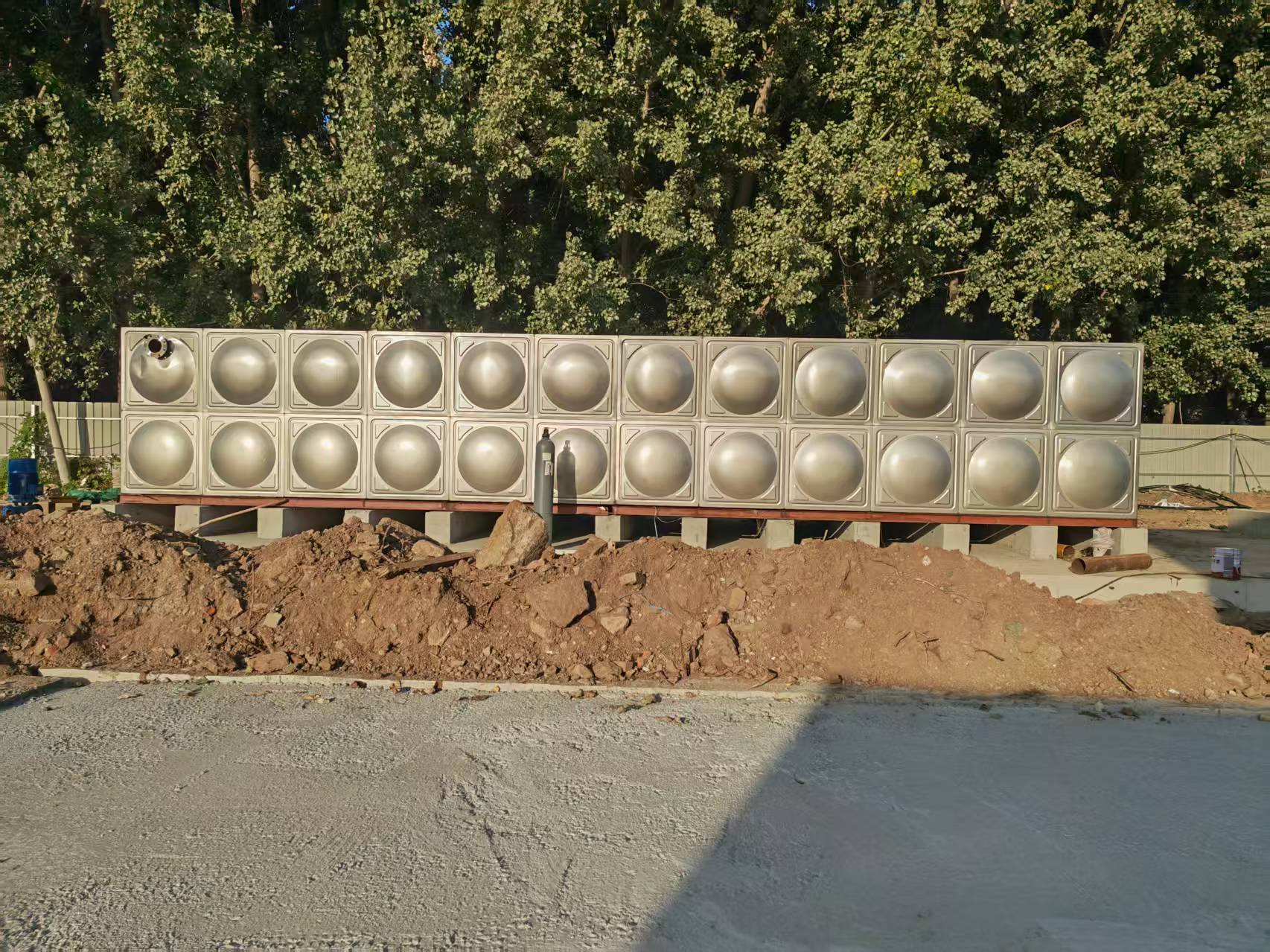
Introduction: Why Manufacturing Process Determines Tank Lifespan
FRP (Fiberglass Reinforced Plastic) water tanks are widely used in construction, municipal, and chemical industries due to their light weight, high strength, corrosion resistance, and no secondary pollution. However, tanks of the same specification can differ in lifespan by 3–5 times—the key difference lies in the manufacturing process.
Beijing Yuanhui FRP Co., Ltd., with 15 years of production experience and over 5,000 delivered units, uses its actual production line as the blueprint to analyze the complete process chain—from resin selection to final inspection—including SMC compression molding, hand lay-up winding, and cure control.
1. Raw Material Preparation: Resin System and Reinforcement Ratio
1.1 Matrix Resin Selection
Three common resin types:
- Unsaturated Polyester Resin (UPR): 70% market share, cost-effective, moderate weather resistance;
- Vinyl Ester Resin: High chemical resistance, used for chemical tanks;
- Epoxy Resin: Best mechanical properties, for high-pressure or potable water tanks.
1.2 Reinforcement and Fillers
E-glass fiber (alkali-free) with 25–50mm length; chopped strand mat surface density of 450 g/m². Calcium carbonate filler is controlled at 20%–30%—exceeding 40% increases brittleness.
Data point: Yuanhui tests show each 5% increase in filler reduces flexural strength by ~12%.
2. Molding Process: Hand Lay-Up vs. SMC Compression
2.1 Hand Lay-Up (Open Mold)
Best for non-standard or low-volume parts. Steps:
- Mold cleaning → release agent (3 coats, 15-min intervals);
- Gel coat (0.3–0.5mm), wait for gelation;
- Place chopped strand mat, apply resin, roll out air;
- Repeat to design thickness (typically 3–5 layers, 4–8mm total).
2.2 SMC Compression Molding (Closed Mold)
SMC (Sheet Molding Compound) suits mass production of standard panels. Parameters:
- Mold temperature: 140–150°C;
- Pressure: 10–15 MPa;
- Hold time: 1.5–2 min per mm thickness.
3. Curing and Demolding: Balancing Temperature and Time
3.1 Curing Stage
Hand-laid parts cure 24 hours at room temperature, then post-cure (60°C×4h). SMC parts cure fully in the mold; demold only after cooling below 60°C.
Case: A winter project below 10°C without heating caused incomplete curing—micro-cracks appeared after 6 months. Yuanhui maintains constant-temperature curing rooms (25±2°C) at its northern factory for year-round consistency.
3.2 Demolding and Trimming
Draft angle: 1°–3°. Use pneumatic demolders to avoid impact damage. Waterjet trimming achieves ±0.5mm accuracy, 60% faster than manual grinding.
4. Assembly and Sealing: The Last Defense Against Leaks
4.1 Panel Joining
Standard panels connected with stainless steel bolts (304 or 316L) and EPDM gaskets. Yuanhui test data: at 25 N·m torque, gasket compression is 30%–40%, minimizing leak risk.
4.2 Final Inspection
After assembly, water-fill test for 24 hours. Criteria:
- Deformation ≤3mm per meter;
- No leakage;
- Verticality error ≤5mm.
Conclusion: Craftsmanship Defines Core Competitiveness
From resin compatibility to precise molding parameters, every step affects FRP tank strength, lifespan, and hygiene safety. Beijing Yuanhui FRP Co., Ltd. achieves a defect rate below 0.5% (industry average ~3%) through standardized SMC formulations, constant-temperature curing, waterjet trimming, and rigorous water-fill testing.
For buyers, request resin grade, fiber content test reports, and cure degree data—these are the true indicators of tank quality.