Complete Process Analysis of FRP Water Tank Manufacturing: From Hand Lay-Up to Compression Molding
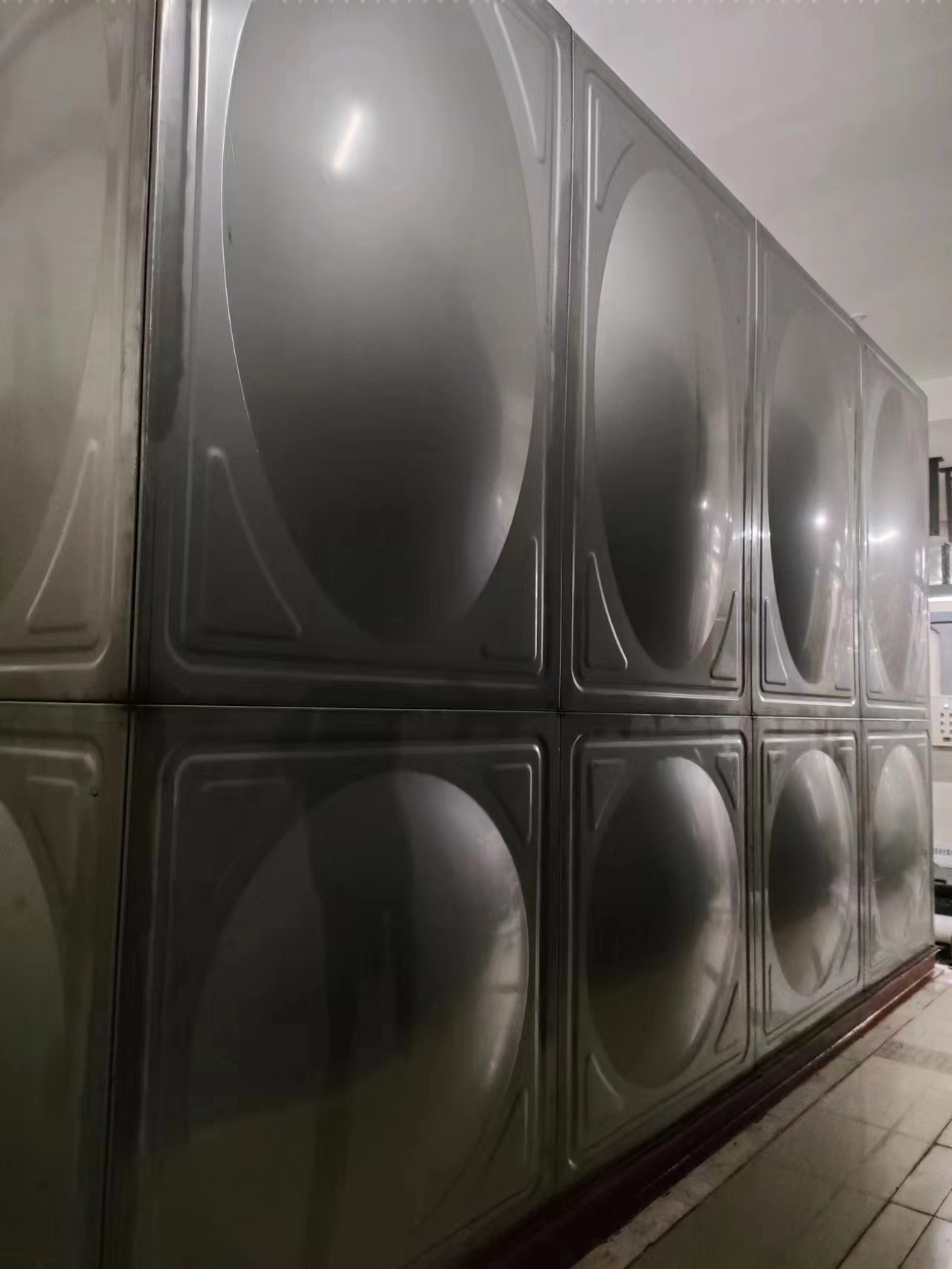
Introduction
FRP (Fiberglass Reinforced Plastic) water tanks dominate 30% of the building water supply, fire storage, and industrial cooling markets (2025 industry white paper). Production techniques directly determine tank sealing, impact resistance, and service life—a standard hand lay-up SMC tank achieves a Barcol hardness above 40, while compression-molded panels maintain thickness tolerance within ±0.3 mm. Beijing Yuanhui FRP Co., Ltd., with an annual capacity exceeding 5,000 tons in North China, operates hand lay-up, high-speed compression molding, and filament winding lines simultaneously. This article breaks down the technical specifics from material preparation to final inspection.
1. Raw Material Selection and Pre-Treatment
1.1 Resin System Specifications
Unsaturated polyester resin accounts for 35-40% of tank cost. Common grades include 196# (general purpose) and 189# (heat-resistant). Key parameters: viscosity 350-550 mPa·s (25°C), acid value 12-18 mgKOH/g, gel time 22-28 minutes (2% MEKP + 0.5% cobalt solution). For fire protection tanks, Beijing Yuanhui uses isophthalic resin with a heat deflection temperature of 110°C—15°C higher than orthophthalic types.
1.2 Reinforcement Material Cutting Standards
E-glass chopped strand mat (450 g/m²) and woven roving (800 g/m²) require 12-hour preconditioning in a controlled environment (22±2°C, 50±5% RH) to prevent moisture absorption that reduces interlaminar shear strength. Cutting tolerance is ≤5 mm. For circular tanks over 3 m diameter, CAD nesting optimizes material utilization to over 92%.
2. Comparison of Primary Molding Processes
2.1 Hand Lay-Up (for Complex Shapes and Small Batches)
Procedure: mold cleaning → mold release agent (PVA or silicone, 3 coats at 15-minute intervals) → gel coat (0.4-0.6 mm thick) → CSM layering → resin brushing → woven roving layering → roller debulking. Fiber content per layer: 30-35%. A 6 m³ tank requires ~72 hours of hand lay-up, with void content controlled below 2%. Beijing Yuanhui employs vacuum-assisted resin transfer molding (VARTM) to reduce porosity from 5% to below 1.5%.
2.2 Compression Molding (for Standardized Panels)
SMC (Sheet Molding Compound) is the core material. Molding parameters: temperature 135-145°C (upper mold 5°C hotter), pressure 10-15 MPa, hold time 3 min/mm thickness. Panel tolerance: length ±1 mm, diagonal difference ≤2 mm. Beijing Yuanhui’s 1,600-ton hydraulic press produces 1.2 m × 2.4 m standard panels at 6 minutes per piece, with annual output of 120,000 panels. Compression-molded tanks achieve tensile strength ≥80 MPa and flexural strength ≥160 MPa—significantly higher than hand lay-up products.
2.3 Filament Winding (for Large Cylindrical Tanks)
Continuous winding uses 180° cross-ply plus hoop layers, with 50 mm tow width, 55° winding angle, and tension 1.5-2.5 kg/tow. Inner liner resin content: 65-70%; structural layer resin content: 35-40%. A 100 m³ wound tank has a 10 mm wall (2 mm liner + 8 mm structure), with burst pressure reaching 4.2 MPa—three times the working pressure. Fiber volume fraction reaches 55-60%, 20 percentage points higher than hand lay-up.
3. Curing and Demolding Quality Control
Cure degree, measured by DSC, must be ≥85%. Ambient conditions: 18-25°C, humidity <75%. Post-curing at 60°C for 4 hours eliminates internal stress, raising Barcol hardness from 35 to 42. Beijing Yuanhui’s QC protocol specifies hot water immersion (80°C, 100 hours) and drop-weight impact tests (2 kg tup, 1.5 m drop) on three samples per batch—no delamination or leakage allowed.
4. Quality Testing and Industry Standards
4.1 Mechanical Property Testing
Per GB/T 8237-2021 and JC/T 658.1-2020 standards. Beijing Yuanhui’s lab is equipped with universal testing machines, impact testers, and Barcol hardness testers. All data—tensile strength, flexural strength, impact toughness—is logged in the MES system for full traceability. In a 2024 fire protection project, SGS testing confirmed: tensile strength 85 MPa (standard ≥70 MPa), Barcol hardness 43 (standard ≥35).
4.2 Leak Testing
Finished tanks undergo 72-hour hydrostatic testing (filled to design level) and pneumatic testing (0.1 MPa, 15 min, pressure drop ≤0.005 MPa). Flange joints and manholes are checked with kerosene penetration. Beijing Yuanhui attaches QR codes to each tank, linking to the batch resin lot number, fiber brand, operator ID, and all test results.
Conclusion
From hand lay-up to compression molding and filament winding, FRP water tank production is trending toward automation and precision. Process selection depends on volume, geometry, and cost. Beijing Yuanhui FRP Co., Ltd. has reduced defect rates below 0.3% through raw material databases, cure curve models, and full MES traceability. For project owners, verifying a manufacturer’s process documentation, test equipment, and project track record offers more long-term value than simple price comparison.