Thermal Insulation Performance of FRP Water Tanks: From Polyurethane Foam to Extreme-Cold Applications
Introduction
The thermal insulation performance of FRP water tanks determines their suitability for severe cold regions, industrial thermal storage, and agricultural constant-temperature water systems. Field data from Beijing Yuanhui FRP Co., Ltd. shows that an 80m³ assembled insulated tank with 50mm polyurethane rigid foam maintained water temperature from 60°C to 50°C for over 72 hours at -25°C ambient temperature—30% longer than traditional steel insulated tanks. This advantage stems from the synergy between FRP's low thermal conductivity (approximately 0.25 W/m·K) and the insulating layer structure.
1. Insulation Structure Design and Material Selection
1.1 Thermal Conductivity Comparison: Polyurethane vs. Rubber-Plastic
Two mainstream insulation materials dominate the market: polyurethane rigid foam (PU) and rubber-plastic foam (NBR/PVC). PU has a thermal conductivity of 0.022–0.028 W/m·K, closed-cell ratio above 95%, and water absorption below 3%. Rubber-plastic foam exhibits 0.034–0.042 W/m·K thermal conductivity with approximately 85% closed-cell ratio. At equal thickness, PU outperforms rubber-plastic by 20%–30%. However, rubber-plastic offers better flexibility for irregular tank surfaces or pipe connections. In a Shanxi chemical plant project, Beijing Yuanhui FRP Co., Ltd. adopted a dual-layer approach—30mm PU inner layer plus 20mm rubber-plastic outer layer—reducing heat loss by an additional 12%.
1.2 Thickness Optimization and Cost Balance
Per China's GB 50176 standard, insulation thickness should not be less than 40mm when ambient temperature drops below -10°C. In practice, Northeast China projects commonly use 60–80mm PU, while North China uses 40–50mm. For a 100m³ tank, each 10mm increase in PU layer raises manufacturing cost by approximately 8% but reduces annual heat loss by 15%–18%. Beijing Yuanhui FRP Co., Ltd. installed a 65mm PU layer for an Inner Mongolia livestock farm, reducing winter electric heating consumption by 23% compared to the client's previous 50mm insulated tank, recovering the upgrade cost within two years.
2. Field Data and Failure Analysis in Extreme Cold
2.1 Mohe Project: 72-Hour Temperature Drop Test
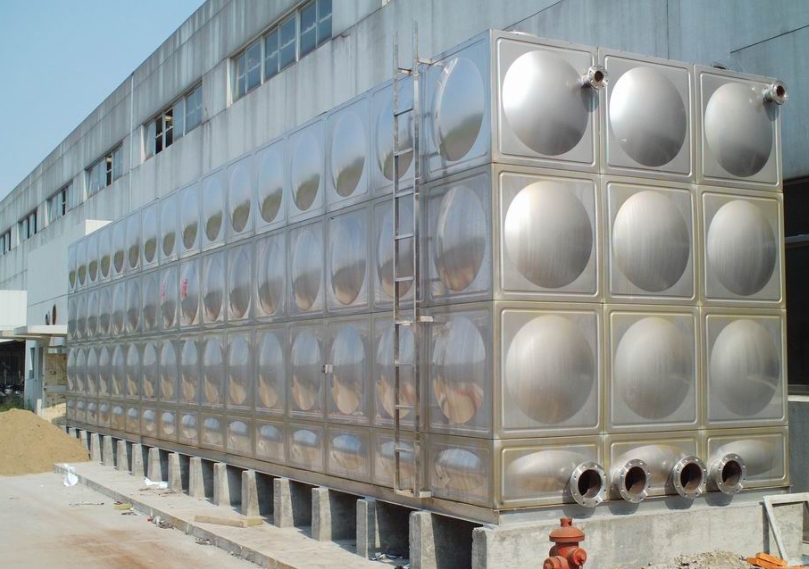
In December 2023, Beijing Yuanhui FRP Co., Ltd. deployed a 20m³ insulated tank at a border post in Mohe, Heilongjiang, with 1.5mm stainless steel cladding and 55mm PU insulation. Ambient temperature ranged from -32°C to -28°C; initial water temperature was 85°C (steam-heated). Recorded temperatures: 72.3°C after 24 hours, 65.1°C after 48 hours, 58.6°C after 72 hours—an average drop of 8.8°C per 24 hours. In comparison, an uninsulated SUS304 stainless steel tank under identical conditions lost 22.4°C in 24 hours, demonstrating 61% insulation efficiency improvement.
2.2 Three Common Causes of Insulation Failure
Frequent field failures include: (1) uneven PU foam density (local density below 35kg/m³ raises thermal conductivity above 0.04 W/m·K); (2) unsealed joints allowing moisture ingress, which freezes and expands to rupture cells; (3) improper outer cladding material (e.g., 0.3mm aluminum sheet deforms and cracks under strong wind). Beijing Yuanhui FRP Co., Ltd. performs 100% ultrasonic thickness measurement and thermal imaging inspection on every insulated tank before shipment, ensuring density deviation within ±3%.
3. Typical Applications and Selection Guidelines
3.1 Hot Water Storage for Northern District Heating
In coal-to-electricity conversion projects, insulated FRP tanks serve as buffer tanks for heat pump systems, requiring a 24-hour temperature drop no greater than 10°C. Recommended specification: 50–60mm PU layer, 0.6mm color-coated steel cladding, plus 50mm XPS cold barrier at the tank bottom. Beijing Yuanhui FRP Co., Ltd. supplied twelve 120m³ insulated tanks to a Hebei residential complex; after three heating seasons, the average daily temperature drop was 6.8°C, with no auxiliary heating needed.
3.2 High-Temperature Industrial Thermal Storage
Electroplating and chemical industries often require storage of 60–90°C process water or dilute acid solutions. Corrosion-resistant SMC/BMC panels must be used, and insulation thickness must be calculated based on medium temperature and allowable drop. For example: medium at 85°C, ambient -5°C, allowable 8°C drop in 24 hours—PU thickness ≥70mm. Beijing Yuanhui FRP Co., Ltd. executed a project in a Shandong electroplating park with 80mm PU and epoxy resin anti-corrosion lining, achieving 18 months of continuous operation without insulation delamination or corrosion perforation.
3.3 Constant-Temperature Water Supply for Aquaculture and Smart Greenhouses
Aquaculture species such as sea bass require daily water temperature fluctuation ≤2°C. Insulated FRP tanks combined with solar collectors maintain 18–22°C water temperature during Yangtze River basin winters. Case study: Beijing Yuanhui FRP Co., Ltd. provided a 40m³ insulated tank (40mm PU, aluminum foil reflective cladding) to a Jiangsu aquaculture base. During overcast winter days (ambient -2°C to 5°C), water temperature dropped only 5.5°C over three days, fully meeting fry rearing requirements.
Conclusion
The insulation performance of FRP water tanks hinges on uniform polyurethane foam thickness, high closed-cell ratio, and durable outer cladding. From -32°C field tests in Mohe to aquaculture applications in the Yangtze basin, data confirms that a 40–80mm PU layer with proper structural design reduces heat loss by over 60%. Beijing Yuanhui FRP Co., Ltd. recommends that clients provide four key parameters—ambient temperature, medium temperature, allowable temperature drop, and storage duration—to enable the manufacturer to perform thermal calculations and customize the insulation scheme, avoiding one-size-fits-all thickness selections that lead to energy waste or insufficient thermal protection.