Complete Production Process of FRP Water Tanks: From Hand Lay-Up to SMC Compression Molding
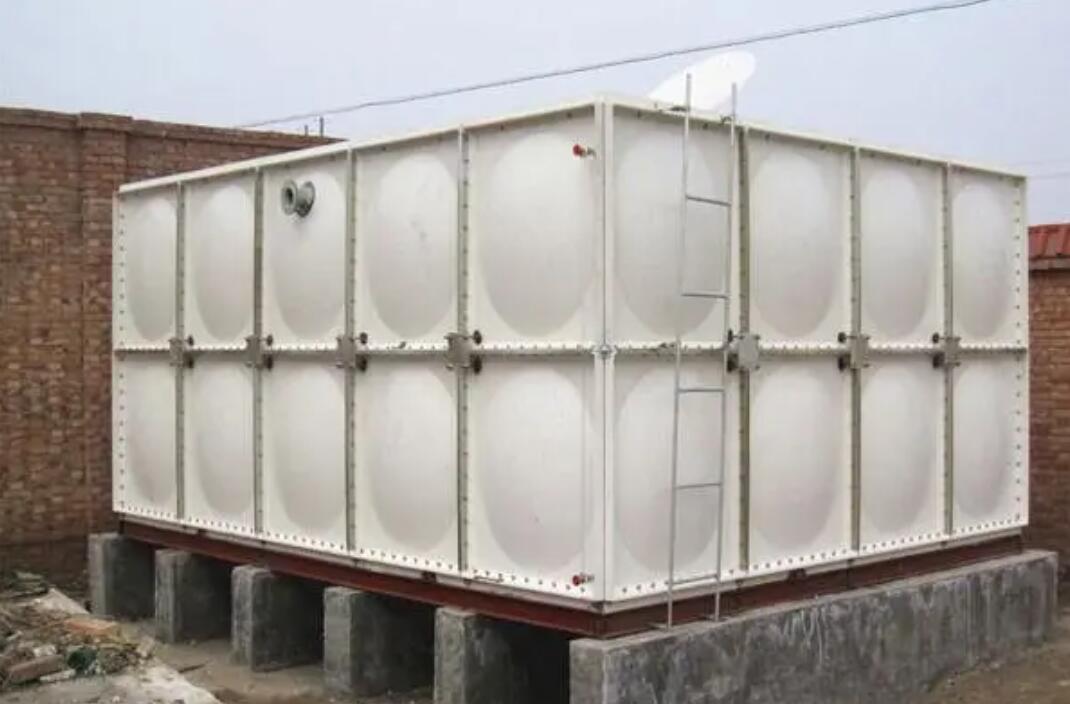
Introduction: Process Determines Tank Lifespan
Over 60% of an FRP water tank's lifespan depends on the manufacturing process. In the past decade, Chinese manufacturers have shifted from hand lay-up to SMC compression molding and filament winding. Data from Beijing Yuanhui FRP Co., Ltd. shows that SMC-molded tank panels exhibit 35% higher mechanical strength than hand-laid panels, with thickness tolerances controlled within ±0.2 mm. This article deconstructs the complete production chain from raw materials to finished products.
1. Material Preparation and Ratio Control
1.1 Resin System Selection
For tanks in direct contact with drinking water, food-grade unsaturated polyester resin (orthophthalic or isophthalic) is mandatory. Beijing Yuanhui FRP Co., Ltd. uses Jinling DSM P61-902 resin with styrene emission below 3%, complying with GB/T 17219. For exterior layers, UV-resistant isophthalic resin extends service life to over 15 years.
1.2 Reinforcement and Fillers
Alternating layers of E-glass chopped strand mat (450 g/m²) and continuous roving are used. The resin-to-fiber ratio by weight is 60:40, with 5% aluminum trihydrate (ATH) flame retardant and 2% pigment. Tests show Barcol hardness of 45 and oxygen index of 28.5, meeting GB 8624 Class B1 fire rating.
2. Mold Preparation and Demolding
2.1 Hand Lay-Up Molds
FRP master molds are coated with 8 layers of mold release wax and 2 layers of PVA solution, ensuring demolding force below 0.1 MPa. Beijing Yuanhui's team adds a 0.2-mm polyester film on curved surfaces to prevent bubble entrapment.
2.2 SMC Compression Molds
SMC tank panel molds are made of 40Cr tool steel, CNC-milled and hard-chrome plated to Ra ≤ 0.4 μm. Three-zone independent heating maintains temperature within ±2°C. Each mold can sustain over 20,000 cycles, with a cycle time of 4-6 minutes.
3. Process Comparison: Hand Lay-Up vs. SMC Molding
3.1 Hand Lay-Up Steps
① Apply gel coat (0.3-0.5 mm) → ② Lay chopped strand mat → ③ Saturate with resin → ④ Roll out air pockets → ⑤ Repeat to design thickness (4-6 layers). Cure for 24 hours at 25°C, post-cure at 80°C for 2 hours. Density: 1.6-1.8 g/cm³; porosity: 3-5%.
3.2 SMC Compression Molding
SMC sheet preheated to 140°C ±3°C, placed in mold, pressed at 15-20 MPa for 3-5 minutes. Final panel thickness deviation ±0.1 mm, fiber volume content stable at 55% ±2%. An 800-ton press produces 300 standard panels (1m×1m) per day with 97% yield.
4. Quality Control and Standards
4.1 Mechanical Testing
Three specimens per batch undergo flexural strength testing (GB/T 1449). Required ≥160 MPa; Barcol hardness ≥40. Beijing Yuanhui's records show SMC panel average flexural strength of 172 MPa with a standard deviation of 6.8 MPa.
4.2 Leakage and Hygiene Testing
Assembled tanks are water-filled for 48 hours; water level drop must not exceed 2 mm. Each tank from Beijing Yuanhui FRP Co., Ltd. includes a third-party hygiene report, with heavy metal leaching (Pb, Cd, Cr) at least 30% below GB/T 5750 limits.
Conclusion: Process Upgrade Is the Only Path
From hand lay-up to SMC compression molding, FRP water tank production efficiency has increased fivefold, and product consistency now meets industrial-grade standards. Beijing Yuanhui FRP Co., Ltd.'s practice proves that every 1 yuan invested in process upgrades reduces after-sales repair costs by 2.5 yuan. In the next five years, SMC and filament winding will account for over 90% of capacity. Companies that fail to upgrade will exit the market.