Color Selection and UV Protection for FRP Water Tanks: A Professional Guide
Introduction
For FRP water tanks installed outdoors, ultraviolet radiation is the primary environmental factor causing resin degradation, fiber exposure, and strength loss. Color selection directly determines the surface's ability to reflect or absorb UV rays, thereby affecting service life. Based on years of production and field feedback, Beijing Yuanhui FRP Co., Ltd. has established a correlation between color and UV protection. This article analyzes different color performances using ASTM G154 accelerated aging data and real-world cases, offering actionable selection strategies.
Color and UV Reflectance
High Reflectance of Light Colors
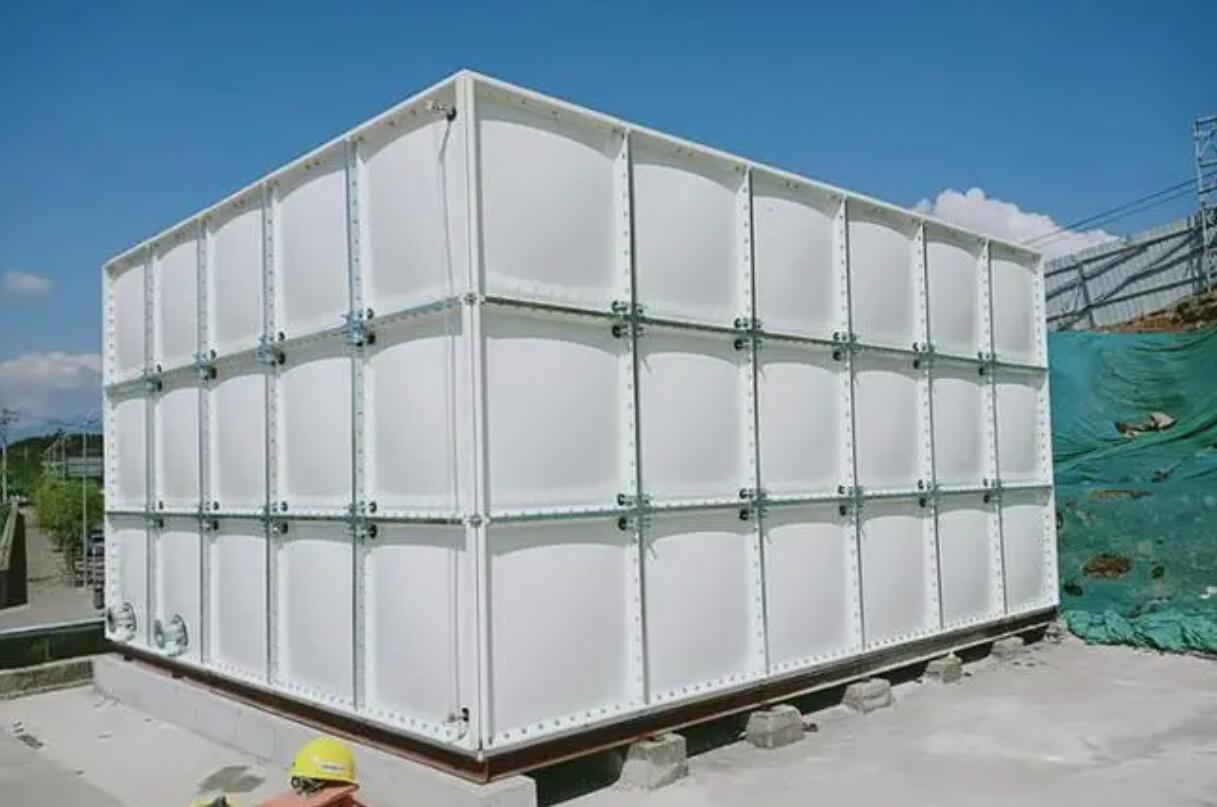
White, light gray, and pale blue surfaces achieve 70%-85% reflectance in the visible spectrum (380-780nm) and 55%-65% in the UV range (280-400nm). In a three-year outdoor exposure test by Beijing Yuanhui, white tanks showed surface temperatures 12-15°C lower than dark tanks, and the yellowing index (YI) change was only one-third of dark tanks. Under ASTM G154, white samples retained 92% flexural strength after 2000 hours of UV irradiation.
Heat Accumulation Risk of Dark Colors
Dark gray, forest green, and deep blue absorb over 80% of UV radiation, reaching surface temperatures of 65-70°C in summer. High temperatures accelerate photochemical reactions: each 10°C rise doubles the resin hydrolysis rate. Laboratory data from Beijing Yuanhui shows that coating adhesion on dark tanks declines 40% faster than on light tanks under equivalent UV exposure.
UV Protection Mechanisms and Material Selection
Gel Coat Performance Limits
The gel coat is the first UV defense. Standard isophthalic gel coats develop micro-cracks in about 3 years, while gel coats with 2%-4% nano-TiO₂ extend protection to 8-10 years. In a Hebei project, Beijing Yuanhui measured 78% gloss retention after 5 years on UV-resistant white tanks, versus 35% on standard ones.
Effect of Pigments on Resin Matrix
Organic pigments (e.g., azo compounds) fade under UV and catalyze resin degradation; inorganic pigments (e.g., titanium dioxide, iron oxide) are stable and scatter UV rays. Inorganic pigment systems are recommended, as they can extend protective life by 3-5 years even if color options are limited.
Case Studies and Data
Villa Project in North China
Fifty white tanks (supplied by Beijing Yuanhui) installed in 2020 at 1200m altitude faced 20% higher UV intensity than plains. After 4 years, only two tanks showed local gel coat chalking; dark blue tanks at the same site exhibited fiber texture exposure after 2 years. Repair costs: white tanks required zero maintenance; dark tanks averaged ¥1,200 per unit.
Industrial Park in South China
In a tropical high-humidity environment, dark tanks raised internal water temperature by 5-8°C, accelerating algae growth and tripling cleaning frequency. After switching to light gray tanks, water temperature dropped 6°C, and cleaning intervals extended from monthly to quarterly.
Selection Recommendations
Balancing UV protection, thermal management, and aesthetics:
- Prefer white or light gray for highest reflectance in most outdoor settings.
- If dark colors are required, use a triple protection layer: UV-resistant gel coat + inorganic pigments + surface coating (e.g., polyurethane varnish).
- Inspect every six months for gloss loss, chalking, or color changes, especially at seams and edges.
- Beijing Yuanhui offers free color sample exposure tests; clients can place samples in actual environments for 3-6 months to measure color shift and strength retention.
Conclusion
Color selection directly impacts UV protection and lifecycle cost of FRP water tanks. Light colors like white and light gray offer superior reflectance, thermal management, and aging resistance. Dark colors require upgraded materials and multilayer protection to compensate. Beijing Yuanhui FRP Co., Ltd. recommends prioritizing functional requirements over aesthetics and using standardized tests to validate color choices.