How Long Does a FRP Water Tank Last? 6 Key Factors Affecting Service Life with Data
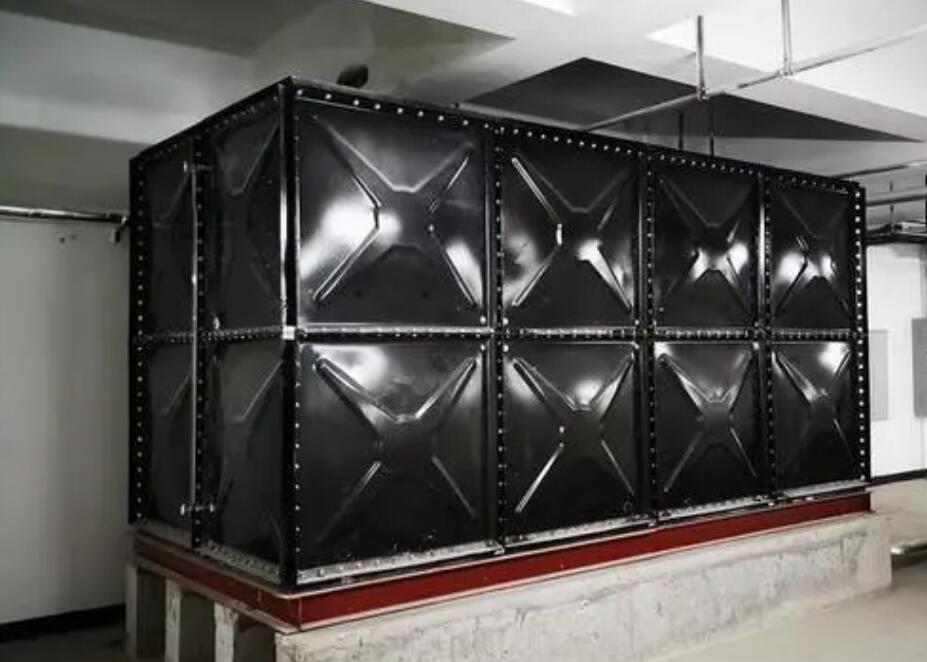
Introduction: Setting Realistic Life Expectancy for FRP Tanks
FRP (Fiberglass Reinforced Plastic) water tanks are widely used in building water supply, fire protection, and industrial cooling due to their light weight, corrosion resistance, and ease of installation. Beijing Yuanhui FRP Co., Ltd. has observed through years of market feedback that many users mistakenly believe FRP tanks require zero maintenance after installation. In reality, service life can range from less than 5 years to over 25 years, depending on material selection, manufacturing quality, installation conditions, water chemistry, and maintenance practices. This article breaks down the six key factors that determine how long an FRP water tank will last, backed by field data and case studies.
Factor 1: Raw Material Selection — Resin and Fiber Quality
The resin matrix is the backbone of an FRP tank. Common types include orthophthalic polyester, isophthalic polyester, and vinyl ester resin. Isophthalic resin offers about 30% better water resistance than orthophthalic, while vinyl ester excels in acidic or alkaline environments. Beijing Yuanhui FRP Co., Ltd. recommends isophthalic resin for standard applications, achieving a typical service life of 18–22 years. Glass fiber content and layup are equally critical. Industry standards mandate fiber content between 30% and 40%. A 2021 third-party lab analysis of six tank brands found that samples with fiber content below 28% had a 42% higher probability of developing micro-cracks within five years.
Factor 2: Manufacturing Process and Cure Quality
Hand lay-up and machine filament winding are the two dominant processes. Hand lay-up offers flexibility but suffers from a 5%–8% defect rate due to air bubbles and uneven thickness. Filament winding, controlled by computer, maintains wall thickness within ±0.2 mm and bubble rate below 0.5%. Cure degree is often overlooked. Resin cured at 80°C for two hours achieves over 95% cross-linking, while ambient curing typically reaches only 80%–85%. Incomplete curing causes the resin to leach small molecules under water exposure, leading to softening and leakage. A 2020 study in Water Supply & Drainage journal reported that each 10% reduction in cure degree increases the strength decay rate by approximately 18% over ten years. Beijing Yuanhui FRP Co., Ltd. employs oven-curing at 80°C and performs Barcol hardness testing on every batch before shipping.
Factor 3: Installation Environment — UV and Thermal Stress
Outdoor tanks face constant UV exposure. Without a protective gel coat or UV stabilizer, the resin surface degrades within three years, with hardness dropping about 25% and fiber exposure possible after five years. Beijing Yuanhui FRP Co., Ltd. adds a UV-resistant gel coat that slows aging by 60%. Thermal stress is equally damaging. In northern China, the temperature swing from −30°C in winter to 40°C in summer causes expansion and contraction. If the tank base lacks a flexible cushion layer, stress can crack the bottom joints. A project in Hebei Province experienced a bottom leak in the second winter because the tank was mounted directly on concrete without rubber pads — the repair cost was nearly 30% of the original tank price.
Factor 4: Water Chemistry — Chlorine and Scale
Water quality directly affects tank longevity. Chlorine in tap water (common at 0.5–1.5 mg/L) slowly penetrates the resin and attacks the glass fiber interface, causing micro-crack corrosion. Tests show that at chlorine levels above 1.5 mg/L, the corrosion rate is 3.2 times higher than in low-chlorine water. Hard water with calcium carbonate hardness over 300 mg/L promotes scaling. Under the scale layer, oxygen concentration cells form, accelerating localized corrosion. In one industrial case using reclaimed water with TDS of 1,200 mg/L, the tank developed large perforations within four years without internal coating. Beijing Yuanhui FRP Co., Ltd. recommends a food-grade anti-corrosion inner coating for aggressive water, extending chemical resistance to 10–12 years.
Factor 5: Installation Quality — The Weakest Link
Poor installation is responsible for about 35% of all tank repairs. Common mistakes include uneven foundations causing tank distortion, rigid pipe connections that concentrate stress, and missing check valves that allow water hammer. Water hammer pressure can spike to 3–5 times normal operating pressure, repeatedly fatiguing flange joints until they crack. Proper installation requires: foundation flatness within 5 mm per meter, flexible rubber couplings on all pipe connections, a screened vent on the tank top, and grounding resistance below 10 ohms. Beijing Yuanhui FRP Co., Ltd. provides on-site installation supervision and conducts a mandatory 48-hour full-water test to verify no leaks or excessive deformation.
Factor 6: Maintenance — Small Effort, Big Payoff
Many users believe FRP tanks are maintenance-free. In reality, a simple semi-annual inspection — checking for cracks, bulges, or color changes, cleaning bottom sediment, and verifying valve operation — can dramatically extend tank life. A five-year tracking study of 300 commercial tanks found that 89% of annually maintained tanks remained defect-free after a decade, compared to only 47% of unmaintained tanks. Maintenance costs are minimal, typically 1%–2% of the total tank investment, but can add 3–5 years of useful life. Beijing Yuanhui FRP Co., Ltd. advises clients to keep a tank logbook recording inspection dates, findings, and corrective actions — data that proves invaluable for future troubleshooting.
Conclusion: Right Specs + Proper Install + Regular Care = 20-Year Service
The service life of an FRP water tank is not a fixed number — it is the combined outcome of material choice, manufacturing quality, installation environment, water chemistry, and maintenance. Beijing Yuanhui FRP Co., Ltd. recommends users specify their actual water quality and site conditions when ordering, choose a resin system and process that match the application, hire qualified installers, and implement a regular inspection schedule. Under reasonable conditions, a well-made FRP tank can reliably serve 15–20 years or longer. Neglect any single factor, and the life can shrink dramatically. Partnering with a reputable supplier and managing the full lifecycle is the key to long-term value.