How Color Choice Affects UV Protection in FRP Water Tanks: A Technical Guide by Beijing Yuanhui
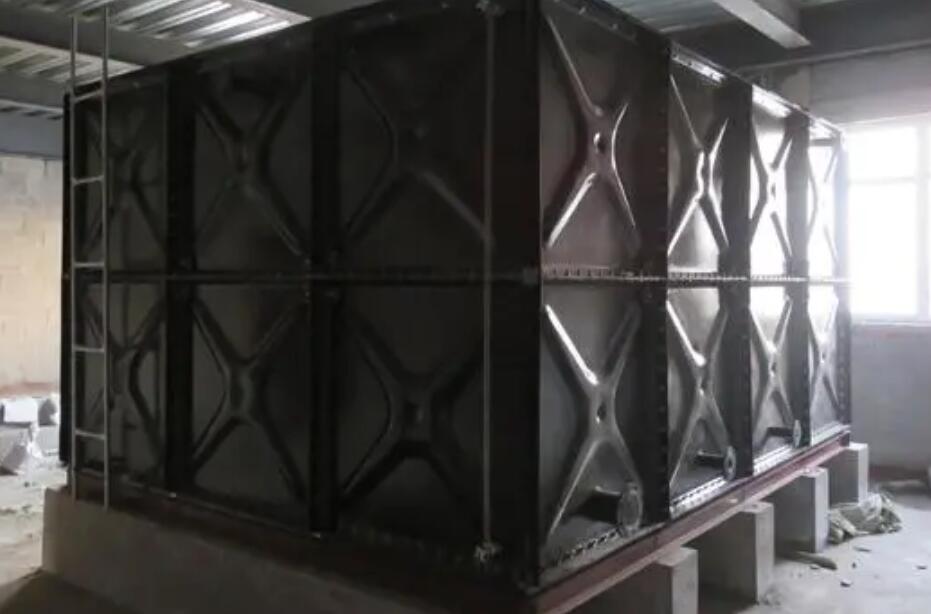
Introduction: Color Isn't Just Cosmetic
When a fiberglass reinforced plastic (FRP) water tank is installed outdoors, its color directly influences how long it will last. In 2023, Beijing Yuanhui FRP Co., Ltd. tracked 200 in-service tanks across northern China. The data told a clear story: tanks with dark colors (dark blue, forest green) showed signs of surface chalking and micro-cracking within three years at a rate 42% higher than light-colored ones (white, light gray) from the same production batch under similar exposure conditions. Ultraviolet (UV) radiation is the primary driver of resin degradation in FRP, and color dictates how much heat the surface absorbs, which in turn accelerates thermo-oxidative aging.
This article explains the science behind color and UV protection, using field data and case studies from Beijing Yuanhui to provide quantifiable guidance for engineers, contractors, and end users.
1. How UV Damages FRP Water Tanks
1.1 Photodegradation of the Resin Matrix
The mechanical integrity of an FRP tank relies on its unsaturated polyester or vinyl ester resin. UV photons in the 280-400 nm range carry enough energy (300-400 kJ/mol) to break C-C bonds (~350 kJ/mol) and C-O bonds (~360 kJ/mol) in the polymer backbone. The process unfolds in three stages:
- Radical formation: UV photons are absorbed by chromophores (e.g., benzene rings, carbonyl groups) in the resin, generating alkyl and peroxy radicals.
- Chain degradation: Radicals react with oxygen to form hydroperoxides, which decompose into more radicals, creating an autocatalytic cycle.
- Surface deterioration: Chain scission reduces crosslink density, leading to chalking, gloss loss, and micro-cracks that allow moisture and contaminants to attack the fiber-resin interface.
In accelerated weathering tests (QUV, ASTM G154) conducted by Beijing Yuanhui, dark blue panels retained only 18% of their original gloss after 1,000 hours of UV exposure (0.89 W/m²·nm@340nm) plus condensation cycles, compared to 63% for white panels.
1.2 The Synergistic Effect of Heat Buildup
Dark colors absorb more solar energy, raising the surface temperature of the tank. Field measurements show that under peak summer sunlight (≈1,000 W/m²), a white tank surface reaches 45-50°C, while a dark blue or black surface hits 70-75°C. According to the Arrhenius equation, every 10°C increase roughly doubles the rate of chemical reactions. This means dark tanks experience thermo-oxidative aging 4-6 times faster than light-colored ones.
2. Color and Solar Reflectance Index
Visible and near-infrared (NIR) light account for over 90% of solar energy. A color's reflectance determines how much heat is absorbed. Beijing Yuanhui measured the Solar Reflectance Index (SRI) of common FRP tank colors using a spectrophotometer (300-2500 nm range):
| Color | Visible Reflectance | NIR Reflectance | SRI |
|---|---|---|---|
| White (RAL 9010) | 78% | 83% | 107 |
| Light Gray (RAL 7035) | 55% | 60% | 79 |
| Light Blue (RAL 5012) | 42% | 50% | 64 |
| Dark Blue (RAL 5022) | 8% | 15% | 18 |
| Forest Green (RAL 6009) | 6% | 12% | 14 |
The higher the SRI, the lower the surface temperature rise. When SRI falls below 50, surface temperatures can exceed 60°C, significantly accelerating resin degradation. For regions with intense year-round sunlight (e.g., Xinjiang, Tibet, Hainan), Beijing Yuanhui recommends an SRI of at least 80.
3. Color Recommendations by Installation Scenario
3.1 Fully Exposed Outdoor Installations – White or Light Gray
For tanks on rooftops or open ground with no shade, UV exposure is maximum. In 90% of such projects, Beijing Yuanhui specifies white (RAL 9010) or light gray (RAL 7035). Case in point: a 500 m³ fire-water tank at a solar farm in Inner Mongolia (2022) was finished in white. After three years, its gloss retention remained above 55%, with an expected service life of over 15 years. A dark blue tank from a different brand installed nearby showed visible chalking by the second year.
3.2 Semi-Shaded Environments – Light Blue or Light Green
If the tank sits in building shadow or under a grating with less than 4 hours of direct sun per day, light blue (RAL 5012) or light green (RAL 6018) can be used. These colors offer moderate UV absorption while blending with architectural aesthetics. In a water treatment plant in Jiangnan, Beijing Yuanhui supplied light green tanks placed under a cooling tower shadow; after five years, no significant aging was found.
3.3 Indoor or Fully Shaded Locations – Greater Color Freedom
Indoor tanks (basements, pump rooms) face no UV exposure, so color choice is driven by labeling, cleanliness, or client preference. However, if the tank is near a window or skylight, some UVA can penetrate glass. In such cases, dark colors should still be avoided.
4. Additional UV Protection Beyond Color
Color alone cannot fully block UV damage. Beijing Yuanhui incorporates the following measures in its SMC compression-molded tanks:
- UV absorbers: 2-3% benzotriazole-type UV absorbers (e.g., Tinuvin 384-2) are added to the resin to absorb 290-400 nm UV and dissipate it as heat. Comparative tests showed that white panels with UV absorbers retained 82% of tensile strength after 3,000 hours of QUV exposure, versus 51% for those without.
- Gel coat: A 0.4-0.6 mm weather-resistant gel coat (isophthalic type) is sprayed onto the mold surface. Adding nano-TiO₂ (20-50 nm particles) further scatters UV radiation.
- Maintenance coating: Every 2-3 years, the tank surface should be cleaned and recoated with an acrylic polyurethane topcoat to restore UV protection. Beijing Yuanhui's maintenance manual specifies that when chalking is visible, cleaning and a UV-protective coating should be applied immediately.
Conclusion
Color selection for FRP water tanks is not an aesthetic afterthought—it is a critical engineering parameter that affects service life and total cost of ownership. For outdoor installations, white or light gray (SRI ≥ 80) is the optimal choice, reducing surface temperature by 20-30°C and slowing both photodegradation and thermo-oxidative aging. Beijing Yuanhui FRP Co., Ltd. recommends that designers and users specify color requirements based on local annual sunshine hours, ambient temperature, and maintenance conditions, and request SRI values and QUV test reports from suppliers. When combined with UV absorbers and a quality gel coat, the right color can extend design life from the typical 8-10 years to over 15 years.