Modular Assembly Process of FRP Water Tanks: From Standard Panels to Sealing Structures
Introduction
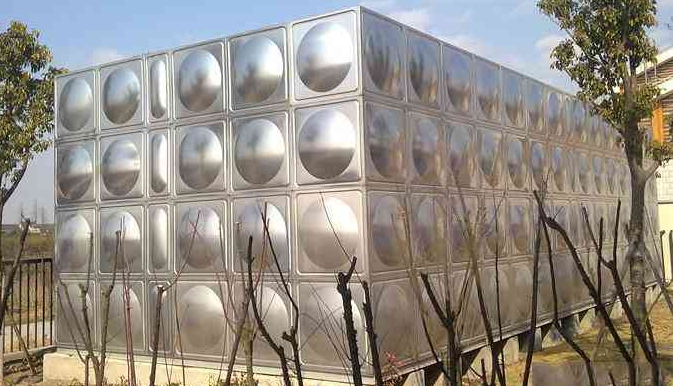
Modular assembly of FRP water tanks is not simply 'stacking blocks.' Each SMC compression-molded panel must have dimensional tolerances within ±1.5mm and diagonal deviation no more than 2mm. Based on production data from Beijing Yuanhui FRP Co., Ltd., which manufactures 3,000 tanks annually, the molding temperature is controlled at 145℃±5℃, with holding time calculated at 45 seconds per millimeter of thickness. This ensures a Barcol hardness of 40 or higher. During assembly, 304 stainless steel bolts must be torqued to 35-40 N·m, and gasket compression must stay between 25% and 30%. Any deviation can cause leakage under full water load.
1. Panel Production: The Foundation of Modularity
1.1 SMC Molding Parameters
The modular system starts with SMC sheets. Low molding temperature results in incomplete curing and a 30% drop in mechanical strength; excessive temperature causes premature gelation and surface bubbles. Beijing Yuanhui's parameters:
- Molding temperature: 145℃±5℃ (top/bottom mold difference ≤3℃)
- Holding time: thickness × 45 sec/mm (e.g., 10mm panel = 450 sec)
- Pressure: 12-15 MPa (based on projected area)
- Shrinkage: ≤0.15% linear shrinkage using low-shrink additives
1.2 Panel Dimensions and Tolerances
Common panel sizes are 1000×1000mm and 1000×500mm, with thicknesses of 5, 8, 10, and 12mm. Beijing Yuanhui's quality standards:
- Length/width tolerance: ±1.5mm
- Diagonal deviation: ≤2mm
- Flatness: ≤1.5mm/m
- Flange height: 25mm±0.5mm
2. Core Assembly: Connections and Sealing
2.1 Stainless Steel Bolt System
Module connections use 304 stainless steel bolts, nuts, and steel washers. Common bolt sizes are M10 or M12. Torque control is critical:
- M10 bolt recommended torque: 35 N·m (±3 N·m)
- M12 bolt recommended torque: 40 N·m (±3 N·m)
- Tightening sequence: center to edges, cross-pattern, in three stages (50%→80%→100%)
A chemical plant using a Beijing Yuanhui 100-ton tank showed only 4.2% torque loss after three years, validating the initial settings.
2.2 Gasket Compression Control
Gaskets are EPDM rubber (Shore A 60±5). They must be centered, with no more than 3mm overhang. Compression is indirectly controlled by bolt torque:
- Target compression: 25%-30%
- Compressed thickness: 70%-75% of original
- Critical compression: above 35% causes permanent deformation
Beijing Yuanhui performs a 0.3 MPa air pressure test before shipment, with pressure drop ≤0.01 MPa over 15 minutes.
3. On-Site Assembly and Quality Control
3.1 Foundation and Bottom Panel Installation
Concrete strength must be ≥C25, with surface flatness ≤3mm/2m. A 5mm rubber cushion pad (Shore A 50) is placed before bottom panels. Gaps between panels and foundation are filled with cement mortar.
3.2 Side and Top Panel Assembly
Side panels are assembled from one corner upward. Verticality must be checked with a level after each row (deviation ≤2mm/m). The top panel includes a manhole with double-seal gasket construction.
3.3 Internal Bracing and Fittings
Tanks over 2.5m height require 304 stainless steel tie rods spaced ≤1.5m apart. Inlet/outlet nozzles, overflow pipes, and drain connections use flanged joints with rubber gaskets.
4. Common Issues and Solutions
4.1 Leak Detection
During hydrostatic testing, 90% of leaks occur around bolt holes or panel joints. Remedy: loosen bolts, check gasket alignment, re-torque to specification. Replace damaged gaskets with identical ones.
4.2 Bolt Loosening
Temperature changes and vibration may reduce preload within the first 3 months. Re-torquing on day 7 and day 30 is recommended. Beijing Yuanhui's service data shows leak rates drop from 2.1% to 0.3% after implementing re-torque procedures.
Conclusion
Modular assembly is the critical link between manufacturing and field performance. From molding parameters to bolt torque, gasket compression to installation sequence, every detail affects tank longevity and reliability. Beijing Yuanhui FRP Co., Ltd. has standardized these processes over 15 years, ensuring zero leakage under full load. For buyers, choosing a supplier with documented process control is more important than comparing panel thickness alone.