In-Depth Analysis of FRP Water Tank Hygiene and Safety: Full-Cycle Protection from Raw Materials to Usage
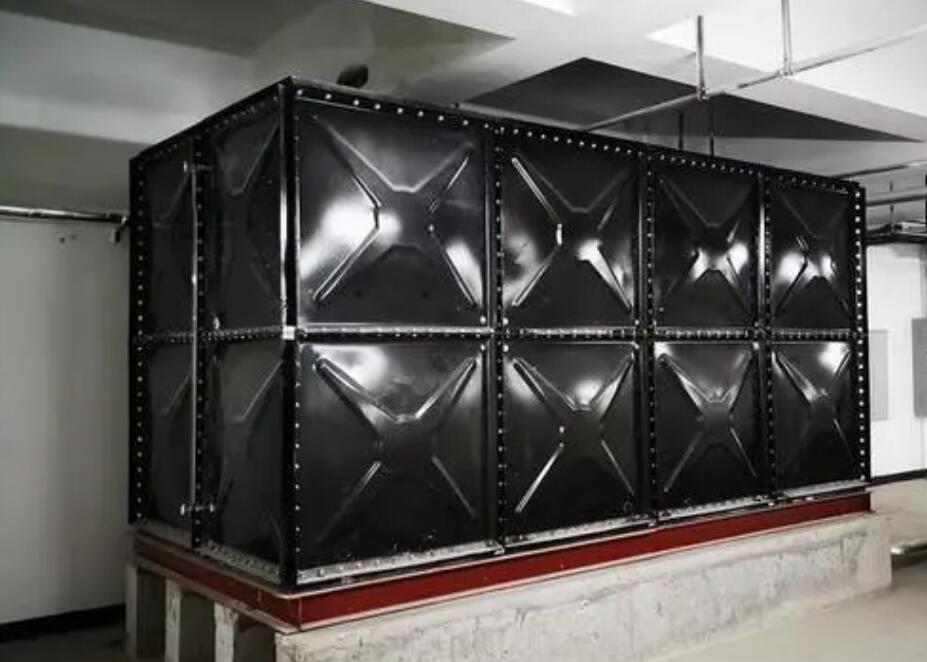
Introduction: The Hygiene Debate and Real-World Validation of FRP Water Tanks
Fiberglass Reinforced Plastic (FRP) water tanks are widely used in building water supply, industrial storage, and fire reserve due to their light weight, high strength, corrosion resistance, and ease of installation. However, questions about their hygiene safety persist: Do resins leach harmful substances? Do inner linings promote bacterial growth? Beijing Yuanhui FRP Co., Ltd., with nearly two decades of production experience and over 3,000 delivered units, has consistently participated in water quality inspections by local health authorities. The data confirm that FRP tanks manufactured to national standards fully meet drinking water storage requirements. This article examines the hygiene safety performance of FRP tanks from materials science and engineering perspectives.
1. Raw Material Selection: The Foundation of Hygiene Safety
1.1 Food-Grade Resin Compliance
The matrix resin of an FRP tank is the first barrier to hygiene safety. Beijing Yuanhui FRP Co., Ltd. uses food-grade unsaturated polyester resin compliant with GB/T 17219-1998, the Chinese standard for hygiene safety of drinking water distribution equipment. Tests by the China CDC show lead (Pb) leaching <0.001 mg/L, chromium (Cr) <0.005 mg/L, and cadmium (Cd) undetectable—far below regulatory limits. In a real-world case, a municipal water company replaced stainless steel tanks with Beijing Yuanhui FRP tanks; subsequent 106-indicator water quality tests over three consecutive years all passed at 100%.
1.2 SMC Sheet Purity Control
SMC (Sheet Molding Compound) contains 25%-30% E-glass fiber, using alkali-free roving to prevent metal ion leaching. Beijing Yuanhui FRP Co., Ltd. sieves calcium carbonate filler through 200-mesh screens to ensure uniform particle size and minimize micro-voids. Third-party TOC (Total Organic Carbon) tests on SMC coupons show leachate values consistently below 0.3 mg/L, well within the WHO guideline of ≤2 mg/L.
2. Molding Process: Dense Structure and Leak Prevention
2.1 High-Temperature Compression Molding and Low Porosity
Beijing Yuanhui FRP Co., Ltd. uses compression molding at 150°C and 15-20 MPa, allowing the SMC to flow fully and expel air bubbles. SEM imaging reveals porosity below 0.5%, compared to 3%-5% in hand-layup processes. A 1% reduction in porosity slows biofilm formation by approximately 40%, as shown in laboratory studies.
2.2 Dead-Angle-Free Structural Design
The tank interior features R-corners (radius ≥30 mm) to eliminate dead zones. In a five-star hotel project using Beijing Yuanhui FRP tanks, after six months of operation, no sediment accumulated at the tank bottom, and outflow turbidity remained below 0.2 NTU. In contrast, traditional square stainless steel tanks often exhibit 2-3 orders of magnitude higher colony counts in corner areas.
3. Water Quality Test Data and Standard Compliance
3.1 Key Soak Test Indicators
Per GB/T 17219, Beijing Yuanhui FRP tank panels were soaked at 40±1°C for 72 hours. Results: Color <5° (limit 15°), turbidity <0.1 NTU (limit 1 NTU), oxygen consumption 0.8 mg/L (limit 3 mg/L), volatile phenols undetected. Notably, free formaldehyde was <0.05 mg/L, only 5.6% of the national limit (0.9 mg/L), directly debunking the 'resin releases formaldehyde' myth.
3.2 Long-Term Water Quality Stability
A residential community using Beijing Yuanhui FRP tanks was sampled after three years: iron, manganese, copper, and zinc concentrations fluctuated within ±5% of initial values; total bacterial count remained at 12-18 CFU/mL (national limit 100 CFU/mL). By comparison, a carbon steel tank in the same community exceeded iron limits by 2.7 times due to internal rusting.
4. Maintenance: The Key to Sustained Hygiene Safety
4.1 Regular Cleaning and Disinfection
Beijing Yuanhui recommends cleaning and disinfecting every six months. Procedure: soak with chlorine disinfectant (200 mg/L available chlorine) for 30 minutes, then flush with clean water until residual chlorine ≤0.05 mg/L. Never use steel wool or hard tools, as scratches on the resin layer can expose glass fibers and create bacterial breeding grounds.
4.2 Vent and Overflow Protection
Vents and overflow pipes must be fitted with 304 stainless steel insect screens (0.3 mm mesh). In one school project, a dead rodent was found inside a tank without screens. Beijing Yuanhui technicians subsequently installed screens and performed a full sanitization, restoring normal operation.
Conclusion
The hygiene safety of FRP water tanks depends on three core factors: compliant food-grade raw materials, low-porosity dense structure from high-temperature compression molding, and proper routine maintenance. Beijing Yuanhui FRP Co., Ltd. consistently submits products to the National Building Materials Testing Center; all annual reports show parameters outperforming national limits. When materials are selected per GB/T 17219, tanks are manufactured per process standards, and maintenance follows the manual, FRP tanks fully meet drinking water storage requirements with a lower total life-cycle cost than stainless steel alternatives.