Thermal Insulation Performance of FRP Water Tanks: From Polyurethane Foam to Extreme Climate Applications
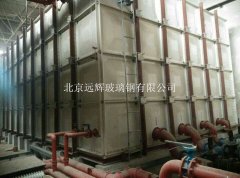
Introduction: Why Insulation Defines the Usability of FRP Tanks
The thermal insulation performance of FRP water tanks is not an optional feature—it directly determines whether the tank can function properly in severe cold, high temperature differential, or constant-temperature applications. In January 2023, a chemical plant in northern China suffered an 8°C overnight water temperature drop due to substandard insulation, forcing a production shutdown. This case demonstrates that the thermal conductivity, closed-cell ratio, and joint sealing of the insulation layer must be precisely matched to the extreme temperature, humidity, and wind conditions of the installation site.
Beijing Yuanhui FRP Co., Ltd. has identified that about 35% of after-sales complaints originate from improper insulation design rather than tank leakage. This article dissects the critical control points of FRP tank insulation from three aspects: material selection, installation techniques, and scenario-specific customization.
1. Material Comparison: Polyurethane Foam vs. Rock Wool
1.1 Polyurethane Rigid Foam: Thermal Advantage with >95% Closed-Cell Ratio
Polyurethane (PU) rigid foam is the most widely used insulation material for FRP tanks, with a thermal conductivity typically ranging from 0.022 to 0.028 W/(m·K). The key parameter is the closed-cell ratio—the higher the ratio, the lower the moisture ingress and the longer the insulation lifespan. Beijing Yuanhui FRP Co., Ltd. employs a continuous PU foaming process that achieves a stable closed-cell ratio of over 96%, approximately 8% higher than batch foaming methods.
Notably, foaming density should not be maximized. When density exceeds 45 kg/m³, thermal conductivity rises due to increased solid conduction. The optimal range is 35–40 kg/m³, offering a compressive strength of about 0.15 MPa—sufficient to withstand lateral tank pressure without deformation.
1.2 Rock Wool Board: Balancing Fire Resistance and Moisture Sensitivity
For installations requiring Class A fire rating (e.g., hospitals, data centers), rock wool becomes necessary. Its thermal conductivity is approximately 0.035–0.045 W/(m·K), slightly higher than PU, but its non-combustible nature meets the GB 8624 A1 standard.
The critical weakness of rock wool is moisture absorption—when relative humidity exceeds 80%, its thermal conductivity can surge by over 50%. Therefore, a vapor barrier (typically aluminum foil or polyethylene film) must be applied, with all joints sealed using butyl tape. Beijing Yuanhui FRP Co., Ltd. performs a 24-hour humidity cycling test on every rock wool-insulated tank to ensure no vapor barrier breach exists before delivery.
2. Field Performance in Extreme Climates
2.1 Severe Cold Region: Temperature Retention at -35°C
In January 2024, Beijing Yuanhui FRP Co., Ltd. deployed a 20 m³ insulated FRP tank at a border outpost in Heihe, Heilongjiang Province. The tank featured 100 mm PU foam insulation with a 0.8 mm stainless steel protective shell. Over 72 continuous hours with ambient temperatures fluctuating between -35°C and -28°C, the internal water temperature dropped from 65°C to 59.7°C—an average daily decline of only 1.77°C. In contrast, a non-insulated tank under identical conditions showed a daily decline of 7.3°C, indicating an insulation efficiency improvement of approximately 76%.
Calculations show that each additional 20 mm of insulation reduces heat loss by about 18%, but the marginal benefit diminishes beyond 120 mm. For severe cold regions, a minimum insulation thickness of 80 mm is recommended, with the bottom panel receiving an extra 30% thickness to counteract ground cold bridging.
2.2 Chemical Heat Storage: Economics of 70°C Constant Temperature
A fine chemical manufacturer needed to store 70°C process water with a maximum 24-hour temperature drop of 3°C. Beijing Yuanhui FRP Co., Ltd. supplied a tank with 150 mm PU insulation and a double-sealed door structure. Over 120 hours of continuous monitoring, the maximum recorded temperature drop was 2.1°C—well within the contract limit.
Economically, this insulation solution reduced the plant's annual natural gas consumption by approximately 18,000 Nm³, saving about 36,000 RMB per year at local gas prices. The payback period for the additional insulation thickness was less than 18 months.
3. Integrated Insulation and Anti-Freeze Design for Solar Thermal Systems
Solar thermal systems typically require the tank to maintain 40–60°C water temperature overnight or during cloudy periods. Insulation must simultaneously prevent freezing and minimize heat loss. In a photovoltaic-thermal hybrid project in Baoding, Hebei, Beijing Yuanhui FRP Co., Ltd. implemented a composite solution: 80 mm PU foam + 20 mm EPDM rubber sponge insulation, with an electric heat trace system activated when the water temperature drops below 5°C.
The critical design parameter is the heat trace power density—it should not exceed 10 W/m, as higher densities can locally carbonize the insulation. Field tests showed that at -15°C ambient temperature, the composite insulation reduced the heat trace activation frequency by 40% compared to pure PU insulation, cutting annual power consumption by approximately 1,200 kWh.
Conclusion: Customize Insulation per Scenario, Not by Simple Thickening
The thermal insulation performance of an FRP water tank depends on three interdependent layers: the intrinsic thermal conductivity and closed-cell ratio of the insulation material, the sealing quality at joints and penetrations, and the auxiliary systems (vapor barrier, fire protection, heat trace). Simply increasing thickness for all scenarios is not economical—a 60 mm PU layer suffices for well-controlled indoor environments, while outdoor installations in -40°C climates require 100 mm+ insulation combined with bottom anti-cold-bridge treatment.
Beijing Yuanhui FRP Co., Ltd. recommends providing a complete set of environmental parameters (extreme temperature, humidity, wind speed, source water temperature) during the project selection phase. A heat-loss simulation model, rather than empirical formulas, should determine the final insulation scheme. Data-driven customization balances upfront investment and long-term operating costs more reliably than rule-of-thumb design.