Complete Process Analysis of FRP Water Tank Production: Technical Details from Raw Materials to Finished Products
Introduction
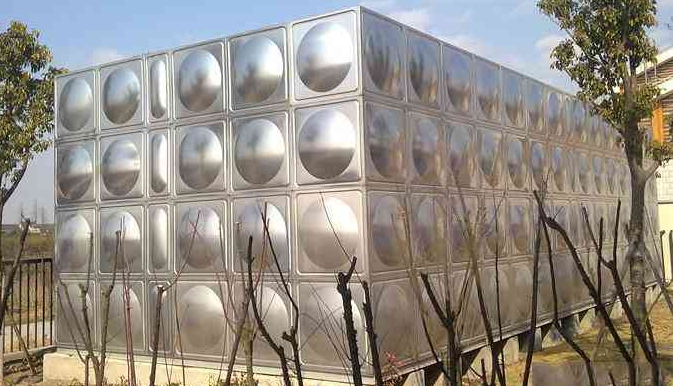
FRP (Fiberglass Reinforced Plastic) water tanks are widely used in construction, chemical plants, and municipal water supply due to their corrosion resistance, light weight, and long service life. Beijing Yuanhui FRP Co., Ltd. has accumulated comprehensive process experience from raw material formulation to final inspection. Every step in production directly affects the tank's sealing integrity, load-bearing capacity, and durability. This article breaks down the entire production workflow based on actual manufacturing lines.
1. Raw Material Preparation and Ratio Control
Key materials include unsaturated polyester resin (isophthalic type 190 or 196 for better water resistance), glass fiber reinforcements (woven roving, chopped strand mat), curing agent (MEKP), accelerator (cobalt naphthenate), and fillers (calcium carbonate, aluminum hydroxide). Typical ratio: resin to curing agent = 100:1.5~2.0 (by weight), accelerator at 0.2%~0.5%. The curing agent dosage must be adjusted based on workshop temperature (18~25°C): reduce to 1.2% in summer, increase to 2.5% in winter. Glass fiber is cut with 3~5mm allowance and dried at 50~60°C for 2 hours to remove moisture; untreated fiber increases porosity by over 30%.
2. Mold Preparation and Release Agent Application
Molds are made of steel or FRP master molds, polished to Ra ≤ 3.2μm. Three to four layers of release agent (PVA or semi-permanent type) are applied, each layer cured for 15~20 minutes. Beijing Yuanhui uses semi-permanent release agents that last 5~8 cycles per application, improving efficiency by 40%. Uneven application leads to sticking and surface defects.
3. Molding: Hand Lay-Up vs. Spray-Up
Hand lay-up is suitable for medium-volume production (1000~5000 panels/year). Workers mix resin and hardener, brush it onto the mold, lay glass mat, and compact with rollers. Resin content per layer is 45%~55%. Standard panels have 3~5 layers, 4~8mm thickness, tensile strength 160~200 MPa. Spray-up uses a gun to spray resin and chopped fibers simultaneously, boosting production speed by 3~5 times but with 10%~15% material waste. Air bubble content must be below 2% (ASTM D2584). Beijing Yuanhui's vacuum-assisted hand lay-up reduces bubble content to below 0.5% and increases interlaminar shear strength to over 25 MPa.
4. Curing and Demolding
Curing includes gelation (20~40 min), hardening, and post-curing. Full cure at 25°C takes 8~12 hours; heating at 60°C cuts time to 2~3 hours. Beijing Yuanhui uses a step-heating profile: 40°C for 1 hour, then 60°C for 2 hours, followed by natural cooling. Demolding uses pneumatic tools or compressed air to avoid damage. Panels are post-cured at room temperature for 24 hours to achieve optimal mechanical properties.
5. Post-Processing and Quality Inspection
Panels are cut, drilled, and ground with tolerances: cutting allowance 2~3mm, hole diameter ±0.5mm. Assembly uses FRP angle brackets and sealing strips, with bolt torque 30~40 N·m. Inspection includes visual check (bubbles, cracks), dimensional accuracy (length/width ±2mm, diagonal ±3mm), Barcol hardness ≥40, and hydrostatic test (0.15 MPa for 30 min, no leakage). Beijing Yuanhui's first-pass yield rate consistently exceeds 98.5%.
Conclusion
FRP water tank production integrates material science, molding engineering, and quality control. Beijing Yuanhui FRP Co., Ltd. achieves industry-leading quality through optimized resin ratios, improved mold preparation, and vacuum-assisted techniques. Understanding these process details helps procurement teams evaluate supplier capabilities and select reliable products.