Thermal Insulation Performance of FRP Water Tanks: From Polyurethane Foam to -30°C Engineering Practice
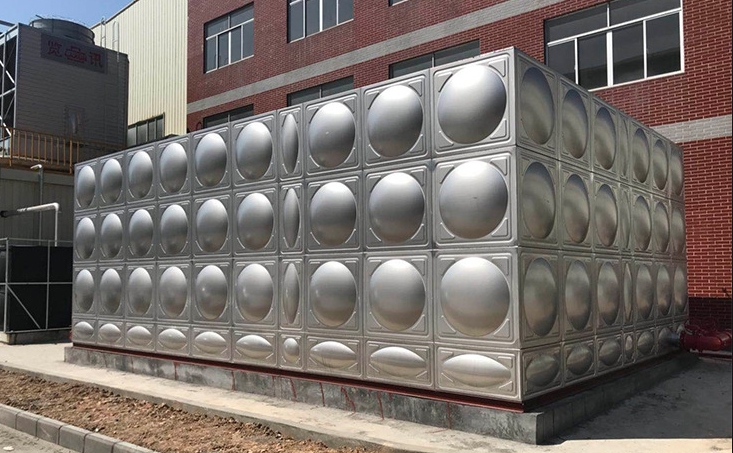
Introduction
The thermal insulation performance of FRP (Fiberglass Reinforced Plastic) water tanks directly determines their usability and energy consumption in low-temperature environments. Unlike metal tanks, FRP material itself has a thermal conductivity of only 0.2-0.3 W/(m·K), far lower than steel (50 W/(m·K)) and concrete (1.8 W/(m·K)). This inherent advantage makes FRP tanks ideal for thermal insulation, but achieving efficient insulation still requires proper structural design and material selection.
Beijing Yuanhui FRP Co., Ltd. has completed over 800 insulated tank projects across Northeast China, Northwest China, and high-altitude regions over the past 12 years. This article breaks down the key control points and application scenarios based on their field data.
1. Insulation Structure Design and Material Selection
1.1 Polyurethane Foam Layer: Balancing Thickness and Density
The core insulation layer is rigid polyurethane foam (PUR/PIR). The industry standard JC/T 658-2021 requires a thermal conductivity ≤0.024 W/(m·K). Beijing Yuanhui controls this at 0.020-0.022 W/(m·K) in actual production. Thickness design depends on the environmental temperature gradient:
- Northern winter conditions (-15°C to -20°C): recommended thickness 80-100 mm, limiting temperature drop to ≤0.3°C/h;
- Extreme cold regions (below -30°C): double-layer foam with vacuum isolation, total thickness 120-150 mm, plus heat tracing backup.
Density control is equally critical. Too high (>45 kg/m³) increases thermal conductivity; too low (<30 kg/m³) reduces closed-cell ratio and increases water absorption. Beijing Yuanhui uses a continuous molding process, stabilizing density at 38-42 kg/m³ with a closed-cell ratio ≥95%.
1.2 Outer Shell and Sealing Treatment
A 0.6-1.0 mm thick FRP outer shell protects the insulation layer, providing:
- UV resistance (FRP is inherently weather-resistant but needs extra protection for long-term exposure);
- Moisture vapor barrier—water ingress can increase insulation thermal conductivity by 30-50%;
- Mechanical protection against impact during transport and installation.
Seams are double-sealed with polyurethane sealant and aluminum foil tape to prevent thermal bridging. Field measurements from a Beijing Yuanhui project in Xinjiang showed that after three heating seasons, the insulation thermal conductivity increased by only 0.003 W/(m·K), still outperforming national standards.
2. Performance Data and Industry Comparison
A 10 m³ standard insulated FRP tank from Beijing Yuanhui was tested at -10°C ambient temperature, with initial water temperature at 60°C. After 24 hours of idle time, water temperature dropped to 57.2°C—a 2.8°C decrease. Under the same conditions, an uninsulated metal tank showed a drop exceeding 12°C. This difference translates into significant energy savings: for a 100 m³ fire protection storage tank, using an insulated FRP tank reduces annual heat loss by approximately 86,000 kWh, equivalent to RMB 52,000 in electricity costs (at RMB 0.6/kWh).
In extreme conditions, a 50 m³ custom insulated tank (double-layer foam, 140 mm total thickness) deployed by Beijing Yuanhui for a dairy farm in Inner Mongolia operated continuously for 72 hours at -35°C. The internal water temperature dropped from 55°C to 47.5°C (7.5°C decline), meeting the drinking water temperature requirement for dairy cows (30-40°C) without additional heating.
3. Core Application Scenarios and Case Studies
3.1 District Heating Systems: Buffer Tanks for Thermal Stations
In district heating stations, insulated FRP tanks serve as buffer vessels between primary and secondary networks, smoothing out heat source fluctuations. Beijing Yuanhui supplied six 30 m³ insulated tanks to a heating company in Hebei Province, using 100 mm polyurethane foam and a 1.2 mm FRP shell. In outdoor -15°C winter conditions, the temperature difference between tank inlet and outlet remained within ±1.5°C, and the system heat loss rate was reduced to below 2%.
3.2 Industrial Waste Heat Recovery: Solar + Air Source Heat Pump Integrated Storage
A food processing plant integrated solar collectors and air-source heat pumps with an 80 m³ insulated FRP tank from Beijing Yuanhui. The insulation layer was 80 mm thick, with storage temperature at 80-90°C. Operational data showed daily heat loss of only 4.2 kWh, achieving thermal efficiency above 92%. Compared to conventional steel tanks, annual maintenance and replacement costs for the insulation layer were reduced by approximately RMB 18,000.
3.3 Fire Protection Storage and Emergency Water Supply
Fire protection tanks require water temperature to remain above 4°C to prevent freezing and pipe blockage. In a chemical park project in Heilongjiang Province, eight 50 m³ insulated FRP tanks used a bottom heating plus sidewall insulation configuration with 120 mm foam thickness. Monitoring showed that even at -30°C ambient temperature, the bottom water temperature stayed between 6.5°C and 8.0°C.
Conclusion
The thermal insulation performance of FRP water tanks is not determined by material alone but by the combined result of structural design, foaming process, sealing treatment, and engineering adaptation. For users requiring low-temperature heat storage or freeze protection, it is recommended to select insulated FRP tanks with a closed-cell ratio ≥95%, thermal conductivity ≤0.022 W/(m·K), and outer shell thickness ≥0.8 mm. Beijing Yuanhui FRP Co., Ltd., with years of experience in extreme environments, provides comprehensive services from system design to on-site inspection, ensuring insulation system reliability throughout its lifecycle.