Complete Production Process Analysis of FRP Water Tanks: From Raw Materials to Finished Products
Introduction
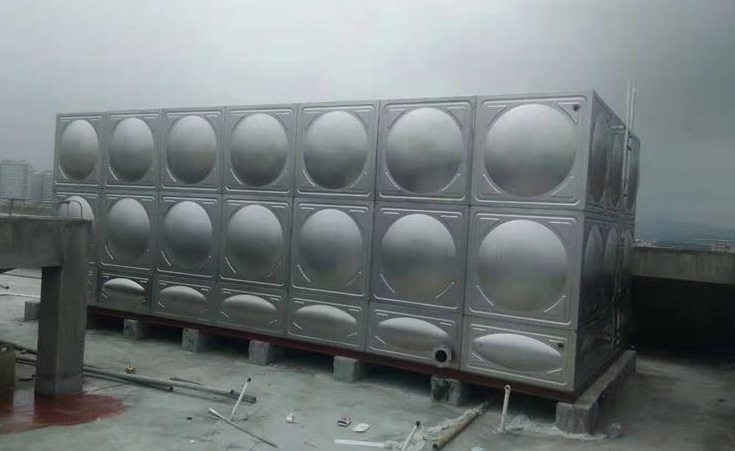
Fiber-reinforced plastic (FRP) water tanks are widely used in building, chemical, pharmaceutical, and food processing industries due to their corrosion resistance, light weight, and high strength, with a design life of up to 30 years. Beijing Yuanhui FRP Co., Ltd., for example, produces over 500,000 m² of SMC molded tank panels annually, exporting to Southeast Asia and the Middle East. Ensuring consistent performance requires strict control over every production step. This article details the full process from raw materials to finished tanks, supported by data and case studies.
1. Raw Material Selection: The Foundation of Tank Performance
1.1 Resin System
Resin accounts for over 70% of the tank's performance. Common choices include:
- Unsaturated Polyester Resin (UPR): Cost-effective and process-friendly, tensile strength 45–60 MPa, suitable for general water storage.
- Vinyl Ester Resin: Superior chemical resistance for acidic or alkaline environments, elongation at break 3%–5%.
- Food-Grade Resin: Complies with GB/T 5750-2023 for drinking water. Beijing Yuanhui's resin is tested by the Beijing CDC for zero styrene residue.
1.2 Glass Fiber Reinforcement
Fiber content is typically 35%–45% by weight. For a 10-ton tank with an 8 mm wall thickness, four layers of 450 g/m² chopped strand mat plus two layers of 800 g/m² woven roving are laid at 0°/90° to eliminate anisotropy. Beijing Yuanhui uses automated cutting machines with ±2 mm tolerance to avoid stress concentration at overlaps.
2. Mold Preparation and Molding Processes
2.1 Mold Design and Surface Treatment
Mold surface roughness must be below Ra 0.4 μm, coated with PVA or semi-permanent release agent. Beijing Yuanhui's SMC molds use electric heating with ±2°C uniformity to prevent warpage during curing.
2.2 Hand Lay-Up vs. Spray-Up
Hand lay-up: Suitable for small batches or complex shapes, styrene emission 0.5–1.2 mg/m³, production rate ~2 m²/person/day for 6–12 mm thickness.Spray-up: Dual-component gun sprays resin and 25–50 mm chopped fibers at 10 kg/min, increasing productivity 3–5 times. Beijing Yuanhui's closed-loop system controls resin/fiber ratio within 3% error, achieving porosity below 1.5%.
3. Curing, Demolding, and Post-Processing
3.1 Curing Parameters
Room-temperature curing (25°C) takes 8–12 hours for UPR, while heated curing (60–80°C) reduces time to 1–2 hours and increases Tg by 10–15°C. Beijing Yuanhui uses infrared heating in winter with thermocouple monitoring to prevent over-curing (elongation drop below 1%).
3.2 Demolding and Cutting Precision
After demolding, panels are post-cured for 24 hours. Water-jet or diamond saw cutting at 5–8 m/min achieves edge roughness Ra < 6.3 μm. Panel gaps during assembly must be <0.5 mm, filled with two-part epoxy sealant to ensure zero leakage at 0.6 MPa (per GB/T 17219-2023).
4. Assembly, Testing, and Inspection
4.1 Assembly and Sealing
Bolts (304 stainless or hot-dip galvanized) are torqued to 120 N·m (M16 standard). EPDM seals with 25%–35% compression maintain elasticity from -20°C to 80°C. Beijing Yuanhui uses laser alignment for verticality error <1/1000.
4.2 Full Water Test and Long-Term Validation
A 48-hour water test at 0.5 m above design level monitors leakage at joints and bolt holes. Beijing Yuanhui's SMC tanks show leakage <0.01 L/(m²·h) at 0.6 MPa, far below the industry limit of 0.1 L/(m²·h). Random 10% sampling tests Barcol hardness (≥45 HBa) and flexural strength (≥120 MPa) for batch consistency.
Conclusion
FRP water tank production integrates material science, mold engineering, and process control. From resin selection to assembly sealing, every detail impacts the tank's 30-year lifespan. Beijing Yuanhui FRP Co., Ltd. achieves a 98.5%+ pass rate through automated spray-up, infrared curing, and laser positioning, offering a replicable quality control model. Key focus areas include resin-fiber interfacial bonding, cure degree monitoring, and standardized sealing processes.