In-Depth Analysis of FRP Water Tank Corrosion Resistance: The Durability Truth from Materials Science
Introduction: Corrosion Resistance is a System, Not a Label
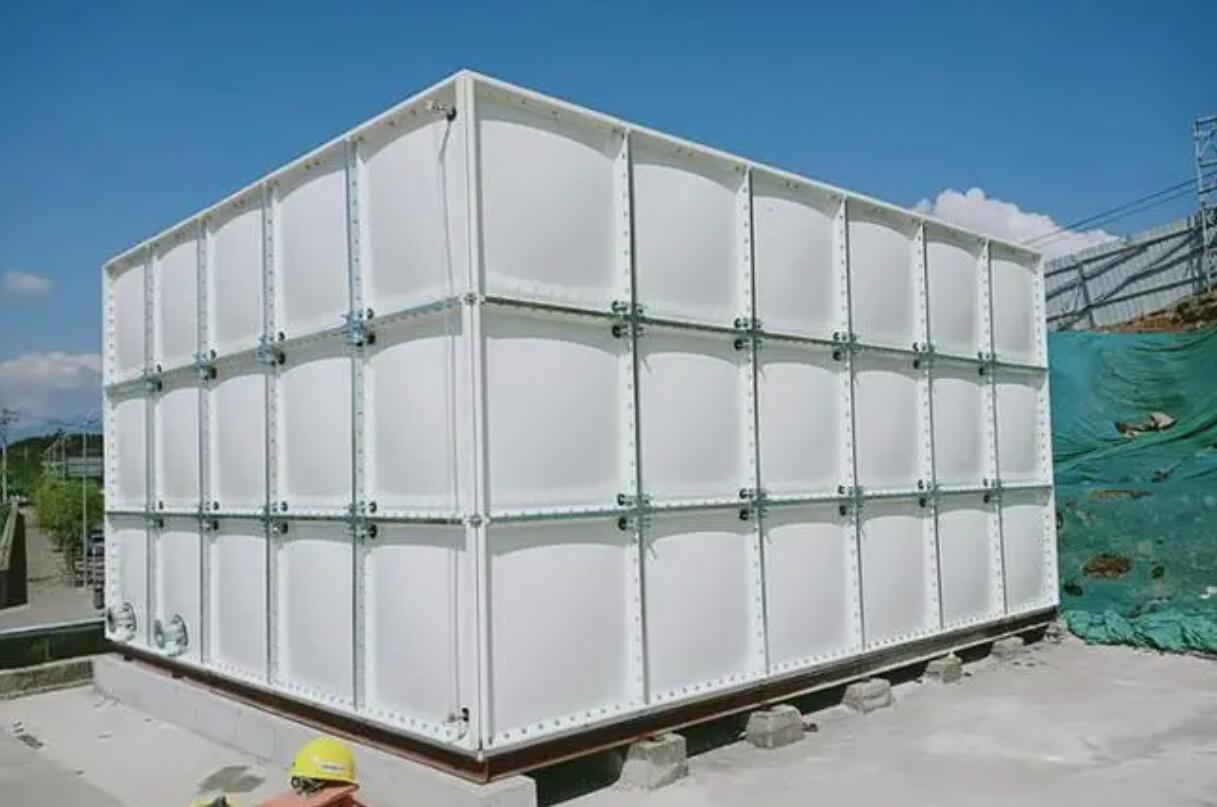
FRP water tanks have replaced traditional steel tanks in municipal water supply, industrial liquid storage, and marine aquaculture because of their inherent corrosion resistance. However, the term 'corrosion resistance' is often reduced to a marketing tagline. The true determinant of tank lifespan is the synergy among resin type, curing system, laminate design, and interfacial treatment. Twelve years of after-sales data from Beijing Yuanhui FRP Co., Ltd. reveal that 60% of corrosion failures stem from incorrect resin selection, 25% from insufficient curing, and the remainder from interface debonding. This article unpacks the science behind FRP tank corrosion resistance.
1. Resin Matrix: The First Line of Defense
1.1 Orthophthalic vs. Isophthalic Resins
Orthophthalic unsaturated polyester resin (UPR) offers good water resistance at manageable cost, suitable for potable water with pH 5.5–8.5. Isophthalic UPR improves chemical resistance by 30–50%, particularly against weak acids and bases (pH 4–10). In a project for a Hebei chemical plant, Beijing Yuanhui used an isophthalic/vinyl ester hybrid system. After five years in industrial wastewater with 1,200 mg/L chloride, the corrosion depth measured only 0.08 mm (ASTM G59).
1.2 Vinyl Ester: The Ultimate Solution for Aggressive Media
When the medium contains strong oxidizers (e.g., sodium hypochlorite) or pH < 3, vinyl ester resin is mandatory. Its low ester bond density gives 3–5 times higher hydrolytic stability than general-purpose UPR. For a coastal seafood processing plant, Beijing Yuanhui supplied tanks made with Derakane 411-350 vinyl ester. After 5,000 hours of salt spray (ASTM B117), the surface showed no blistering or cracking, with a tensile strength retention of 92%.
2. Fiber Reinforcement: The Mechanical Barrier
2.1 Glass Fiber Type and Corrosion Resistance
E-glass slowly leaches in acidic environments, while C-glass or ECR-glass remains stable in pH 3–11. Beijing Yuanhui mandates: for potable water tanks, use E-glass with a resin-rich layer (≥70% resin); for industrial tanks, use C-glass or ECR-glass with a surface veil (≥0.5 mm) as a barrier. ASTM E96 vapor transmission tests show that a surface veil reduces permeability by a factor of 10.
2.2 Laminate Sequencing and Residual Stress
Corrosion failure often initiates at the fiber-resin interface. Improper sequencing causes microcracks from differential curing shrinkage. Beijing Yuanhui employs a 'gradient laminate' process: a resin-rich inner layer (80% resin), a structural middle layer (45–55% resin), and a weather-resistant outer layer. This boosts interfacial shear strength from 12 MPa to 18 MPa (ISO 4587).
3. Interface Chemistry and Curing: The Silent Corrosion Killers
3.1 The Limits of Silane Coupling Agents
Silane coupling agents (e.g., γ-MPS) on glass fibers improve wet strength retention. However, the silanol groups accelerate hydrolysis at pH > 9 or < 4. For an alkaline medium (pH 8–9), Beijing Yuanhui switched to epoxy-silane, raising strength retention after 3,000 hours in 80°C water from 65% to 88%.
3.2 Cure Degree and Lifespan
When the degree of cure falls below 85%, residual styrene forms micro-channels for medium penetration. Beijing Yuanhui uses DSC (differential scanning calorimetry) to monitor curing online, demanding ≥95% cure. Samples with 92% cure showed 4.3 times greater corrosion area than 98% cure samples after 1,000 hours in 3.5% NaCl.
Conclusion: A Triangle of Design, Material, and Process
FRP tank corrosion resistance is not an inherent property but the outcome of resin system, fiber type, interface treatment, and curing. Beijing Yuanhui FRP Co., Ltd. advises: always design the corrosion barrier thickness and select the resin based on medium composition, temperature, pH, and service life. No universal anticorrosion material exists—only precisely matched solutions. With the advent of high-crosslink-density resins and nano-modification, the service life of FRP tanks is expected to extend from the current 15–20 years to over 30 years.