Complete Process Analysis of FRP Water Tank Manufacturing: 12 Key Steps from Material Selection to Quality Inspection
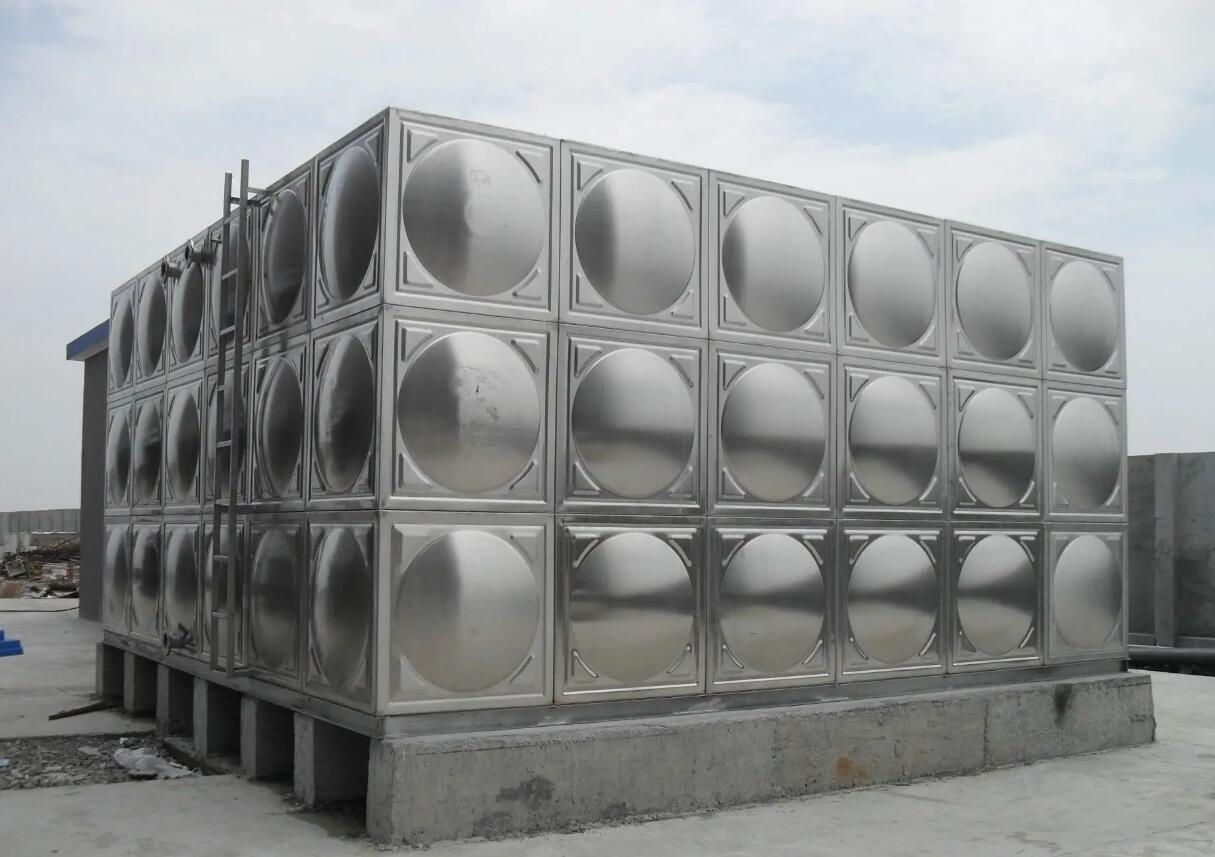
Introduction
FRP (Fiberglass Reinforced Plastic) water tanks dominate the building water supply, industrial cooling, and fire protection sectors due to their low weight, high strength, corrosion resistance, and extended service life. Beijing Yuanhui FRP Co., Ltd., with 15 years of manufacturing experience and over 2,000 delivered units, presents a technical breakdown of the complete production chain—from raw materials to finished product—to help buyers understand the engineering behind quality differences.
1. Raw Material Selection and Inspection
1.1 Resin and Reinforcement
The inner liner uses isophthalic unsaturated polyester resin (e.g., DS-447S) that withstands 48-hour boiling water immersion without discoloration. The outer layer uses orthophthalic resin for cost efficiency. Reinforcement consists of E-glass chopped strand mat (450 g/m²) and woven roving (0.4mm), with fiber content controlled at 35% ± 2%. Every batch is tested for acid value, viscosity, and gel time (12-18 min at 23°C).
1.2 Additives and Mold Preparation
MEKP hardener (1.5%-2.0%) and cobalt naphthenate accelerator (0.3%-0.5%) are used. Mold surface receives 3 coats of mold release wax followed by PVA release agent, drying for 60 minutes. Mold flatness tolerance is ≤1mm per 2 meters, critical for panel joining accuracy.
2. Molding Processes: Hand Lay-Up and Compression
2.1 Hand Lay-Up (for Custom Shapes and Large Panels)
Standard sequence:
① Gel coat application (0.3-0.5mm), then surface veil after gelation;
② Alternate layers of mat and roving, compacted with a metal ribbed roller to keep void content ≤3%;
③ Thickness control: base 12mm (7 roving + 2 mat), side 8mm (5 roving + 1 mat), top 6mm (4 roving).
Environment: 18-25°C, RH ≤70%. Beijing Yuanhui data shows interlayer peel strength drops 22% when RH exceeds 75%.
2.2 SMC Compression Molding (Standard Panels)
Sheet Molding Compound (SMC) is molded in a 1,500-ton press: 140±5°C, 12 MPa, 3 min/mm hold time. Cycle time is ~8 min per panel, 5× faster than hand lay-up, ideal for 1000×1000mm standard modules. However, mold cost is high (80,000-120,000 RMB per set), so hand lay-up remains dominant for low-volume custom orders.
3. Curing and Demolding
Hand-laid parts cure at room temperature for 24 hours before demolding; SMC parts are force-cooled below 60°C. After trimming (fillet radius ≥3mm), common defects are addressed:
- Voids: pinholes >2mm filled with resin putty;
- Dry spots: unimpregnated areas cut out and patched;
- Warpage: panels exceeding 3mm/m flatness deviation are weighted for 12 hours at 25°C.
4. Assembly and Performance Testing
4.1 Panel Joining
Galvanized bolts (torque 28-32 N·m for M10) and 5mm EPDM gaskets are used. Beijing Yuanhui’s internal standard requires:
- Joint gap ≤0.5mm;
- Hydrostatic test: filled to design level, 48-hour hold, ≤2 leaks per 100m².
4.2 Factory Inspection (per JC/T 658.1-2007)
Each batch samples are tested for:
① Barcol hardness ≥35;
② Flexural strength ≥160 MPa;
③ Water absorption ≤0.5% (24h);
④ Acid resistance: strength retention ≥85% after 24h in 10% H₂SO₄.
Conclusion
Manufacturing FRP water tanks is not a simple "fiberglass lay-up"—it is a systematic engineering effort covering material science, mold design, environmental control, and mechanical verification. Beijing Yuanhui FRP Co., Ltd. achieves 8-12 year service life through full-process quality control, from resin batch testing to 48-hour hydrostatic testing. Buyers should prioritize inner liner resin type, fiber content, and cure degree to avoid low-cost pitfalls.