Detailed Analysis of FRP Water Tank Lining Anti-Corrosion Technology: From Material Selection to Acceptance
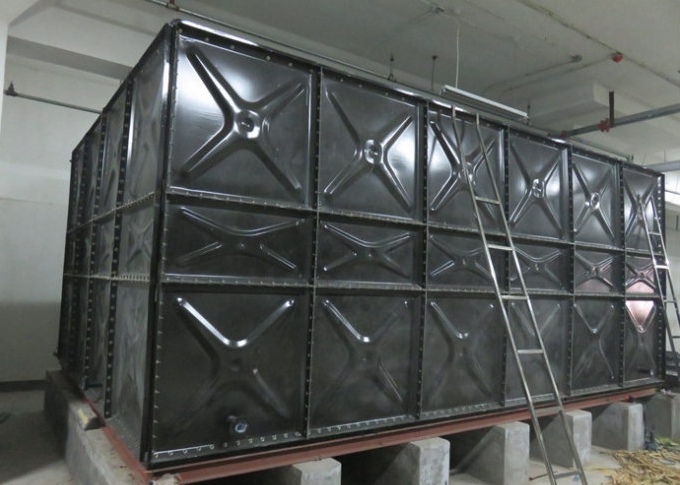
Introduction: Why Lining Anti-Corrosion Determines FRP Tank Lifespan
FRP water tanks are widely used for potable water and chemical storage, but lining failure accounts for over 70% of maintenance cases. Common defects include blistering, delamination, and chemical penetration. Drawing on two decades of field data from Beijing Yuanhui FRP Co., Ltd., this article presents material selection criteria and process controls essential for long-term corrosion resistance.
1. Resin System Selection: From General to Specialty
1.1 Orthophthalic vs. Isophthalic Polyester Resins
Orthophthalic resin (e.g., 191#) suits ambient-temperature water storage with a pH tolerance of 4–10. Isophthalic resin (e.g., 196#) offers higher crosslink density and temperature resistance up to 80°C, maintaining pH 3–12 stability. In a Beijing Yuanhui project for a power plant, isophthalic lining retained 92% Barcol hardness after five years of continuous operation.
1.2 Vinyl Ester Resin for High-Temperature and Chemical Environments
For media containing organic solvents or temperatures above 60°C, vinyl ester resin (e.g., Derakane 470 series) is mandatory. Its low ester-group content provides 3–5 times better hydrolysis resistance than polyester. A chemical wastewater tank using vinyl ester lining showed a permeability drop from 0.8 g/m²·h to below 0.05 g/m²·h.
1.3 Food-Grade Resin Compliance
Drinking water tanks require NSF/ANSI 61 certified food-grade resin. Beijing Yuanhui uses ISO-NPG resin for domestic water tanks, with residual styrene below 0.1%, meeting GB/T 17219 standards.
2. Reinforcement and Interface Treatment: Preventing Blisters and Debonding
2.1 Surface Veil and Chopped Strand Mat
Standard lining builds consist of a 30–50 g/m² surface veil (resin content >85%) plus a 300–450 g/m² chopped strand mat. Lab tests show that veil weight below 30 g/m² increases porosity from 3% to 8%, compromising chemical barrier performance.
2.2 Silane Coupling Agent Application
Applying silane coupling agents (e.g., KH-570) boosts interlaminar shear strength from 15 MPa to 28 MPa. Beijing Yuanhui enforces a three-step impregnation-squeegee-rolling process to ensure full fiber wet-out and eliminate dry spots.
3. Process Control: Temperature, Humidity, and Cure Degree
3.1 Environmental Thresholds
Optimal application conditions are 15–30°C and relative humidity below 75%. When humidity exceeds 85%, water molecules react with hardeners, generating bubbles. In one Beijing Yuanhui site, pinhole density jumped from 2 to 15 per m² when humidity rose from 60% to 85%.
3.2 Post-Cure Treatment
Ambient-cured linings typically reach only 80–85% cure degree; post-cure at 80°C for 4 hours raises it above 95%. A hot-water tank without post-cure developed through-wall cracks after six months due to residual stress release.
4. Quality Inspection and Acceptance Criteria
4.1 Barcol Hardness and Thickness
Lining Barcol hardness must be ≥35 (ASTM D2583), with minimum thickness of 2 mm for water tanks and 3 mm for chemical tanks. Spark testing at 2,000 V per mm thickness must show zero pinholes.
4.2 Hydrostatic and Permeability Tests
Tanks must pass a 72-hour static water test with a water level drop ≤3 mm and no external leakage. For chemical tanks, a 72-hour NaCl immersion test must yield chloride ion penetration below 0.01 mg/cm².
Conclusion
FRP tank lining anti-corrosion demands a systematic approach—from resin selection to environmental control. Beijing Yuanhui FRP Co., Ltd. recommends specifying media composition, temperature, and pH during design, and strictly following ASTM and GB standards. With proper material combinations and disciplined processes, lining service life can extend from 3 to over 15 years, reducing total maintenance costs by 40%.