Modular Assembly Process of FRP Water Tanks: 15 Critical Steps from Panels to Finished Product
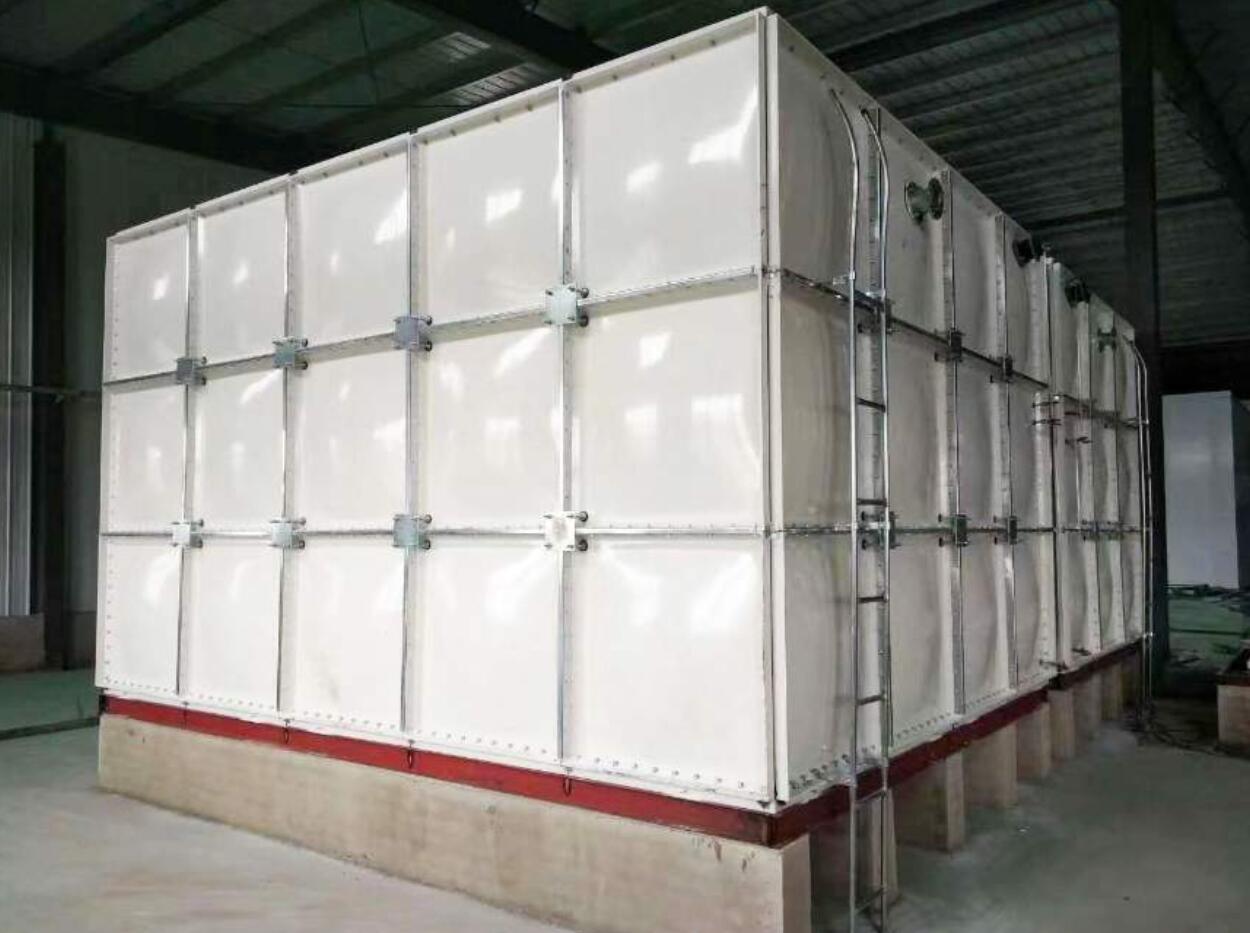
1. The Core Logic of Modular Assembly
FRP water tank modular assembly deconstructs large storage vessels into standardized SMC molded panel units, assembled on-site with custom connectors and sealing systems. Key advantages include:
- 40% improvement in transport efficiency: Standard panels (1m×1m or 1m×0.5m) weigh 12-18kg each; a 12m truck carries 2,000+ units.
- 60% reduction in construction time: A 300m³ tank requiring 25 days via hand lay-up takes only 7-9 days with modular assembly.
- Consistent quality: Factory-controlled molding keeps density deviation within ±3%.
Beijing Yuanhui FRP Co., Ltd. applied modular assembly to a 3,000-ton fire water tank project in a northern industrial park, cutting on-site wet work by 85% and achieving zero leakage across 12,000+ bolted connections.
2. Panel Production & QC Standards
2.1 SMC Molding Parameters
Panel quality determines tank lifespan. Critical parameters:
- Molding temperature: 135-145°C. Above 145°C causes premature resin curing and brittleness.
- Holding pressure: 12-15MPa. Below 12MPa results in >3% porosity and higher water absorption.
- Curing time: 4.5 min for 3mm panels, 7 min for 5mm panels.
2.2 Factory Test Metrics (JC/T 658.1-2021)
- Barcol hardness: ≥40 (≥45 for potable water tanks)
- Flexural strength: ≥120MPa
- Water absorption: ≤0.5% (24h immersion)
- Thermal cycling: -30°C to 55°C, 100 cycles without delamination
Beijing Yuanhui adds ultrasonic thickness gauging to reject panels with >0.2mm deviation, ensuring uniform joint gaps.
3. On-Site Assembly Core Steps
3.1 Foundation Leveling & Load Calculation
Concrete base flatness must reach ±2mm/m. A 50m³ tank exerts ~5 tons/m² when full; foundation requires C25 concrete ≥200mm thick, with Φ12@150 double-layer reinforcement.
3.2 Sealing System Installation
Modular assembly relies on a three-layer seal:
- Butyl rubber gasket: 30%-40% compression ratio
- Silicone structural adhesive: 2-3mm thickness, 24h cure
- Stainless steel bolts: M12×45, torque 80-100N·m, tightened diagonally with a torque wrench.
In 2023, Beijing Yuanhui replaced 72-hour hydrostatic testing with negative pressure leak detection, cutting test time to 6 hours. The method applies -0.02MPa vacuum inside the tank and uses soapy water to find leaks—continuous bubbles indicate a leak point.
3.3 Stiffener & Tie Rod Layout
Side panels at 3m height experience ~0.03MPa hydrostatic pressure. Reinforcement includes:
- Horizontal stiffeners: L50×50×5 angle steel, spaced 600mm, welded to embedded nuts.
- Vertical tie rods: Φ16 steel bars, threaded at ends, at least one per panel.
Beijing Yuanhui uses FEA to identify weak points. In one case, reducing tie rod spacing from 900mm to 600mm lowered max deformation from 4.7mm to 1.2mm.
4. Acceptance Standards & Common Fixes
4.1 Hydrostatic Test Acceptance
Fill in three stages: 1/3 height (12h hold), 2/3 height (12h), full height (24h). Water level drop must not exceed 2mm per stage.
4.2 Emergency Bolt Hole Leak Repair
Beijing Yuanhui's field solution for leaking bolt holes—without draining the tank—uses underwater epoxy with a hollow bolt. Replace M12 bolt with hollow version, inject epoxy through the center hole; curing in 15 minutes seals the leak. This method has succeeded in 23 projects with 97% effectiveness.
Conclusion
Modular FRP water tank assembly has evolved into a precision-engineered system integrating calculations, multi-layer sealing, and smart inspection. Beijing Yuanhui FRP Co., Ltd. has built a full-process SOP from panel intake to final acceptance based on 5,000+ tank installations. For specifiers, requiring modular assembly with third-party test reports in tender documents effectively mitigates long-term leakage risks. As BIM technology gains traction, modular tank assembly accuracy is expected to reach millimeter level.