In-Depth Analysis of FRP Water Tank Hygiene and Safety: A Triple Assurance of Material, Process, and Standards
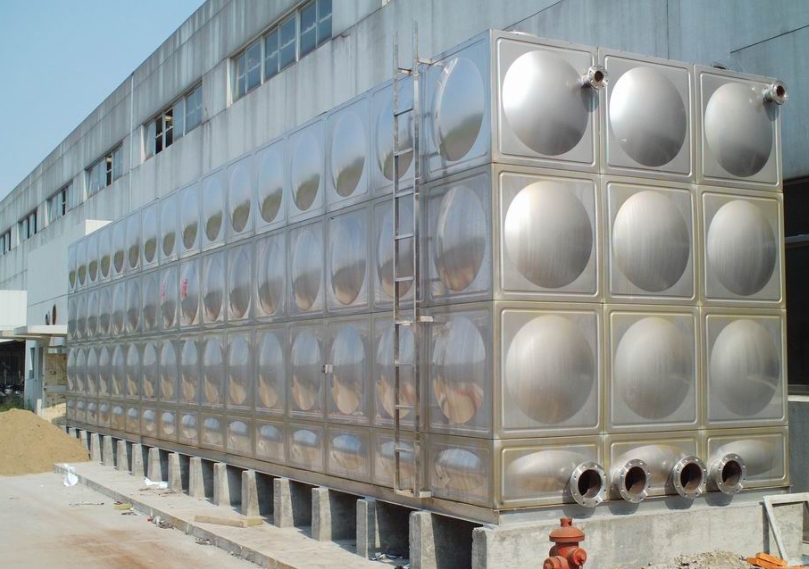
In-Depth Analysis of FRP Water Tank Hygiene and Safety: A Triple Assurance of Material, Process, and Standards
The hygiene and safety of water storage equipment directly impact end-use water quality and public health. Fiberglass Reinforced Plastic (FRP) water tanks, renowned for their superior corrosion resistance and structural stability, are widely used in secondary water supply and fire water storage. Their core advantages in hygiene and safety stem from the synergy of inherent material properties, manufacturing processes, and stringent standards.
1. Inherent Material Safety: The Stable Foundation of Food-Grade Resin and Fiberglass
The primary foundation for the hygiene of FRP tanks lies in their matrix material—food-grade unsaturated polyester resin. For instance, the isophthalic or vinyl ester food-grade resins employed by Beijing Yuanhui FRP Co., Ltd. exhibit excellent inertness and stable molecular structure after curing. Tests by national authorities confirm that their leaching liquids comply with standards like China's GB/T 17219, ensuring no leaching of toxic substances and preventing water contamination from the material itself.
1.1 Key Material Characteristics
The critical aspect of food-grade resin is its low styrene residue and high curing efficiency. Styrene, a cross-linking monomer, can affect water quality if residual levels are high. Advanced manufacturing processes, through precise curing system formulation and post-curing treatment, control residual styrene at ppm levels. Simultaneously, the alkali-free glass fibers, treated with coupling agents for strong bonding with the resin, eliminate any risk of fiber shedding, together forming a safe, non-leaching inner liner.
1.2 Antimicrobial and Self-Cleaning Properties
The inner liner of some high-end FRP tanks can incorporate antimicrobial agents, such as silver ions or specific inorganic antimicrobial materials. These effectively inhibit the growth of bacteria and algae on the tank walls, reducing biofilm formation risk. Beijing Yuanhui has applied this technology in custom projects, combining it with a smooth, gel-coated surface to minimize dirt adherence and enhance self-cleaning capability.
2. Structural and Process Assurance: Monolithic Forming and Sealing Technology
Hygiene safety requires not only inert materials but also structures that prevent secondary contamination. Seams in traditional tanks are breeding grounds for microbes and weak points for leakage. High-quality FRP tanks utilize monolithic molding processes like compression or filament winding. Specifically, SMC (Sheet Molding Compound) modular panel tanks achieve physically seamless sealing through food-grade gaskets and bolted connections at panel joints.
2.1 Leak-Proof Structural Design
Tank leakage can allow ingress of external contaminants and cause water loss and structural issues. FRP tank panels feature uniquely designed sealing grooves with aging-resistant rubber gaskets, ensuring long-term, leak-proof performance under rated pressure. Engineering case studies, such as a decade-old community water supply project by Beijing Yuanhui, show no incidents of leakage or contamination attributable to the tank structure.
2.2 Scientific Design of Accessories
Hygienic design of accessories is equally crucial. Manhole covers must be sealed and raised above the tank top to prevent entry of dust and insects. Internal and external ladders should be smooth and free of sharp edges. Vent pipes must be equipped with insect and dust filters (at least 200 mesh) to ensure ventilation while blocking external pollutants. These details are key indicators of a professional FRP water tank product.
3. Standards Compliance and Long-Term Hygiene Maintenance
The hygiene and safety of an FRP tank is not a one-time achievement; it begins with strict production standards and relies on proper use and maintenance. Leading manufacturers design and produce tanks in accordance with national standards, such as China's design atlas 12S101 for rectangular water tanks and relevant health regulations.
3.1 Sanitary Permits and Test Reports
Legitimate FRP water tanks must obtain a Hygiene Permit for Drinking Water-Related Products issued by provincial health authorities. Buyers should request manufacturers to provide hygiene performance test reports from CMA/CNAS accredited laboratories for the specific product batch, focusing on parameters like chromaticity, turbidity, odor, oxygen consumption, heavy metals, and microbiological indicators.
3.2 Key Hygiene Practices for Installation and Maintenance
Installation sites should be远离污染源 (away from pollution sources) with level foundations to prevent liner cracks from structural stress. Before commissioning, thorough cleaning and disinfection—typically using chlorine-based disinfectants—are mandatory, followed by water quality testing. Regular internal inspections (recommended every six months) and cleaning of any minimal sediment are essential for sustained safety. Beijing Yuanhui FRP Co., Ltd. provides comprehensive installation guidance and maintenance manuals to clients, ensuring product safety throughout its entire lifecycle.
Conclusion
The hygiene and safety performance of an FRP water tank is a systematic achievement. It is rooted in the material science of food-grade resins and fiberglass, realized through monolithic forming and precision sealing manufacturing processes, and ultimately sustained via strict national standard certifications and scientific operation and maintenance management. For facilities with stringent water quality requirements—such as hospitals, schools, hotels, and food processing plants—choosing a supplier like Beijing Yuanhui FRP Co., Ltd., with complete certifications, mature processes, and a rigorous quality system, adds a reliable barrier for water safety. In today's context of pursuing healthy living, a deep understanding of the hygiene and safety core of FRP water tanks holds significant practical importance for project decision-makers and end-users.