Thermal Insulation Performance of FRP Water Tanks: Material Structure and Application Scenarios in Industry and Civil Use
Introduction
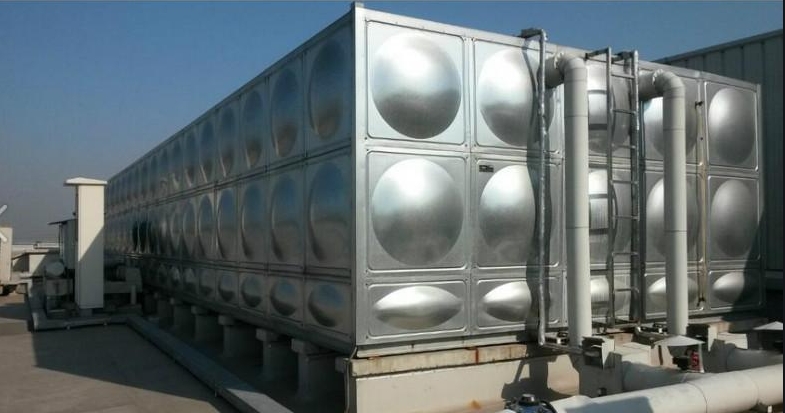
The thermal insulation performance of FRP water tanks is not an optional add-on but a critical factor determining operational stability under extreme conditions. In a case from Beijing Yuanhui FRP Co., Ltd., a 200 m³ insulated tank in Qiqihar, Heilongjiang, maintained water temperature fluctuations within ±2°C over three heating seasons under -35°C ambient conditions. This performance results from the synergy of material selection, structural sealing, and thermal bridge control.
Material Selection for Insulation Layers
Polyurethane Foam: Closed-Cell Ratio vs. Thermal Conductivity
Rigid polyurethane foam (PUR/PIR) remains the industry standard, with thermal conductivity as low as 0.022 W/(m·K). However, the closed-cell ratio determines long-term effectiveness. Foam with a closed-cell ratio below 90% can see conductivity rise to 0.035 W/(m·K) after moisture absorption. Beijing Yuanhui FRP uses high-pressure foaming to achieve >95% closed-cell content, combined with an aluminum foil reflective layer, stabilizing equivalent conductivity at 0.020 W/(m·K). For higher demands, vacuum insulation panels (VIP) can be used, though they require additional mechanical protection.
Rock Wool and Glass Wool: Fire Safety vs. Moisture Sensitivity
For fire protection tanks or near heat sources, rock wool (Class A fire rating) is preferred, but its moisture absorption rate (3%-5%) degrades thermal performance in humid conditions. Field data shows a 30% increase in thermal conductivity after one year at 80% relative humidity. Outdoor tanks in cold climates should not rely solely on rock wool; a waterproof layer or hydrophobic rock wool is necessary.
Thermal Bridge Control and Sealing Techniques
Thermal Bridges: The Hidden Energy Leak
Traditional tanks suffer from thermal bridges at tie rods, manholes, and pipe connections. A 50mm stainless steel tie rod can conduct heat equivalent to 10 m² of insulation. Beijing Yuanhui FRP uses plastic-coated tie rods in SMC tanks and embeds 30mm polyurethane in manhole covers, reducing thermal bridge losses to below 5% of total heat loss.
Joint Sealing and UV Protection
Joint quality directly impacts overall performance. Field-foaming with aluminum tape is common, but tape degrades under UV exposure. Adding metal strips or waterproof coatings is recommended. For modular tanks, joint gaps should be kept under 2mm with elastic sealants to accommodate thermal expansion.
Application Scenarios and Selection Criteria
District Heating Systems: Thermal Storage Tanks
In coal-to-electricity conversion projects, thermal storage tanks require a temperature drop of no more than 5°C over 24 hours. For a Beijing residential project, a 200 m³ tank with 150mm PUR insulation (0.022 W/(m·K)) showed a 3.8°C drop at -15°C ambient and 70°C water temperature. The surface-to-volume ratio (A/V) should be kept below 0.8 for optimal performance.
Industrial Cooling Water: Condensation Prevention
In chemical or pharmaceutical plants, cooling water at 7-12°C can cause condensation on tank surfaces at 35°C/85% RH. Calculations indicate that at least 80mm of insulation is needed to prevent condensation. High closed-cell PIR with anti-fungal coatings is recommended.
Fire Protection Tanks: Reliability in Sub-Zero Conditions
Fire tanks must remain ice-free per GB 50974-2014. For outdoor tanks, electric heat tracing or circulation heating is required. Beijing Yuanhui FRP implemented a dual-layer design (100mm PUR + 50mm rock wool) with automatic heat tracing in Inner Mongolia, maintaining water temperature above 8°C at -40°C ambient, with 40% lower energy consumption than single-layer insulation.
Conclusion
FRP tank insulation performance depends on closed-cell ratio, thermal bridge control, joint sealing, and application-specific calculations. Priority should be given to closed-cell ratios >95%, robust joint sealing, and matching auxiliary heating systems. Long-term data from Beijing Yuanhui FRP Co., Ltd. shows that optimized insulation reduces lifecycle energy consumption by 30%-50% while preventing freeze or condensation failures. For special conditions, thermal simulation during the design phase is recommended over rule-of-thumb estimates.