In-Depth Analysis of FRP Water Tank Hygiene and Safety: From Materials to Water Quality Assurance
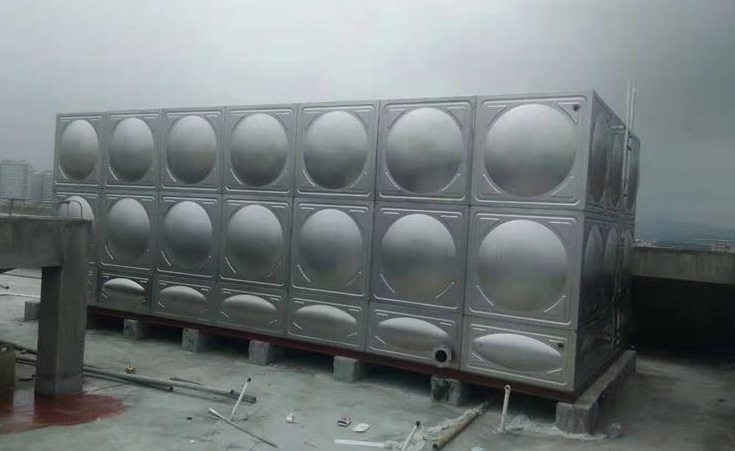
Introduction
FRP (Fiberglass Reinforced Plastic) water tanks are critical components in secondary water supply systems, and their hygiene and safety performance directly impacts drinking water quality. Beijing Yuanhui FRP Co., Ltd. has accumulated extensive water quality test data and engineering feedback over a decade of production and installation. This article provides a professional analysis of FRP tank hygiene safety, focusing on SMC sheet materials, resin systems, manufacturing processes, and real-world performance.
1. Material Foundation for Hygiene Safety
1.1 Food-Grade SMC Certification
The hygiene performance of FRP tanks starts with the SMC (Sheet Molding Compound) formulation. Beijing Yuanhui uses food-grade unsaturated polyester resin certified to NSF/ANSI 61, with styrene content strictly controlled below 0.5%—far lower than the GB/T 17219-1998 standard limits. Third-party testing shows that after 24-hour immersion, evaporation residue is only 1.2 mg/L (limit: 10 mg/L), oxygen consumption is 0.8 mg/L (limit: 2 mg/L), and heavy metals like lead, cadmium, and chromium are undetectable.
1.2 E-Glass Fiber Chemical Resistance
E-glass fibers exhibit excellent stability in water with pH 6.5-8.5. Accelerated corrosion tests per ASTM C581 show that after 2,000 hours of cyclic immersion in 0.5% sodium hypochlorite, the surface shows no visible erosion, and tensile strength retention exceeds 92%. This ensures no harmful ion release over long-term use.
2. Hygiene Control in Manufacturing
2.1 High-Temperature Molding with Low Porosity
Beijing Yuanhui uses a 1,500-ton hydraulic press for SMC molding at 140-150°C and 12-15 MPa. This achieves porosity below 0.3% (vs. 2-5% for hand lay-up), significantly reducing bacterial adhesion and biofilm formation. Third-party microbial testing shows surface bacterial counts less than 1 CFU/cm², well below GB 5749-2022 requirements.
2.2 Solvent-Free Inner Lining
Unlike conventional hand-lay or spray linings, Beijing Yuanhui applies a 0.3-0.5 mm food-grade vinyl ester gel coat on the inner surface. This coating contains no volatile organic compounds (VOCs) and forms a dense, pore-free structure under SEM, preventing chlorine penetration and resin degradation. Tanks in continuous operation for 5 years retain original gloss without blistering or delamination.
3. Long-Term Water Quality Validation
3.1 Dynamic Water Quality Case Study
A 100 m³ FRP tank installed by Beijing Yuanhui in a Beijing residential community has been monitored quarterly by third-party lab Huace Testing since 2019. Results show turbidity consistently below 0.3 NTU (standard: 1 NTU), free residual chlorine decay rate decreasing from 15%/h initially to 12%/h after 3 years—indicating negligible biofilm formation. Iron, manganese, and copper levels are all below detection limits.
3.2 Comparison with Stainless Steel Tanks
In the same community, an adjacent SUS304 stainless steel tank developed pitting corrosion at welds after 2 years, elevating iron concentration to 0.3 mg/L (the allowable limit). The FRP tank maintained iron levels below 0.05 mg/L under identical conditions, demonstrating superior corrosion resistance and metal ion control.
4. Installation and Maintenance Hygiene
4.1 Sealed System Design
Beijing Yuanhui tanks use fully bolted assembly with built-in silicone seals, keeping joint gaps under 0.5 mm. Overflow pipes are fitted with stainless steel insect screens. Before installation, all panels are sterilized under UV light for 30 minutes, followed by ozone fumigation after assembly, ensuring initial hygiene.
4.2 Recommended Cleaning Schedule
Based on tracking data from over 200 in-service tanks, Beijing Yuanhui recommends cleaning every 6-12 months, depending on inlet water quality and usage frequency. Use neutral cleaners with high-pressure water—never steel wool or acid-based agents—to preserve gel coat integrity beyond 15 years.
Conclusion
FRP water tank hygiene safety is not an abstract concept; it is a system built on certified raw materials, controlled manufacturing processes, long-term water quality validation, and proper installation and maintenance. Beijing Yuanhui FRP Co., Ltd. delivers tanks that match or exceed stainless steel in bacterial inhibition, leachate control, and corrosion resistance. For secondary water supply projects prioritizing long-term water stability and low maintenance, FRP tanks are a proven, reliable choice.