How Long Does a Fiberglass Water Tank Last? Key Factors Affecting Lifespan and Maintenance Guide
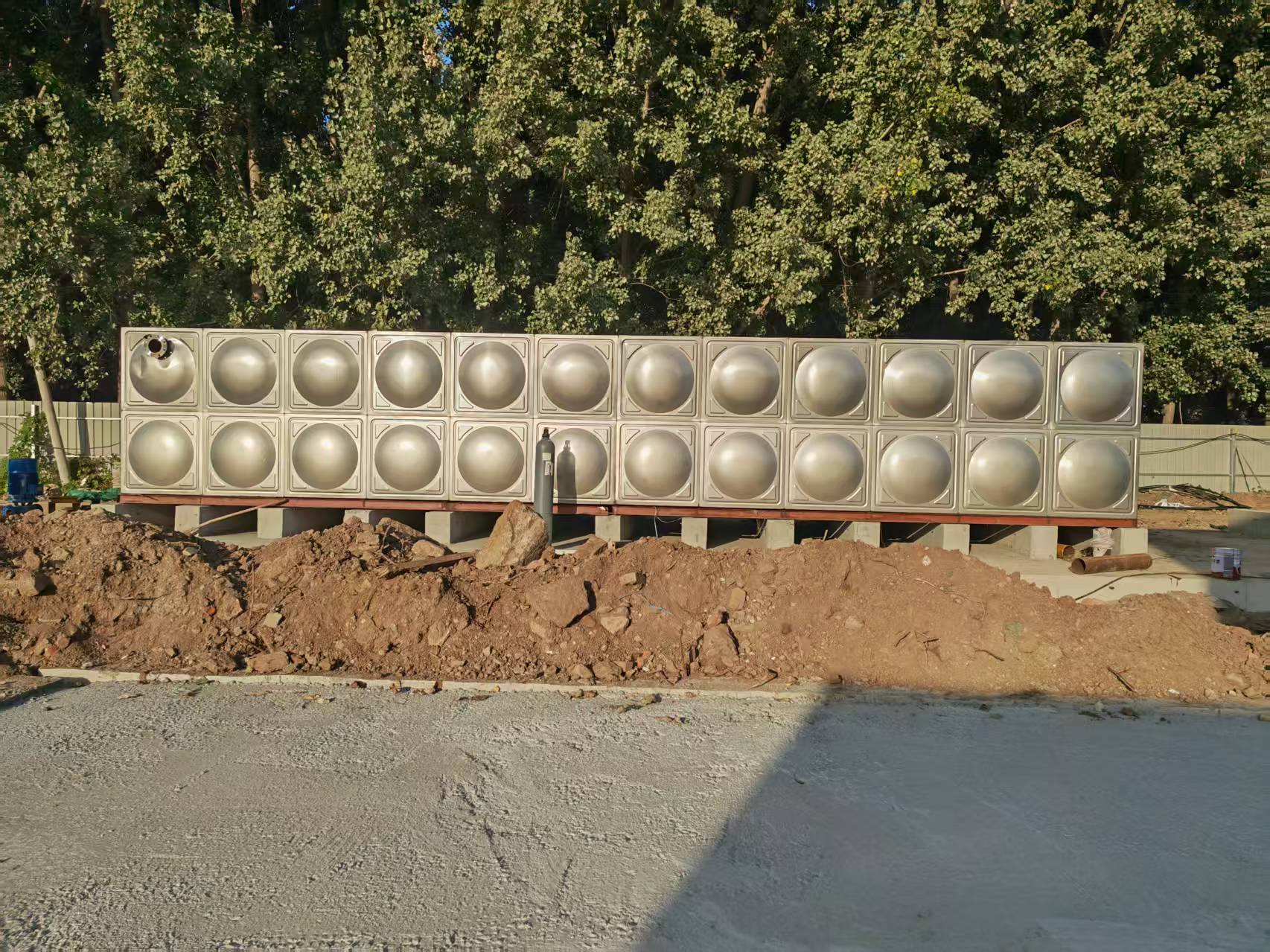
How Long Does a Fiberglass Water Tank Last? Key Factors Affecting Lifespan and Maintenance Guide
Fiberglass reinforced plastic (FRP) water tanks are widely used in commercial buildings, industrial facilities, and residential complexes due to their light weight, high strength, and corrosion resistance. A common question from users is: "How many years can a fiberglass water tank actually serve?" The answer is not a fixed number. Based on field data from Beijing Yuanhui FRP Co., Ltd., actual lifespans range from 10 to over 30 years, heavily influenced by material quality, installation conditions, water chemistry, and maintenance routines.
1. Raw Materials and Manufacturing Quality
The backbone of an FRP tank is SMC (Sheet Molding Compound) and resin gel coat. High-quality SMC contains 25%–30% glass fiber content, with isophthalic or vinyl ester resin offering superior hydrolysis resistance. Low-cost alternatives often use recycled resin or insufficient fiber, leading to surface cracking, yellowing, and leaks within 3–5 years. Beijing Yuanhui uses only virgin SMC and compression molding to ensure uniform density and zero voids—a foundation for a 20+ year service life.
2. Installation Environment and Foundation
Poor installation accelerates tank failure. Critical issues include:
- Uneven foundation – Causes bottom panel deformation or cracking under water load.
- UV exposure – Outdoor tanks without sunshades suffer rapid gel coat degradation. Data shows a 40% lifespan reduction under continuous sunlight.
- Freeze-thaw damage – In northern China, temperatures below -15°C can freeze internal water, expanding and cracking panels. Beijing Yuanhui recommends 5–10 cm polyurethane insulation and electric heat tracing for cold regions.
A 2021 case from Tianjin: an unshaded outdoor FRP tank showed severe chalking and fiber exposure on the south-facing panels after only 7 years, due to combined UV and high surface temperature (60°C+ in summer).
3. Water Quality and Internal Corrosion
While FRP resists many chemicals, certain water conditions attack the resin matrix:
- High chlorine – Residual chlorine >0.5 mg/L can penetrate the resin, causing fiber-resin debonding.
- Extreme pH – pH < 4 or > 9 dissolves the resin surface, weakening the tank over time.
- Microbial growth – Algae and bacteria produce organic acids that locally corrode the gel coat. Cleaning every 6 months is recommended.
For special water types (e.g., high chloride, low pH), Beijing Yuanhui offers customized corrosion-resistant inner linings that extend service life beyond 25 years.
4. Regular Maintenance and Inspection
Many users mistakenly believe FRP tanks are maintenance-free. Regular checks are vital:
- Annually inspect seals and bolts for leaks.
- Check corrosion at manholes and pipe connections.
- Fill the tank and observe for deformation or noise over 24 hours.
- For outdoor tanks, visually inspect joints and sun-exposed surfaces in spring and autumn.
Industry data shows properly maintained tanks outlast neglected ones by 5–8 years. Beijing Yuanhui provides periodic inspection services to help customers optimize tank longevity.
Conclusion
The lifespan of a fiberglass water tank is not a fixed number—it is the cumulative result of material quality, installation precision, water chemistry, and maintenance diligence. Choosing a reputable manufacturer like Beijing Yuanhui FRP Co., Ltd., combined with proper installation and regular care, ensures 20+ years of reliable service. Cutting corners on quality may lead to failure within a decade. Invest in quality and upkeep for true long-term savings.