FRP Water Tank Modular Assembly: A Technical Breakdown from SMC Molding to On-Site Installation
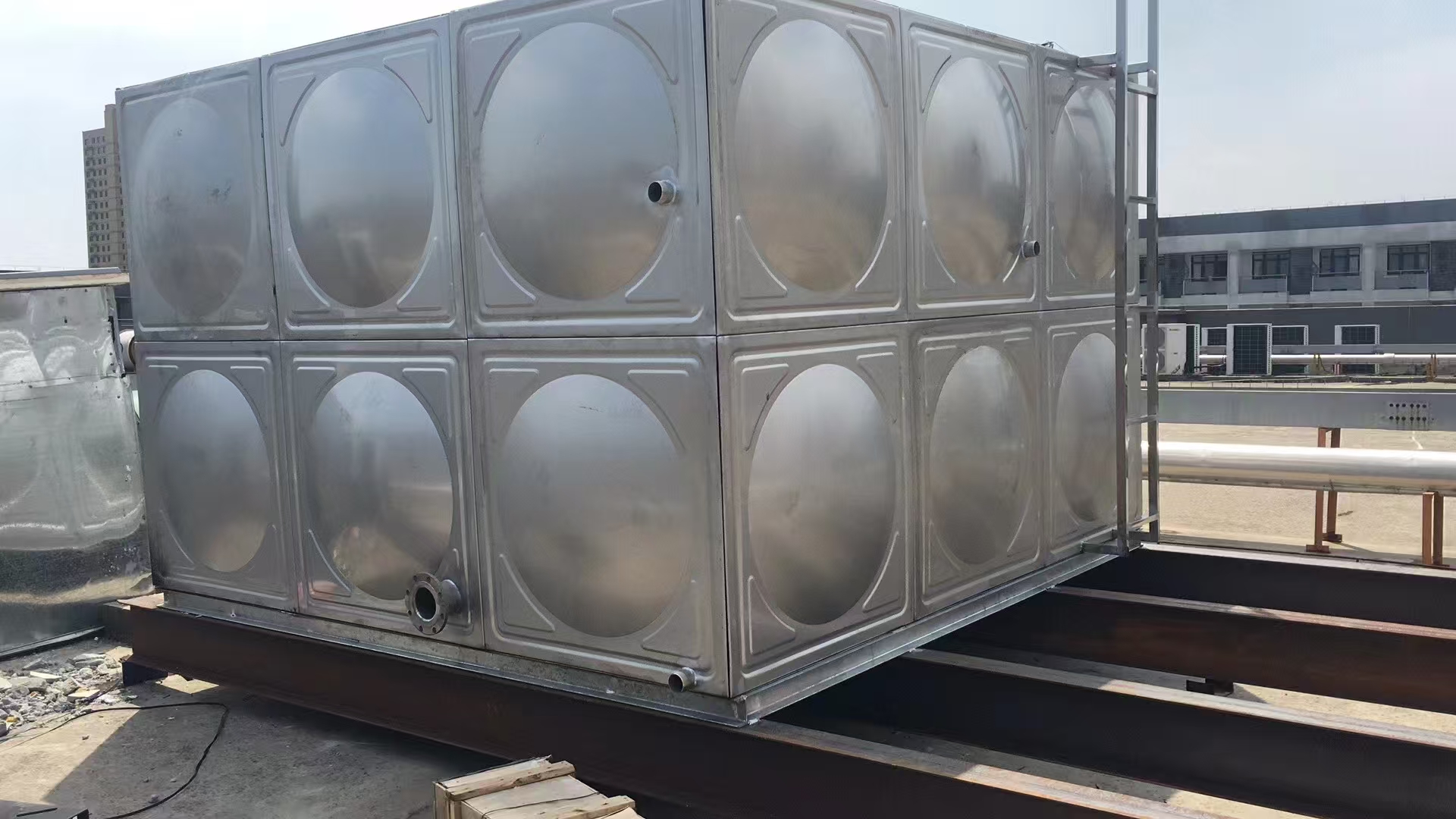
Introduction
The modular assembly of FRP (Fiberglass Reinforced Plastic) water tanks relies on SMC (Sheet Molding Compound) panels manufactured under controlled factory conditions, which are then transported to site and bolted together using standardized connectors and sealing systems. Compared to welded stainless steel tanks or concrete reservoirs, modular FRP tanks reduce logistics costs by over 30% and cut installation time by 50%. Beijing Yuanhui FRP Co., Ltd. has completed more than 2,000 modular tank projects across northern China. This article breaks down the technical workflow and quality control measures behind this process.
SMC Panel Manufacturing: The Foundation of Modularity
Material Formulation and Mechanical Properties
A standard SMC formulation consists of unsaturated polyester resin (28–32%), E-glass fiber (25–30%), calcium carbonate filler (35–40%), plus curing agents and mold release additives. Panels are compression-molded at 140–160°C and 10–15 MPa. The resulting mechanical properties include flexural strength ≥120 MPa, Barcol hardness ≥45, and water absorption ≤0.5%. Beijing Yuanhui uses 1,000-ton hydraulic presses to produce 1.0 m × 1.0 m and 1.0 m × 0.5 m panels in thicknesses of 5 mm, 8 mm, and 10 mm, selected based on water depth requirements.
Dimensional Precision for Seamless Assembly
Panel edge flatness must be within ±0.5 mm to avoid gaps or stress concentrations during assembly. Beijing Yuanhui incorporates a 0.2° draft angle in mold design and uses laser-guided trimming to keep edge dimension errors below 0.3 mm. Bolt holes are pre-drilled at 250 mm centers with a 14 mm diameter, matching M12 stainless steel bolts.
Sealing and Bracing: Ensuring Watertightness and Structural Integrity
EPDM Gasket and Tongue-and-Groove Joint
Static sealing between panels is achieved with EPDM rubber gaskets (compression set ≤25% at 70°C×24h, tensile strength ≥10 MPa). The gasket has an Ω-shaped cross-section that fits into a groove on each panel edge. When bolts are torqued, the gasket compresses by 30–40%, forming a reliable water barrier. For tanks exceeding 100 m³ capacity, Beijing Yuanhui adds a polysulfide sealant layer behind the gasket, reducing leakage probability to below 0.1%.
Internal Tie Bars and External Stiffeners
Water pressure forces panels outward. Internal tie bars made of 304 stainless steel round bars (Ø12–16 mm) are flanged at both ends and bolted to embedded nuts on the panel inner surface. Tie-bar spacing is calculated per water depth: 1.0 m × 1.0 m for 2 m depth, tightened to 0.8 m × 0.8 m for 4 m depth. External stiffeners use equal-leg angle steel (50×50×5 mm) welded into a grid pattern. A 3 mm rubber pad is placed between the angle steel and panels to prevent stress cracking.
On-Site Assembly Workflow
Foundation Inspection and Base Panel Installation
Concrete foundation flatness must be ≤5 mm per 2 m, corrected with cement mortar if needed. Embedded steel plates (Q235, 10 mm thick) align with panel bolt holes. Base panels are laid starting from one corner; bolt torque is set at 40–50 N·m—too high risks edge cracking, too low compromises sealing.
Side and Top Panel Erection
Side panels are lifted using adjustable aluminum alloy support frames. Each panel is immediately bolted to the base and adjacent panels, and tie bars are installed. For side heights above 2.5 m, panels are assembled in two tiers with a horizontal reinforcement band between them. Top panels are installed last, leaving a 600 mm × 600 mm manhole and pipe openings. The manhole rim is reinforced with a 3 mm stainless steel wrap to prevent deformation under foot traffic.
Hydrostatic Testing
After assembly, the tank is filled to design water level and left for 48 hours. Per JC/T 658.1-2007, a water level drop ≤3 mm passes inspection. Beijing Yuanhui also checks bolt tension during the test; any seepage is addressed by locally releasing pressure, retorquing bolts, and reapplying sealant.
Quality Control and Troubleshooting
Panel Inspection
Each SMC panel is visually inspected for bubbles, cracks, or fiber exposure. Dimensional sampling at 5% rate requires thickness deviation ≤0.2 mm and diagonal difference ≤1.0 mm.
Three Critical Control Points During Assembly
- Bolt torque consistency: Use a digital torque wrench—pre-tighten corner bolts to 30 N·m, then tighten diagonally to 40 N·m.
- Tie-bar tension: Bars should feel firm but not overtight; excessive tension causes panel inward bowing.
- Gasket positioning: The gasket must fully seat in the groove without twisting. Beijing Yuanhui preheats gaskets to 20°C in winter for better flexibility.
Conclusion
Modular assembly gives FRP water tanks clear advantages: standardized panels simplify logistics and warehousing; on-site assembly requires no heavy lifting equipment; and the tank can be disassembled and relocated. Beijing Yuanhui FRP Co., Ltd. has extended single-compartment capacity to 500 m³ through optimized SMC molding and sealing design, with service life exceeding 15 years. For buyers, selecting a supplier with in-house molding capability and certified installation crews is essential to project success.