In-Depth Analysis of FRP Water Tank Corrosion Resistance: Full-Chain Protection from Resin Matrix to Interface Design
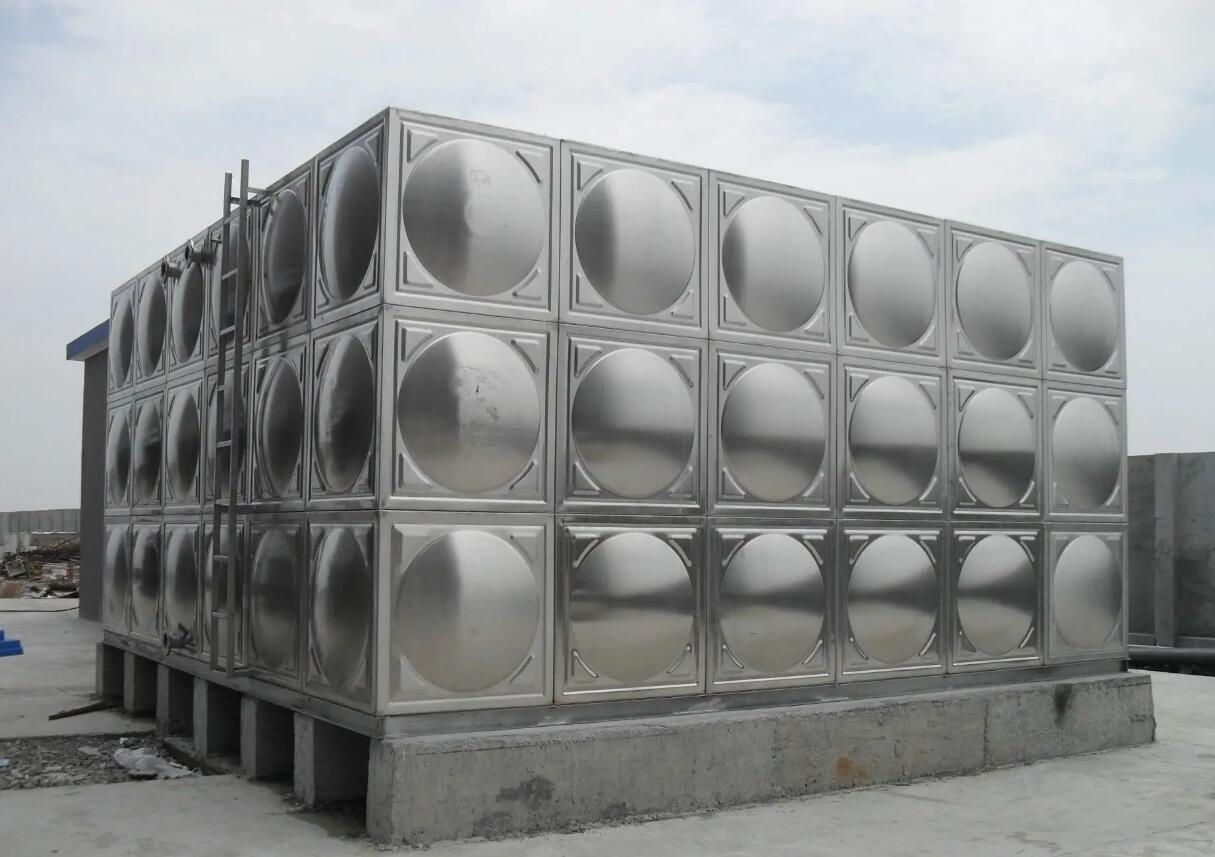
In-Depth Analysis of FRP Water Tank Corrosion Resistance: Full-Chain Protection from Resin Matrix to Interface Design
The corrosion resistance of an FRP water tank is not a single material property but a system engineered through resin matrix, reinforcing fiber, interfacial coupling agents, structural auxiliary layers, and construction environment. This article presents real-world data from Beijing Yuanhui FRP Co., Ltd., applied in multiple industrial and municipal projects across northern China, and breaks down the anti-corrosion mechanism into four key dimensions with reproducible engineering recommendations.
1. Resin Matrix: The First Line of Defense
The corrosion resistance of an FRP water tank primarily depends on the resin type. Significant differences exist between unsaturated polyester resin (UPR) and vinyl ester resin (VER) when exposed to chemical media. Test data show: after 720 hours of immersion in a 5% sulfuric acid solution, the Barcol hardness of general-purpose orthophthalic resin decreases by 38%, while bisphenol A epoxy vinyl ester resin shows only a 6.2% decrease. For potable water tanks, food-grade resin must be used with a residual styrene content below 0.5%. In a water plant project in North China, Beijing Yuanhui used isophthalic resin modified with NPG (neopentyl glycol), extending the tank's service life to over 15 years in a chlorinated environment.
1.1 Degree of Cure and Permeability
The degree of cure directly affects anti-corrosion performance. Incomplete curing creates micro-voids from unreacted styrene, accelerating moisture penetration. Laboratory data indicate: increasing the degree of cure from 85% to 95% reduces water vapor transmission rate by approximately 67%. Therefore, strict control of curing agent ratio and post-cure temperature profile is essential. Beijing Yuanhui uses a stepped heating process (40°C/2h → 60°C/4h → 80°C/2h) to achieve a cure degree ≥92%.
2. Glass Fiber and Interface: Stress Transfer and Chemical Barrier
Glass fiber provides mechanical strength, but the fiber-resin interface is the weak link in corrosion resistance. Capillary action along the interface accelerates corrosion. Silane coupling agent treatment can increase interfacial shear strength from 12 MPa (untreated) to 28 MPa, while reducing interface water absorption by approximately 45%. In desalination projects using C-glass (acid-resistant), vinyl ester resin must be used to prevent fiber degradation from alkali attack. Beijing Yuanhui implemented a three-layer interface design in a coastal project: inner C-glass + vinyl ester, middle E-glass + isophthalic resin, and outer UV-resistant gel coat, successfully withstanding a chloride ion concentration of 35,000 ppm.
3. Structural Auxiliary Layers: Gel Coat and Barrier Layer Synergy
A resin-rich layer (gel coat) of 0.5-0.8 mm serves as the first physical barrier on the inner tank surface. However, once micro-cracks appear in the gel coat, the underlying laminate is rapidly exposed to corrosive media. Solution: add a polyester surface veil (~0.3 mm thick) between the gel coat and structural layer to disperse stress concentration and prevent crack propagation. Additionally, a radius transition (R ≥ 50 mm) should be applied at the tank bottom-to-sidewall junction to eliminate right-angle stress zones. Beijing Yuanhui's fatigue tests show that R-angle joints withstand 10,000 cycles at 1.2x working pressure without leakage, while right-angle joints fail at cycle 2,800.
4. Construction Environment and Long-Term Maintenance
Final corrosion performance depends on controlled construction conditions. Key parameters: molding temperature 18-30°C, relative humidity below 75%. During winter construction, Beijing Yuanhui uses mobile infrared heating to stabilize mold temperature at 25±2°C, preventing delayed cure from low temperatures. After installation, the tank must undergo at least 72 hours of full-water static testing, with pH and iron ion concentration monitored. For long-term maintenance, inspect gel coat wear every two years; local repairs can be made with epoxy putty followed by gel coat re-spraying.
Conclusion
The corrosion resistance of FRP water tanks results from the integrated optimization of material selection, interface design, structural layering, and construction control. Beijing Yuanhui FRP Co., Ltd. achieves stable performance under alternating acid-alkaline, high-chloride, and high-temperature conditions through resin modification, interface coupling, auxiliary layer design, and process integration. When selecting a product, users should request corrosion test reports and cure degree data specific to their water chemistry, rather than relying solely on material standards.