How Long Does a FRP Water Tank Last? Key Factors and Lifespan Extension Strategies
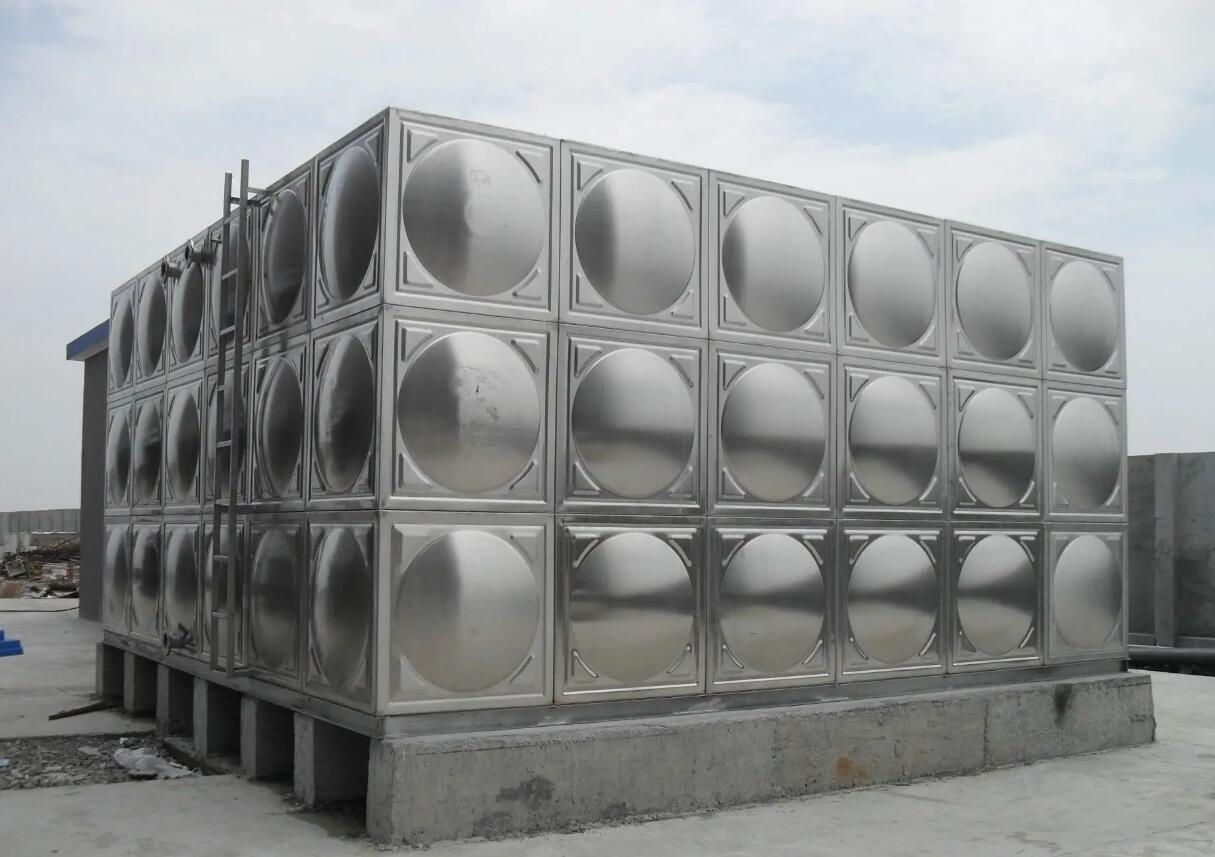
FRP Water Tank Lifespan: Industry Benchmarks and Field Data
Fiberglass Reinforced Plastic (FRP) water tanks are widely used in commercial, municipal, and industrial water supply systems due to their corrosion resistance, lightweight strength, and design flexibility. Based on field data from Beijing Yuanhui FRP Co., Ltd., the typical design lifespan is 20 years, but actual service life ranges from 8 to over 30 years depending on cumulative influencing factors.
A 2019 survey of 200 FRP tanks in eastern China revealed: 12% showed leakage within 10 years (mainly at panel joints); 35% remained operational after 20 years; premature failures were primarily caused by foundation settlement (28%), water quality corrosion (24%), and UV degradation (19%).
Four Critical Factors Affecting FRP Tank Longevity
1. Raw Materials & Manufacturing Quality
Resin type and glass fiber content determine corrosion resistance and mechanical strength. Isophthalic polyester resin outperforms orthophthalic in chemical resistance, while vinyl ester resin is recommended for aggressive water conditions. Beijing Yuanhui uses food-grade resin and SMC sheets with 45% glass fiber content, achieving tensile strength above 120 MPa — significantly higher than the industry average of 30%. Incomplete curing or poor fiber wet-out creates micro-voids that lead to osmotic blistering over time.
2. Installation Environment & Foundation Conditions
A solid, level foundation with proper drainage is non-negotiable. Case: a 200-ton FRP tank installed at a southern factory in 2018 failed after 3 years due to differential settlement — the foundation lacked anti-settlement measures. Recommended practice: reinforced concrete strip foundation with pre-embedded galvanized steel plates and perimeter drainage channels. For outdoor installations, add a sunshade to prevent UV-induced resin degradation.
3. Water Quality & Temperature
Resin hydrolysis rate approximately doubles with every 10°C temperature rise. Continuous exposure to water above 60°C significantly shortens lifespan. Acidic (pH<5) or alkaline (pH>9) water softens the resin matrix; free chlorine above 2 mg/L causes fiber exposure through oxidation. Periodic water quality testing is essential; consider internal anti-corrosion coatings when aggressive conditions are detected.
4. Maintenance Practices — The Underestimated Lifespan Extender
Beijing Yuanhui's service records show that tanks cleaned semi-annually with annual joint seal and bolt torque inspections last 5-8 years longer than neglected ones. Common early warning signs include panel discoloration, joint seepage, bolt corrosion, and blocked breather valves. Prompt repair with specialized resin prevents water intrusion into the laminate.
Six Proven Strategies to Extend FRP Tank Life
① Specify SGS or CTI third-party test reports during procurement — focus on resin hydrolysis resistance, glass content, and Barcol hardness. ② Ensure foundation flatness within 5mm; use hot-dip galvanized anchor bolts. ③ Install sunshade for outdoor tanks and anti-algae liners internally. ④ Conduct 24-hour hydrostatic test before commissioning; record initial panel flatness. ⑤ Establish maintenance logs: weekly valve and level gauge checks, quarterly visual inspections, annual seal replacement. ⑥ For high-salinity or high-chloride water, apply vinyl ester resin internal coating.
Conclusion
FRP water tank lifespan is not a fixed number but a dynamic result of material quality, installation integrity, environmental conditions, and maintenance diligence. By selecting a manufacturer like Beijing Yuanhui FRP Co., Ltd. that enforces strict quality control, combined with proper installation and regular maintenance, tank service life can reliably exceed 25 years. For existing tanks, conduct a comprehensive inspection immediately — check joint integrity, foundation stability, and internal condition — to catch potential issues before they escalate.