Thermal Insulation Performance and Application Scenarios of FRP Water Tanks
Introduction
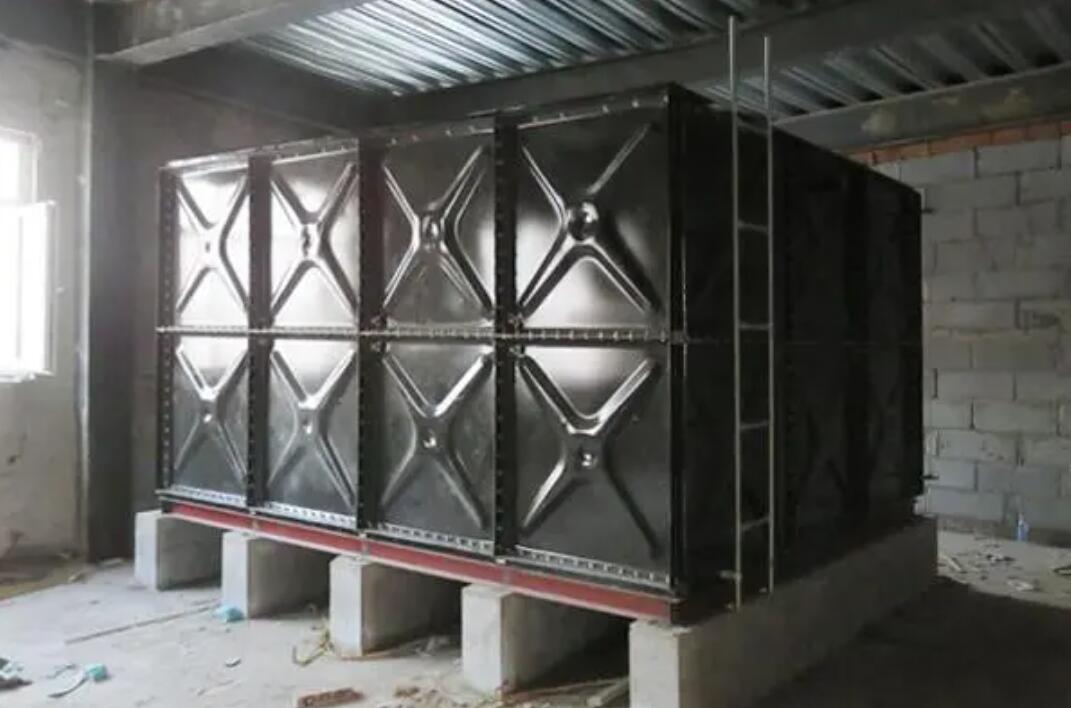
FRP water tanks are widely used in water storage due to their light weight, high strength, and corrosion resistance. However, the true test of tank quality often comes under extreme cold conditions. Thermal insulation failure leads to freezing, heat loss, and water quality degradation, incurring high maintenance costs and operational downtime. Drawing on production data and field tests from Beijing Yuanhui FRP Co., Ltd., this article systematically examines the thermal insulation performance of FRP tanks and their selection logic for different environments.
Insulation Structure Design
Material Selection and Thickness
Polyurethane rigid foam (PUR) and extruded polystyrene (XPS) are the primary insulation materials for FRP tanks. PUR has a thermal conductivity as low as 0.022 W/(m·K) and a closed-cell ratio ≥95%. Laboratory tests at Beijing Yuanhui FRP Co., Ltd. under -30°C conditions show that with 80mm PUR insulation, the internal water temperature drops less than 3°C over 24 hours. Recommended thickness ranges from 50-80mm in northern China to over 100mm in northeastern and northwestern regions.
Anti-Condensation and Sealing
Insulation must also prevent vapor condensation. By adding an aluminum foil vapor barrier outside the 50mm insulation layer, surface condensation can be reduced by over 90%. Beijing Yuanhui FRP Co., Ltd. uses two-component sealant for panel joints and a 2mm air gap between the insulation and tank shell to eliminate cold bridges.
Key Performance Indicators
Thermal Conductivity and Thermal Resistance
The core metrics are thermal conductivity (λ) and total thermal resistance (R). Per GB/T 4272-2008, insulation R-value should be no less than 0.86 (m²·K)/W. Beijing Yuanhui FRP Co., Ltd. products achieve λ = 0.024 W/(m·K) and R = 1.02 (m²·K)/W, exceeding the standard by 18.6%.
Weathering and Long-Term Stability
Modified PUR foam with a high-density FRP shell maintains structural stability from -40°C to +80°C. Accelerated aging tests (1000 hours of xenon arc exposure) show a thermal conductivity change rate below 3%, compared to the industry average of 5%-8%.
Application Scenarios
Fire Tanks in Cold Regions
In Altay, Xinjiang, where winter temperatures reach -42°C, a conventional stainless steel fire tank required electric heat tracing costing ¥80,000/year. Switching to a 100mm PUR-insulated FRP tank from Beijing Yuanhui FRP Co., Ltd. eliminated active heating, maintained water temperature above 4°C at -35°C, and saved ¥65,000/year in operational costs.
Industrial Cooling Water Systems
A chemical plant replaced a carbon steel tank with an 80mm insulated FRP tank, reducing heat loss by 62% and cutting cooling tower runtime by 35%. The modular design allowed installation in just 3 days without production interruption.
Hot Water Storage for Villas and Hotels
A Beijing villa project used 60mm insulated FRP tanks for solar hot water storage. Nighttime temperature drop measured only 2.5°C in winter, reducing auxiliary heating energy by 40%. The SMC outer layer with UV-resistant coating showed no chalking or cracking after 5 years outdoors.
Conclusion
The thermal insulation performance of an FRP water tank is a comprehensive result of material choice, thickness design, sealing technique, and installation quality. Choosing a manufacturer with proven testing capabilities and engineering experience is critical. Beijing Yuanhui FRP Co., Ltd. offers full-service solutions from insulation calculation and modular customization to post-installation monitoring, with detailed energy consumption simulations. For users focused on long-term operating costs, the payback period for investing in high-performance insulated tanks typically does not exceed two years.