How Long Does a FRP Water Tank Last? Key Factors and Maintenance Strategies
Introduction
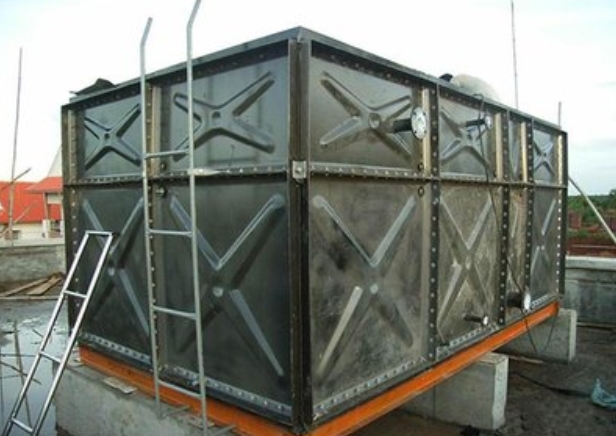
FRP (Fiberglass Reinforced Plastic) water tanks are widely used in construction, fire protection, industrial, and residential water supply systems due to their light weight, high strength, corrosion resistance, and ease of installation. A common question is: How long does an FRP water tank actually last? The answer ranges from 15 to 30 years. This variability depends on a combination of factors including raw material quality, manufacturing process, installation environment, water chemistry, and maintenance practices. Beijing Yuanhui FRP Co., Ltd. has observed over two decades of production that neglecting these factors can cut tank life in half, while scientific management can push service life beyond 30 years. This article breaks down the key determinants from five dimensions: materials, process, environment, water quality, and maintenance.
1. Raw Material Quality: The Genetic Blueprint of Tank Life
1.1 Resin Type and Grade
Resin serves as the matrix of the composite, directly influencing corrosion resistance, thermal stability, and aging performance. Among commonly used unsaturated polyester resins, orthophthalic resin is cost-effective but offers inferior water resistance and weatherability compared to isophthalic or vinyl ester resins. Accelerated aging tests show that panels made with isophthalic resin retain 92% of their Barcol hardness after 10 years, while orthophthalic panels drop to 80% or lower. For fire water tanks or applications involving higher water temperatures, vinyl ester resin is recommended.
1.2 Fiberglass Selection
E-glass (alkali-free) fiber is the industry standard. Some low-cost products use C-glass (alkali-containing) fiber, which shows significant strength degradation under prolonged immersion. Beijing Yuanhui FRP Co., Ltd. conducts accelerated aging tests (80°C water immersion for 1,000 hours) on all outgoing panels. Panels with high-quality E-glass retain over 85% of flexural strength, whereas C-glass panels retain only about 65%.
2. Manufacturing Process: Quality Lies in the Details
2.1 Degree of Cure and Post-Curing
Insufficiently cured resin layers are prone to hydrolysis when in continuous contact with water, leading to surface softening, blistering, or delamination. Reputable manufacturers control curing temperature and time during compression molding or hand lay-up, and often apply post-curing (e.g., 60°C for 4 hours) to increase crosslink density. A field survey of 23 water tanks in northern China revealed that tanks with post-curing had zero leakage within five years, while those without post-curing had a 12% leakage rate by the third year.
2.2 Interlayer Bonding and Void Control
In hand lay-up processes, improper fiber wet-out or entrapped air bubbles create micro-voids between layers. Water molecules penetrate these voids, and freeze-thaw cycles gradually destroy interfacial bonding. Vacuum-assisted molding or mechanical roller debulking can reduce void content below 1%, whereas manual methods often leave 3%–5% voids.
3. Installation Environment and Service Conditions
3.1 Foundation and Support Structure
An uneven base or excessive support spacing causes localized stress concentration in the bottom panel, leading to deformation or cracking over time. Industry standards require foundation levelness deviation ≤5 mm/m and support beam spacing ≤600 mm. Beijing Yuanhui FRP Co., Ltd. handled a case where a chemical plant installed a tank directly on an uneven concrete floor; radial cracks appeared on the bottom panel within two years. After re-leveling the foundation, the same batch of tanks has been in normal service for eight years.
3.2 Temperature and UV Exposure
FRP water tanks are generally rated for operating temperatures between -40°C and 60°C. Above 70°C, the resin begins to soften and mechanical properties degrade. For outdoor installations, ultraviolet radiation causes surface resin to chalk, discolor, and gradually erode the fiber layer. Measured data show that unprotected tanks exposed outdoors for five years experience a 30%–40% drop in surface hardness, while UV-coated tanks lose only 12% over ten years.
4. Water Chemistry and Biological Attack
4.1 pH and Ion Content
Neutral water (pH 6.5–8.5) has minimal aggressive effect on resin. Acidic or alkaline water accelerates resin hydrolysis. For example, high chloride levels in tap water or recirculating cooling water can diffuse into the resin-fiber interface, initiating micro-cracks. Industry guidelines recommend using corrosion-resistant specialty resin when stored water pH is below 4 or above 9.
4.2 Biofouling
Algae and bacteria can grow on the inner surface of tanks that are not cleaned regularly. Their metabolic byproducts, including organic acids, locally attack the resin layer. Periodic cleaning (recommended every six months) and the use of food-grade interior resin can effectively mitigate biofouling.
5. Maintenance: Practical Strategies for Extended Life
A comprehensive maintenance plan should include:
- Quarterly visual inspection for discoloration, blistering, cracks, or leaks.
- Annual interior cleaning and water quality testing (pH, microbial indicators).
- Every 2–3 years, inspect manhole covers, flanges, and seal gaskets; replace if necessary.
- For outdoor tanks, reapply UV-protective coating every three years.
Conclusion
The service life of an FRP water tank is not a fixed number but the outcome of interactions among materials, manufacturing, environment, water chemistry, and maintenance. By selecting high-quality materials (e.g., isophthalic resin, E-glass fiber), strictly controlling curing parameters, ensuring proper installation, and performing routine maintenance, tank life can be extended to 25–30 years. For those planning to purchase or currently using FRP tanks, it is advisable to choose manufacturers like Beijing Yuanhui FRP Co., Ltd. that offer comprehensive quality testing and after-sales support, and to establish a scientific maintenance record. Extending tank life ultimately reduces total lifecycle cost and contributes to sustainable water resource management.