Service Life and Influencing Factors of FRP Water Tanks: An In-Depth Analysis
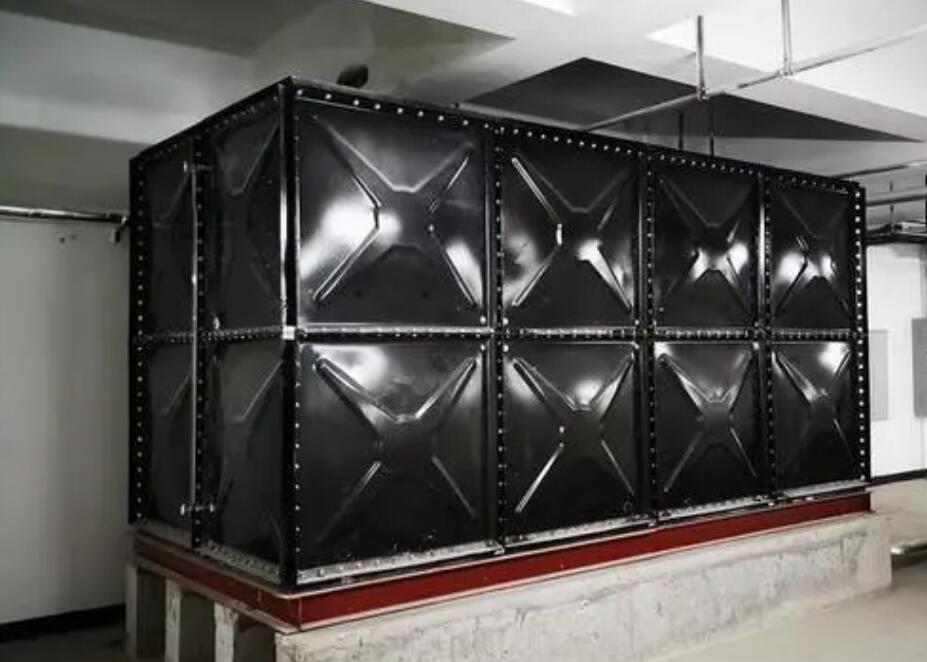
1. Typical Service Life and Industry Standards of FRP Water Tanks
Fiberglass reinforced plastic (FRP) water tanks are widely used in construction, municipal water supply, and fire protection due to their light weight, high strength, corrosion resistance, and ease of installation. According to production and after-sales data from Beijing Yuanhui FRP Co., Ltd., tanks manufactured with high-quality resin and continuous filament winding technology achieve a design life of 15 to 20 years under standard conditions, with some well-maintained units exceeding 25 years. However, actual longevity is significantly influenced by multiple factors.
The Chinese industry standard JC/T 658.1-2007 specifies performance requirements but does not mandate service life. Users should evaluate the raw material grades, molding processes, and warranty terms of manufacturers. Beijing Yuanhui FRP Co., Ltd. offers a 10-year structural warranty on all tanks and recommends periodic professional inspections.
2. Four Key Factors Affecting FRP Tank Longevity
2.1 Raw Material Quality and Resin System
Resin is the matrix material of FRP, determining chemical resistance, temperature tolerance, and aging resistance. Unsaturated polyester resin (UPR) is the mainstream choice, but grades vary in hydrolysis resistance. Orthophthalic resin is prone to ester bond hydrolysis in long-term water immersion, reducing strength, while isophthalic or vinyl ester resins offer superior water resistance and can extend tank life by 3-5 years. Beijing Yuanhui FRP Co., Ltd. uses isophthalic water-resistant resin and strictly controls the curing agent ratio to achieve a curing degree above 95%, minimizing micro-porosity and water permeation.
2.2 Molding Process and Fiber Content
FRP tanks are manufactured by hand lay-up, spray-up, or filament winding. Continuous filament winding provides higher structural strength and impermeability due to orderly fiber arrangement and controlled resin content (typically 35%-45%). According to the FRP/Composites journal, winding-process tanks exhibit 20%-30% higher tensile strength and over 40% lower medium permeability than hand lay-up tanks. Beijing Yuanhui FRP Co., Ltd. employs automated winding machines with tension control systems to ensure uniform fiber distribution and eliminate voids and dry spots.
2.3 Installation Environment and Operating Conditions
Installation location directly affects aging rate. Outdoor tanks are exposed to ultraviolet (UV) radiation, which accelerates surface resin degradation, causing yellowing, chalking, and micro-cracks. UV-resistant gel coat or shading structures are recommended for outdoor tanks. Water temperature is also critical: when storing water above 60°C, if the resin's glass transition temperature (Tg) is lower than the service temperature, material softening and deformation occur. Beijing Yuanhui FRP Co., Ltd. offers heat-resistant resin options with Tg up to 120°C for high-temperature applications.
Water quality matters. Chloride ion concentrations above 500 mg/L (common in industrial circulating water or coastal groundwater) can induce stress corrosion in glass fibers, leading to structural failure. Case study: In 2019, a chemical plant in Shandong used a standard FRP tank for chlorinated wastewater; leakage occurred after only 3 years. After replacement with a corrosion-resistant custom tank from Beijing Yuanhui FRP Co., Ltd., the system has operated reliably.
2.4 Maintenance Management and Inspection Frequency
Regular maintenance is the most cost-effective way to extend tank life. A visual inspection every six months is recommended, focusing on internal surfaces for blisters, cracks, discoloration, and aging of flanges and manhole seals. Sediment should be removed every 1-2 years to prevent microbial growth and scaling. According to Beijing Yuanhui FRP Co., Ltd.'s service records, tanks receiving annual maintenance last on average 5 years longer than those without.
3. How to Extend the Service Life of FRP Water Tanks
Based on the factors above, extending FRP tank life involves the following steps:
- Selection phase: Clearly communicate water quality, temperature, and installation location requirements to the supplier. Beijing Yuanhui FRP Co., Ltd. offers free technical consultation to help users choose the optimal resin system and wall thickness.
- Installation phase: Ensure a level foundation to avoid local stress concentrations; use flexible connections for inlet/outlet pipes to reduce vibration transmission.
- Operation phase: Keep water temperature within the resin's rated range; avoid rapid thermal cycling; test water pH regularly (recommended 6-9) to prevent strong acid/alkali attack.
- Maintenance phase: Establish a maintenance log recording each inspection, cleaning, and repair. Repair minor damage promptly using the same resin material to prevent crack propagation.
4. Conclusion
The service life of an FRP water tank is not a fixed number but the result of material, process, environment, and maintenance. Choosing a reputable manufacturer with mature technology, such as Beijing Yuanhui FRP Co., Ltd., and implementing scientific life-cycle management can reliably achieve 15+ years of operation. When investing in a water tank, users should evaluate total long-term cost and reliability, not just initial price. By understanding the key factors discussed in this article, you can confidently plan tank selection and maintenance strategies to maximize asset value.