How Long Does an FRP Water Tank Last? 5 Key Factors Affecting Service Life
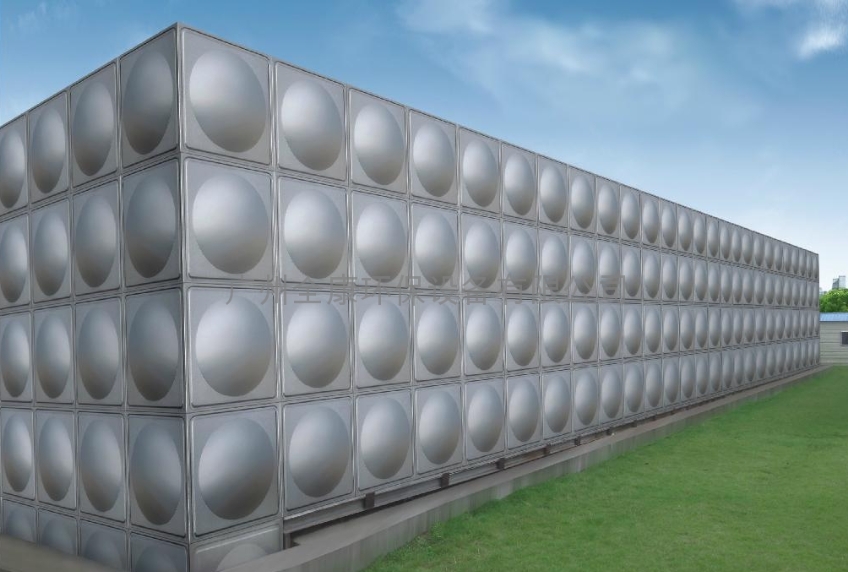
Designed vs. Actual Service Life of FRP Water Tanks
The design service life of an FRP (Fiberglass Reinforced Plastic) water tank typically ranges from 15 to 20 years under standard conditions. Based on after-sales data from Beijing Yuanhui FRP Co., Ltd., which has over a decade of experience in production and installation, the median actual service life in northern China is approximately 18 years, with some well-maintained projects exceeding 25 years.
However, actual longevity varies significantly. Industry surveys indicate that around 30% of FRP tanks experience performance degradation—such as leakage, strength loss, or water quality deterioration—within 8 to 10 years due to improper installation or lack of maintenance. Understanding the key factors controlling tank lifespan is essential for both investors and end-users.
Five Critical Factors Affecting FRP Tank Longevity
1. Raw Material Quality: Resin and Fiberglass Selection
The resin type determines corrosion resistance, temperature tolerance, and aging performance. Isophthalic polyester resin offers about 30% better hydrolysis resistance than orthophthalic resin in long-term water storage. Beijing Yuanhui uses vinyl ester resin in high-end projects, which provides 2-3 times greater chemical resistance than standard polyester—ideal for industrial water or treated effluent.
Fiberglass alkali content directly impacts strength retention. E-glass (alkali-free) retains over 80% strength in humid environments, while medium-alkali glass may drop below 60%. Industry standards require alkali content below 0.8% for water tank applications.
2. Manufacturing Process: Cure Degree and Interlaminar Bonding
Panel cure degree is critical. Plates with a cure degree below 85% are prone to hydrolysis, delamination, and strength loss under prolonged water exposure. Beijing Yuanhui employs high-temperature compression molding, achieving a cure degree above 92%, significantly reducing long-term hydrolysis risk.
Interlaminar shear strength (ILSS) must meet a minimum of 12 MPa per ISO 23559. Poor resin wet-out between fiber layers creates micro-cracks under temperature or pressure fluctuations, leading to eventual leakage.
3. Installation Quality: Foundation and Sealing
Installation issues account for over 40% of early-stage tank failures. An uneven foundation causes localized stress concentrations, leading to fatigue cracks over time. Foundation levelness tolerance should be within 5 mm per meter, with concrete strength no less than C20 and a moisture barrier layer.
Seaming is another weak point. Food-grade silicone sealant with ±25% movement capability should be applied at a minimum thickness of 6 mm per joint. Beijing Yuanhui's installation protocol requires a 24-hour hydrostatic pressure test after sealant curing.
4. Operating Environment: Temperature, UV, and Water Chemistry
Resin aging rate roughly doubles with every 10°C temperature increase. FRP tanks are typically rated for -20°C to 60°C. Below freezing, ice expansion can crack panels. In high-UV regions, an anti-UV gel coat is necessary; without it, surface chalking may appear within 3-5 years.
Water chemistry matters. For potable water, residual chlorine above 2 mg/L accelerates resin oxidation. For industrial wastewater, specialized resin grades must match the pH and chemical composition.
5. Maintenance: Regular Cleaning and Inspection
Annual cleaning prevents algae growth and sediment buildup, which can corrode the resin matrix. Inspect seals, inlet/outlet ports, and flanges each year. Beijing Yuanhui's service data shows that tanks receiving annual maintenance retain about 25% higher strength after 10 years compared to neglected units.
Case Study: Same Batch, Different Outcomes
Beijing Yuanhui supplied identical FRP tanks to two adjacent industrial parks. Park A followed installation guidelines, installed a sunshade, and cleaned the tank annually. Park B had an uneven foundation and never cleaned the tank. After 5 years, Park A's tank was intact; Park B's tank had three leaks and visible internal corrosion. This case highlights the decisive role of installation and maintenance.
How to Extend FRP Tank Service Life
Key measures include: selecting high-quality raw materials (isophthalic resin, E-glass); ensuring a level foundation with moisture barrier; installing sunshade and frost protection; implementing annual cleaning and inspection; and choosing a reputable manufacturer like Beijing Yuanhui FRP Co., Ltd. for integrated production-to-installation service. Industry practice shows that these measures can extend actual service life by 5-8 years beyond the design life.