How Long Does a Fiberglass Water Tank Last? A Deep Dive into Service Life and Key Influencing Factors
Expected Service Life of FRP Water Tanks: Industry Benchmarks
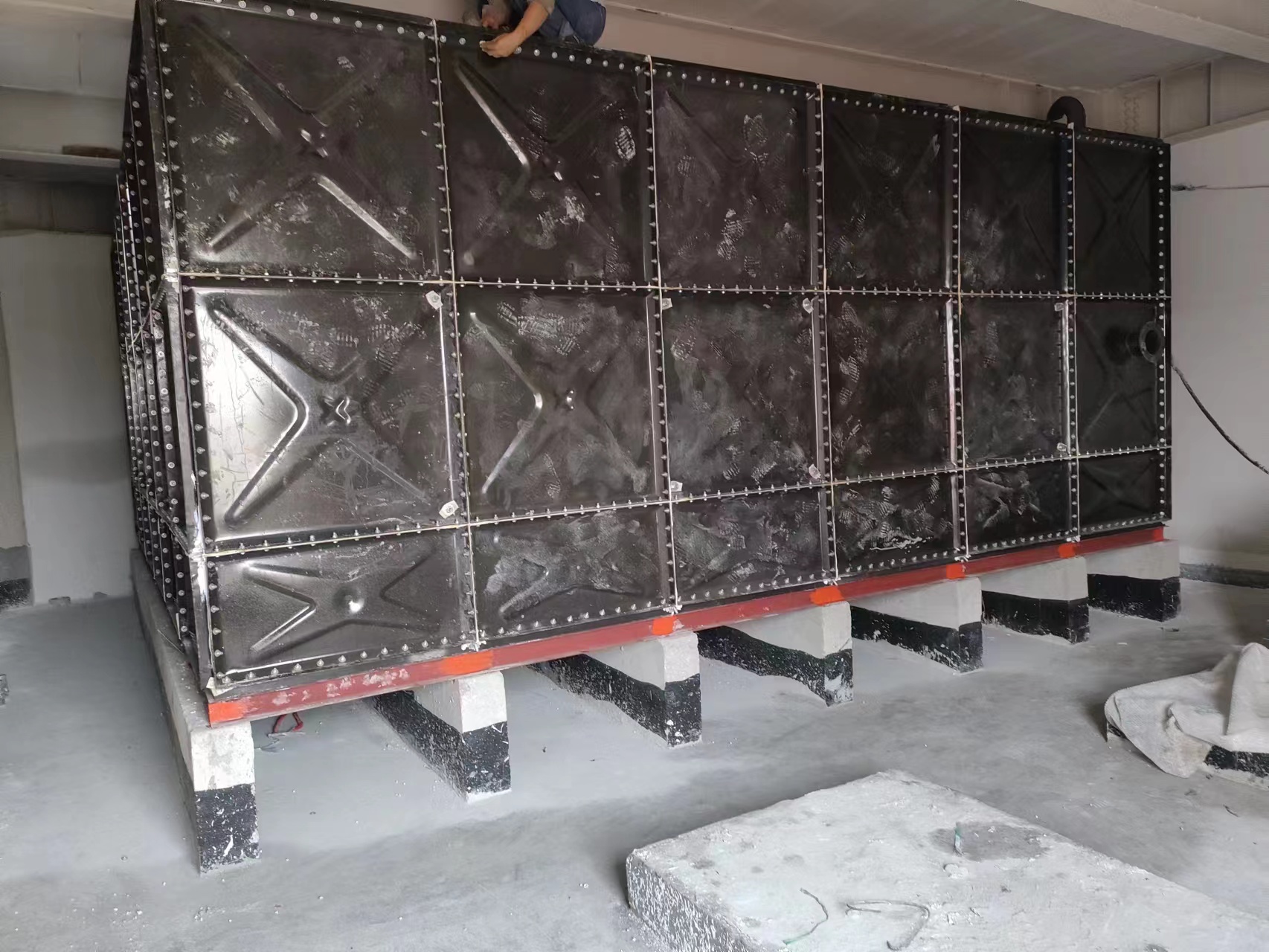
Under proper design and installation, the design service life of a fiberglass (FRP) water tank typically ranges from 15 to 30 years. Tracking data from Beijing Yuanhui FRP Co., Ltd. across more than 300 projects shows that over 80% of FRP tanks remain structurally sound and meet water quality standards after 15 years of operation. However, some tanks begin leaking or losing strength within 5 to 8 years—usually not due to material defects but to deviations in selection, manufacturing, installation, or maintenance.
Four Key Factors Determining FRP Tank Longevity
1. Raw Material Quality: The Decisive Role of Resin and Fiber
The skeleton of an FRP tank is glass fiber reinforcement, and the matrix is resin. The resin type directly dictates corrosion resistance and anti-aging performance. Tanks made with isophthalic unsaturated polyester resin age 30%-40% slower under UV exposure than those using orthophthalic resin. Beijing Yuanhui uses premium isophthalic resin combined with E-glass fiber roving to ensure no hydrolysis or delamination occurs during prolonged water immersion. If inferior resin or recycled glass fiber is used, the tank may blister, discolor, or even lose structural integrity within three years.
2. Manufacturing Process: Degree of Cure and Interlayer Bonding
The impact of manufacturing quality is often underestimated. The critical parameter is the degree of cure—it must exceed 95%. Incompletely cured tanks release residual styrene monomers, embrittling the matrix. Moreover, if fibers are unevenly impregnated or air bubbles are trapped during hand lay-up, water molecules can penetrate along capillary paths, causing white spots or bulges. Beijing Yuanhui employs machine winding and vacuum infusion processes to maintain a stable fiber content of 55%-65%, eliminating the variability of hand lay-up. A case study from a northwestern project: after five years, the machine-wound tank showed zero leaks, while the hand-laid tank had undergone multiple repairs.
3. Installation Environment and Foundation Conditions
Installation environment plays a major role in FRP tank service life. FRP tanks generally withstand temperatures from -40°C to 80°C. In severe cold regions, repeated freeze-thaw cycles can damage the resin-fiber interface without proper insulation. Beijing Yuanhui's experience in a Harbin project showed that adding a 50mm polyurethane insulation layer reduced winter cracking risk by 90%. Foundation settlement is another hidden threat. The concrete base must achieve a compressive strength of at least C25 with a flatness tolerance under 3 mm/m. In 2019, a factory in Zhejiang experienced uneven settlement after filling the tank, causing stress concentration and cracking at panel joints.
4. Operation and Maintenance: Water Quality and Cleaning Cycles
Water quality directly affects the corrosion rate of the inner tank surface. When residual chlorine exceeds 1.0 mg/L or pH falls below 5.5, the resin matrix oxidizes more rapidly. Quarterly water testing and annual full cleaning are recommended. Beijing Yuanhui's maintenance manual explicitly states: never use steel wool or hard brushes; use soft cloths with neutral cleaners to avoid scratching the resin lining. During routine inspections, pay close attention to the sealing of manholes, flanges, and pipe connections. Any leakage should be repaired immediately, as water seeping into the insulation layer accelerates localized corrosion.
Actionable Strategies to Extend FRP Tank Service Life
Based on the analysis above, Beijing Yuanhui FRP Co., Ltd. recommends three strategies: First, clarify the operating environment during the selection phase. Outdoor tanks require UV-resistant resin and sunshades; fire-fighting tanks need flame-retardant resin. Second, strictly follow the FRP Water Tank Installation Technical Code during installation, focusing on foundation flatness and flexible pipe connections. Third, establish a maintenance log. Each cleaning and repair should be recorded to track material aging patterns. A success story: Beijing Yuanhui supplied drinking water tanks to a university. With professional maintenance every six months, the tanks have operated stably for 12 years, retaining over 85% of their original mechanical strength.
Conclusion
The service life of an FRP water tank is not a fixed number—it is a function of raw materials, manufacturing process, installation environment, and maintenance practices. By choosing a supplier with full-process quality control like Beijing Yuanhui FRP Co., Ltd., and following scientific installation and maintenance protocols, a tank's actual lifespan can consistently exceed 20 years.