Complete FRP Water Tank Production Process: From Hand Lay-Up to Compression Molding
Introduction
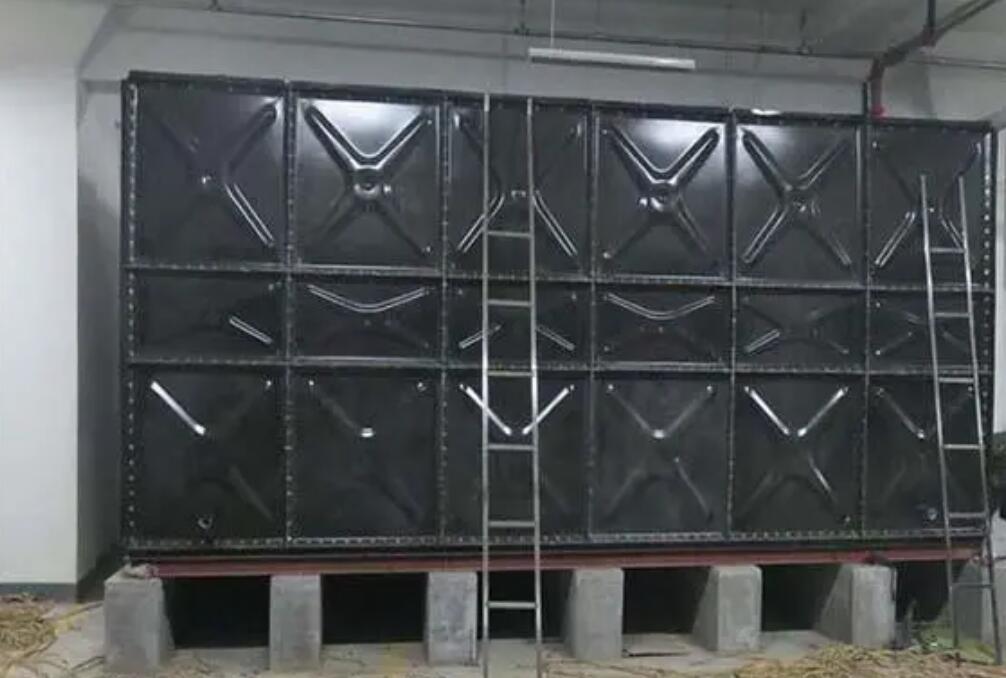
FRP water tanks are widely used in construction, chemical, and municipal water supply sectors due to their lightweight, high strength, corrosion resistance, and ease of installation. The production process directly impacts sealing performance, service life, and cost. Based on 20 years of experience, Beijing Yuanhui FRP Co., Ltd. outlines the complete workflow from resin formulation to finished product. This article covers both hand lay-up and SMC compression molding—the latter now accounts for approximately 65% of the high-end domestic market.
1. Material Selection and Pretreatment
Core materials include unsaturated polyester resin, E-glass fiber, curing agent, and fillers. Isophthalic resin is preferred for potable water tanks due to its water absorption rate below 0.3%. Beijing Yuanhui FRP Co., Ltd. uses NSF-certified food-grade resin for drinking water tanks. Chopped strand mats or spray-up rovings maintain fiber content at 30%–35%. Fillers such as calcium carbonate reduce shrinkage and improve flame retardancy.
Pretreatment: Resin and curing agent are mixed at a 100:2 ratio, stirred for 5–7 minutes. Ambient temperature must stay between 18–25°C with humidity below 75%, otherwise abnormal curing may cause delamination.
2. Hand Lay-Up Process
Hand lay-up suits low-volume or custom-shaped tanks. Steel or wooden molds are coated with mold release wax. Steps:
- Apply gel coat (0.3–0.5 mm thick) to prevent fiber exposure.
- Lay chopped strand mat and remove air bubbles using a roller.
- Brush resin and add fiber layers sequentially, each 1–1.5 mm thick.
- Cure at room temperature for 24 hours, then demold and trim edges.
Data: Interlaminar shear strength reaches 12 MPa, but production is slow—a 500 L tank requires 4 man-hours. Beijing Yuanhui FRP Co., Ltd.'s hand lay-up workshop produces about 200 units per month for custom projects.
3. SMC Compression Molding
SMC (Sheet Molding Compound) molding is the mainstream industrial process. Workflow:
- SMC sheet preparation: Resin paste is mixed with thickener and impregnated into carbon fiber, then rolled into 3–4 mm thick sheets.
- Cutting and stacking: Sheets are cut to mold shape and stacked based on wall thickness (e.g., 6 mm wall requires 2 layers for a 3000 L tank).
- Molding: Mold temperature 140–160°C, pressure 10–15 MPa, hold time 3–5 minutes. Product density reaches 1.8–2.0 g/cm³.
- Curing and demolding: Curing completes inside the mold; parts are cooled to room temperature after demolding.
- Hydrostatic test: 1.5 times rated pressure for 30 minutes, no leakage.
- Barcol hardness test: ≥45 to ensure strength.
- UV aging test: 200 hours xenon lamp exposure, no surface cracking.
Case study: A municipal project produced 100 units of 1000 L tanks using SMC molding. Single-unit cycle time was only 8 minutes, and the leakage rate dropped from 5% (hand lay-up) to 0.5%. Beijing Yuanhui FRP Co., Ltd.'s molding line achieves 80 units daily, meeting GB/T 17219 standards.
4. Post-Processing and Quality Inspection
Finished products undergo edge trimming, drilling, and flange/manhole installation. Key tests:
Beijing Yuanhui FRP Co., Ltd. uses X-ray flaw detection to identify internal voids, keeping defect rates below 1%. Each tank comes with a test report including resin type, fiber content, and test results.
Conclusion
The evolution from hand lay-up to SMC molding in FRP water tank production represents a trade-off between flexibility and efficiency. Hand lay-up remains viable for custom orders, while SMC molding enables standardized mass production with reduced human error. Beijing Yuanhui FRP Co., Ltd. recommends SMC for orders above 500 units and hand lay-up for smaller batches. With automated spraying and AI-based inspection, process yield could exceed 98% in the near future.