How Long Does an FRP Water Tank Last? 5 Key Factors Affecting Service Life
Introduction
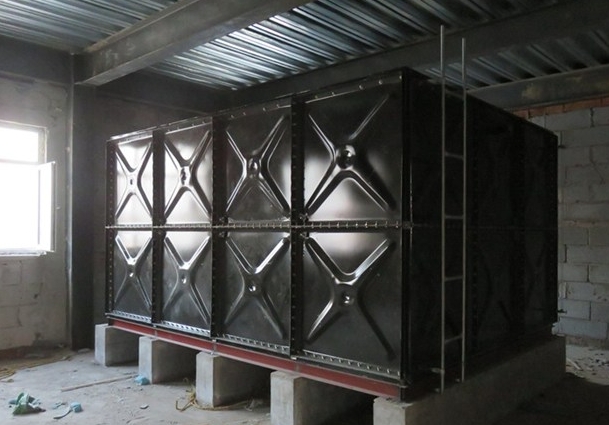
In 2019, a property management team in Tianjin replaced an FRP water tank that had been in service for 11 years. Upon disassembly, localized resin loss and fiber exposure were found on the bottom panels, while the side panels remained intact. Another tank from the same batch, installed indoors with regular cleaning, has been running for 16 years without any leakage. This is not an isolated case—the service life of an FRP tank is not a fixed number but a variable determined by materials, manufacturing process, environment, water quality, and maintenance.
Beijing Yuanhui FRP Co., Ltd. has installed over 8,000 tanks in northern China. According to after-sales data, the shortest actual lifespan was less than 6 years, while the longest exceeded 20 years. Below is a breakdown of the key factors affecting FRP tank longevity.
1. Raw Materials and Molding Process: The Blueprint for Longevity
1.1 Resin System Selection
The corrosion resistance of an FRP tank depends directly on the resin. Orthophthalic polyester resin has water absorption of 1.2%-1.5%, leading to interface debonding over time. Isophthalic resin reduces absorption to below 0.3%, making it suitable for potable water. Vinyl ester resin offers the best chemical resistance, extending service life by 3-5 years in industrial wastewater applications.
1.2 SMC Compression Molding vs. Hand Lay-Up
SMC (Sheet Molding Compound) compression molding—performed at 140°C and 15 MPa—yields fiber content of 28%-32% and porosity below 0.5%. Hand lay-up typically leaves porosity above 2%, creating pathways for moisture ingress. Data shows that SMC panels retain 85% of their original flexural strength after 10 years, versus 70% for hand-laid panels.
2. Installation Environment: Outdoor vs. Indoor, Temperature and UV
2.1 UV Degradation
Outdoor tanks suffer from UV-induced photodegradation. Without UV absorbers, the Barcol hardness of a standard SMC panel drops from 45 to 28 after 5 years in northern China. Adding 2% UV-531 absorber reduces surface hardness loss to less than 15% over 10 years, as demonstrated by Beijing Yuanhui's production data.
2.2 Freeze-Thaw Cycles
In freezing climates, water expansion inside the tank creates cyclic stress. One project in northeast China recorded a 22% reduction in interlaminar shear strength after 40 freeze-thaw cycles in a winter, while a tank with 50mm polyurethane insulation showed only a 6% drop.
3. Water Quality and Microorganisms: Invisible Erosion
3.1 pH and Ion Penetration
FRP is stable at pH 4-10. At pH below 3, ester bonds in the resin hydrolyze, exposing glass fibers. A chemical plant case showed wall thinning of 1.2mm in 3 years with pH 2.5 wastewater, compared to only 0.3mm in 8 years when vinyl ester resin was used.
3.2 Biofilm and MIC
Uncleaned potable water tanks develop biofilm. Microbial metabolic acids create localized pitting. Beijing Yuanhui recommends annual cleaning and the use of NSF/ANSI 61-certified food-grade resin. Antimicrobial additives (e.g., silver ions) delay biofilm formation by 2-3 months.
4. Structural Design and Load: The Role of Safety Margins
4.1 Wall Thickness and Rib Design
A 3-meter-tall tank experiences 0.03 MPa at the bottom side panel. Standard safety factors are 5-7 per GB/T 17219. Beijing Yuanhui uses 8mm bottom panels and 5mm top panels for 6-meter tanks, with grid ribbing that keeps deformation under 0.5%.
4.2 Foundation Settlement and Sealing
Uneven settlement distorts the tank body. A steel base with rubber pads absorbs up to 5mm of differential settlement. EPDM gaskets last about 12 years; silicone rubber gaskets can reach 20 years.
Conclusion
The theoretical 15-20 year design life of an FRP water tank can shrink to 8 years or extend beyond 25 years depending on resin type, molding quality, UV and frost protection, water chemistry, and maintenance. Using isophthalic or vinyl ester resin, SMC panels, proper insulation and UV shielding, maintaining neutral pH, cleaning annually, and inspecting seals—these five actions push actual service life toward the upper limit. Beijing Yuanhui FRP Co., Ltd. provides a maintenance manual with each tank and recommends annual records of temperature, pH, and visual inspection to build a lifecycle file.