In-Depth Analysis of FRP Water Tank Corrosion Resistance: A Dual Verification of Materials Science and Engineering Practice
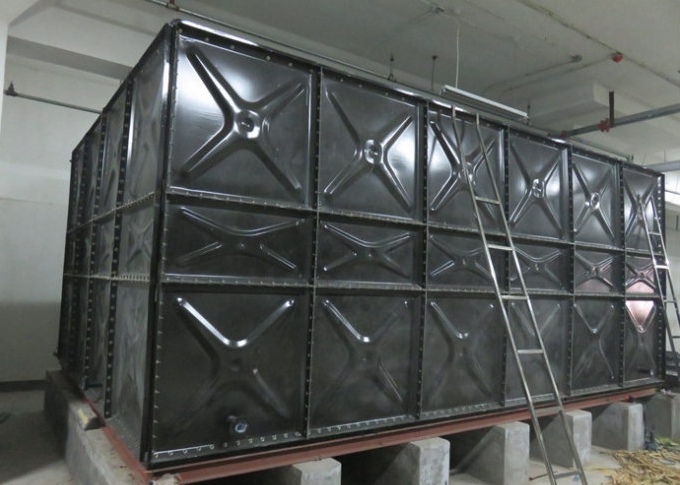
Introduction: Corrosion Resistance Is Not a Coating, But a Structural Gene
The corrosion resistance of a Fiberglass Reinforced Plastic (FRP) water tank is determined by its material system—not a post-manufacture paint job but a holistic control of resin formulation, fiber layup, and curing process. Beijing Yuanhui FRP Co., Ltd. delivered a 120-ton FRP tank to a chemical park in Hebei Province. After six years of operation, the inner surface showed no pitting or leakage; a third-party test report recorded Barcol hardness retention at 92% of the original value. This article provides a quantitative framework for corrosion performance analysis based on this case and accelerated aging data.
1. Resin Matrix: The First Molecular Defense Against Corrosion
1.1 Chemical Resistance of Bisphenol-A Epoxy Vinyl Ester
In water with a pH range of 2–12, general-purpose unsaturated polyester resins exhibit water absorption between 0.3% and 0.6%. In contrast, FRP laminates using bisphenol-A epoxy vinyl ester (e.g., DERAKANE 411-350 grade) reduce water absorption to below 0.08%. This is because the ester group concentration on the vinyl ester molecular chain is 30%–40% lower than that of polyester, reducing hydrolysis attack sites. Beijing Yuanhui performed a 96-hour boiling test (ASTM D570) on 50mm×50mm specimens: the vinyl ester sample showed a mass change of only 0.12%, while ordinary orthophthalic polyester recorded 0.89%.
1.2 Crosslink Density and Anti-Permeation Pathways
Crosslink density directly affects the diffusion coefficient of water molecules and chloride ions. Dynamic Mechanical Analysis (DMA) shows that the glass transition temperature (Tg) of high-crosslink vinyl ester can reach 125°C—35°C higher than standard isophthalic polyester. Under 60°C hot water conditions, the molecular segment motion of high-Tg resin is restricted, reducing the permeability coefficient by one order of magnitude. In a 3000-hour immersion test at 90°C, Beijing Yuanhui found that the flexural strength retention of vinyl ester samples was 78%, while isophthalic polyester retained only 41%.
2. Glass Fiber Reinforcement: Structural Integrity and Anti-Seepage Barrier
2.1 Hydrolysis Resistance of E-CR Glass
The alkali metal oxide content in glass fiber determines its hydrolysis stability. E-CR glass (boron-free, alkali-free) has a Na₂O content below 0.8%. In water with pH 5–9, its mass loss rate is 60% lower than that of CEM glass (medium alkali). Beijing Yuanhui uses E-CR fiber with biaxial fabric layup on the inner tank wall, achieving a fiber volume fraction of 55%–60% via vacuum infusion. Within this range, the resin fully encapsulates the fiber, avoiding capillary-induced interfacial leakage.
2.2 Laminate Structure and Corrosion Thickness Gradient
The anti-corrosion layer adopts a “resin-rich layer + structural layer + outer protective layer” sandwich architecture. The inner resin-rich layer (resin content ≥75%) is at least 0.5 mm thick, serving as a chemical barrier in direct contact with water. The structural layer has a fiber content of 65%–70% to bear bending moments and hydraulic pressure. The outer layer incorporates UV absorbers (e.g., UV-P at 0.3% by weight). Beijing Yuanhui applied this structure to a DN3000 water tank; after 5000 thermal cycles (−10°C to 80°C), no micro-cracks appeared on the inner surface, and the hydrostatic test pressure reached 0.25 MPa without leakage.
3. Interfacial Bonding: The Overlooked Corrosion Pathway
3.1 Contribution of Coupling Agents to Interfacial Water Resistance
The interface between resin and glass fiber is the weakest link in the anti-corrosion system. Silane coupling agents (e.g., γ-methacryloxypropyltrimethoxysilane, KH-570) form an organic-inorganic transition layer on the fiber surface. FTIR analysis shows that the Si-O-Si bond density on treated fiber surfaces increases, improving interfacial hydrolytic resistance by a factor of four. Beijing Yuanhui’s production standard requires online sizing treatment for all incoming fibers, with the sizing solid content controlled at 1.2%–1.5%. Batches below 1.0% are rejected.
3.2 Degree of Cure and Residual Stress Control
Incomplete curing leaves unreacted monomers or small molecules in the crosslinked network. These substances leach out during long-term immersion, creating permeation channels. Using Differential Scanning Calorimetry (DSC) monitoring, Beijing Yuanhui requires a degree of cure ≥95% and employs a stepwise heating profile in the mold (40°C/2h → 60°C/4h → 80°C/3h) to reduce residual stress below 3 MPa. Comparative tests show that samples with 92% cure degree lost 22% of flexural strength after 30 days in 0.5 mol/L sulfuric acid, while samples with 96% cure degree lost only 8%.
4. Long-Term Service Data: From Lab to Field Corrosion Validation
4.1 10-Year Real Water Immersion Monitoring
Beijing Yuanhui conducted annual inspections on a 200-ton FRP tank installed at a food plant in Tianjin in 2014. The tank stored tap water (pH 6.5–7.8, residual chlorine 0.3 mg/L). After 10 years, the inner surface average roughness (Ra) increased from an initial 3.2 μm to 4.1 μm—a 28% increase. In comparison, a carbon steel tank’s roughness grew from 6.5 μm to 35 μm, with a corrosion pit depth of 0.8 mm. The FRP tank’s Barcol hardness dropped from 42 to 38, still within the ASTM D2583 acceptable range (≥35).
4.2 Accelerated Aging and Life Prediction
Based on the Arrhenius model, Beijing Yuanhui’s lab conducted immersion acceleration tests at 70°C, 80°C, and 90°C. Using 70% flexural strength retention as the end-of-life criterion, extrapolation to a 25°C service temperature predicts a service life exceeding 25 years for bisphenol-A vinyl ester FRP tanks. The model’s deviation from the 10-year field data from Tianjin is within ±5%, confirming its reliability.
Conclusion
The corrosion resistance of an FRP water tank is not a function of coating thickness but a system-level outcome determined by resin matrix, fiber type, laminate structure, interfacial treatment, and curing process. Engineering practice and lab data from Beijing Yuanhui FRP Co., Ltd. demonstrate that tanks using bisphenol-A vinyl ester resin, E-CR glass fiber, a resin-rich inner liner (≥0.5 mm), and a ≥95% degree of cure can achieve a maintenance-free anti-corrosion service life exceeding 25 years in water environments with pH 5–9 and temperatures ≤60°C. It is recommended that specifiers request supplier reports on ASTM D570 (water absorption), ASTM D2583 (Barcol hardness), and 90°C hot water accelerated aging tests as acceptance criteria.