Thermal Insulation Performance of FRP Water Tanks: Material Properties and Multi-Scenario Application Guide
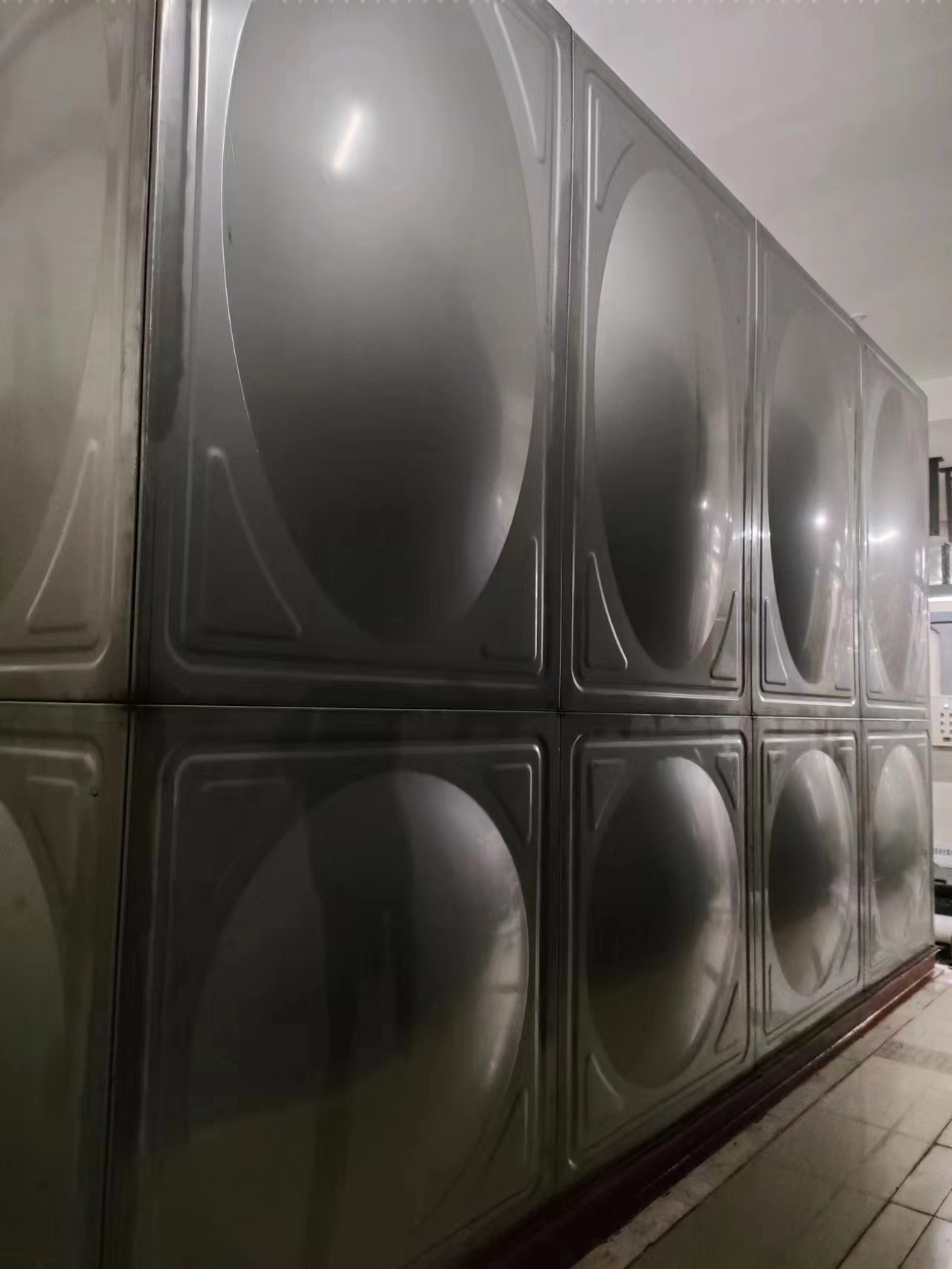
1. Insulation Materials and Structural Design of FRP Water Tanks
The thermal insulation performance of FRP water tanks relies on a three-layer composite structure. The outer layer is glass fiber reinforced plastic (FRP) with a thickness of 3-5mm, providing high strength and corrosion resistance. The middle layer is rigid polyurethane foam (PU) with a density of 35-50 kg/m³ and a thermal conductivity as low as 0.022-0.028 W/(m·K). The inner layer consists of food-grade resin to ensure water hygiene. Beijing Yuanhui FRP Co., Ltd. uses high-pressure foaming technology to produce insulation layers with customized thicknesses of 50mm, 80mm, or 100mm. At 80mm thickness, the temperature drop inside the tank is limited to ≤3°C over 24 hours under -20°C ambient conditions (initial water temperature 60°C).
2. Key Factors Affecting Insulation Performance
2.1 Foam Thickness and Thermal Resistance
According to the heat transfer equation Q=U·A·ΔT, increasing insulation thickness from 50mm to 100mm reduces the overall heat transfer coefficient (U-value) by approximately 40%. Field data from a project in North China (ambient -15°C, water 55°C) shows that a 50mm layer results in 8.5% heat loss over 24 hours, while a 100mm layer reduces loss to 5.2%. Beijing Yuanhui recommends 100mm for severe cold regions (e.g., Heilongjiang, Inner Mongolia) and 80mm for central regions (e.g., Beijing, Hebei).
2.2 Ambient Temperature and Operational Conditions
In industrial cooling systems where water must remain between 10-20°C, insulation prevents solar heat gain during summer. An electronics factory in southern China used a Beijing Yuanhui insulated tank and maintained water temperature below 22°C when ambient temperature reached 35°C. For fire water storage, GB 50974-2014 mandates that tank water temperature must not fall below 5°C. Tests show that with 80mm foam and auxiliary electric heating, the tank water stays above 8°C even at -10°C ambient.
3. Application Scenarios and Selection Guidelines
3.1 Northern Heating Systems
An 80 m³ Beijing Yuanhui tank installed in a Langfang district heating system (100mm insulation) recorded an average daily temperature drop of only 2.1°C during winter nights (-18°C to -5°C). System thermal efficiency improved by over 15% compared to conventional steel tanks.
3.2 Industrial Constant-Temperature Water Supply
A Beijing dairy company using a 30 m³ Beijing Yuanhui insulated tank for CIP cleaning (65°C constant water) reported a temperature deviation of ±1.5°C over 12 continuous production hours, eliminating cleaning failures caused by temperature fluctuations.
3.3 Fire Protection and Emergency Storage
Fire water tanks must maintain 4-50°C around the clock. Beijing Yuanhui designed a tank for a chemical plant in Inner Mongolia featuring anti-freeze circulation pipes at the base, temperature sensors, and electric heating. The system passed fire safety inspection and has operated without freezing failures for two consecutive winters.
4. Maintenance and Common Misconceptions
Some users mistakenly assume thicker insulation is always better. However, layers exceeding 150mm add excessive dead weight, increase support structure costs, and consume installation space. Correct selection should be based on local minimum temperature, tank volume, and water use type (domestic/industrial/fire). Weak points such as inlet/outlet pipes and manholes require additional insulation to prevent thermal bridging. Beijing Yuanhui recommends an annual pre-winter inspection for cracks or moisture damage in the foam layer.
Conclusion
The thermal insulation performance of FRP water tanks results from the synergy of material thickness, environmental conditions, and installation quality. For northern heating, industrial constant-temperature processes, and fire protection, selecting the correct foam thickness can significantly reduce energy consumption and ensure system reliability. Beijing Yuanhui FRP Co., Ltd. offers customized insulation layers from 50mm to 120mm to match project-specific climate and water demand requirements.