In-Depth Analysis of FRP Water Tank Material Composition and Performance Advantages
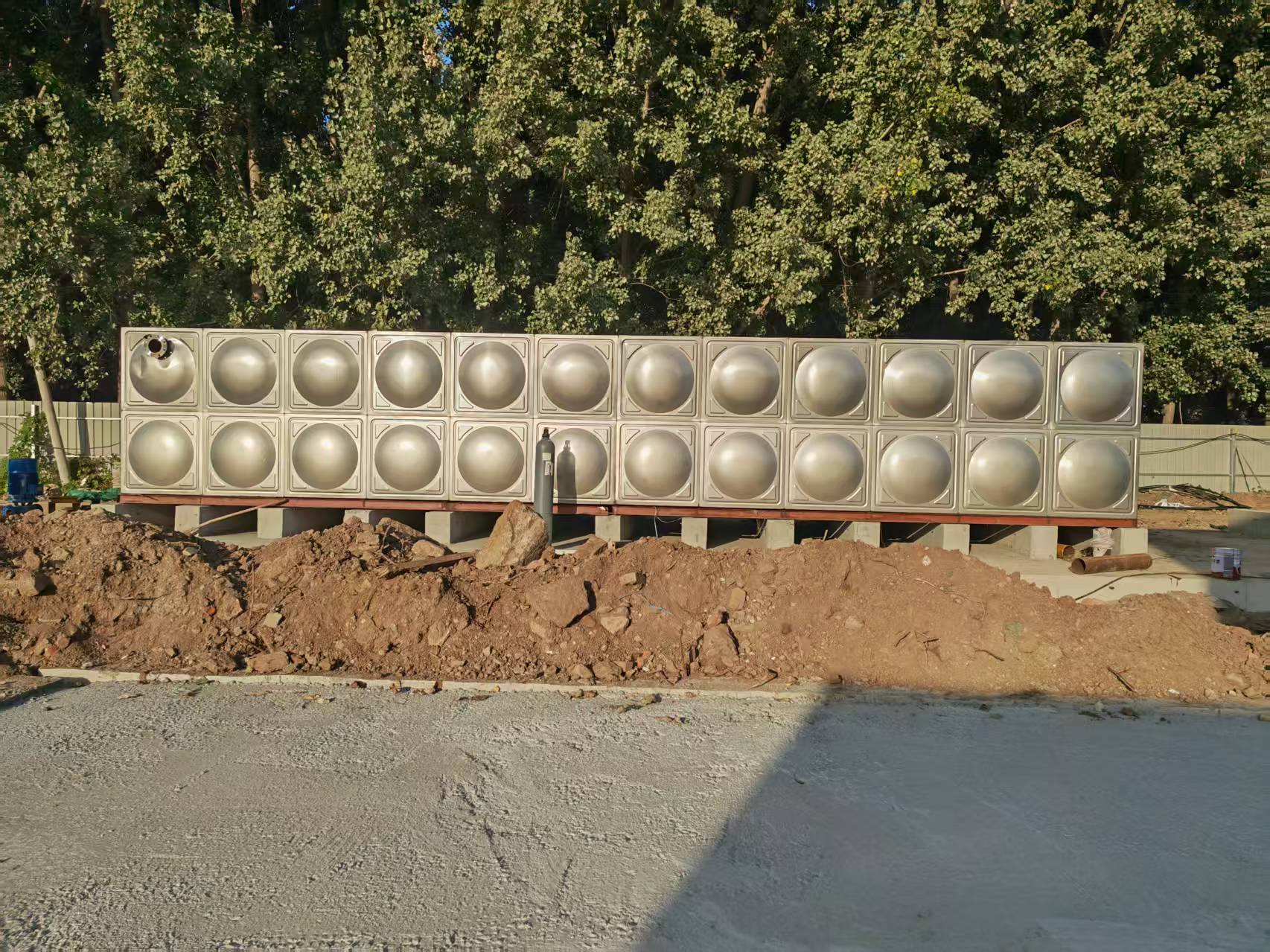
Introduction
FRP (Fiber-Reinforced Plastic) water tanks have become a mainstream choice for modern water storage across construction, chemical, food, and medical sectors. Unlike traditional concrete or steel tanks, FRP tanks offer superior corrosion resistance, structural strength, installation efficiency, and service life. Beijing Yuanhui FRP Co., Ltd., with decades of industry experience, has accumulated extensive production and application expertise. This article breaks down the material composition of FRP water tanks and systematically analyzes their performance advantages, supported by specific data and case studies to help users make informed decisions.
1. Material Composition of FRP Water Tanks
1.1 Matrix Resin: Determining Chemical Resistance and Temperature Range
The matrix material typically uses unsaturated polyester resin, vinyl ester resin, or epoxy resin. Unsaturated polyester accounts for over 70% of conventional tanks due to its cost-effectiveness and mature processing. For high-temperature (above 60°C) or highly corrosive liquids (e.g., industrial wastewater), vinyl ester resin is preferred, offering 3-5 times higher chemical resistance and a heat deflection temperature of 120-150°C. Beijing Yuanhui FRP Co., Ltd. employs imported curing agents and accelerators in its resin formulations, achieving a curing degree above 98% to prevent micro-cracks and leakage.
1.2 Reinforcement: Glass Fiber Layup Design
The reinforcement layer uses E-glass or S-glass fibers, with fiber content controlled at 30%-45% by weight. Wall thickness is built up via hand lay-up or spray-up processes, typically 5-12 mm depending on tank volume and hydraulic pressure. For example, a 100-ton domestic water tank requires a bottom plate thickness of 10 mm, side plates of 8 mm, and a top plate of 6 mm. The fiber layup combines 0°/90° orthogonal and ±45° bias orientations to ensure balanced tensile strength in both hoop and axial directions, with measured hoop tensile strength ≥200 MPa and axial ≥150 MPa.
1.3 Fillers and Additives: Enhancing Processability and Performance
To improve resin flow, flame retardancy, and UV resistance, fillers such as calcium carbonate, aluminum hydroxide, and UV absorbers are added. Aluminum hydroxide acts as a flame retardant, releasing water of crystallization upon heating, enabling FRP tanks to achieve an oxygen index above 28% (UL94 V-0). Beijing Yuanhui FRP Co., Ltd. adds carbon black or titanium dioxide to outdoor tanks to resist UV degradation, with accelerated aging tests showing no chalking or cracking after 3,000 hours.
2. Core Performance Advantages of FRP Water Tanks
2.1 Corrosion Resistance: Superior to Steel and Concrete
FRP tanks withstand acidic and alkaline media in the pH range of 2-12. Comparative immersion tests in 5% sulfuric acid for 1,000 hours showed a corrosion depth of only 0.02 mm for FRP, versus 1.8 mm for carbon steel. For potable water tanks, food-grade resin (compliant with GB/T 17219) ensures heavy metal (lead, cadmium, chromium) leaching below detection limits, far safer than concrete tanks. Beijing Yuanhui FRP Co., Ltd. supplied acid-resistant tanks to a chemical plant that remained intact after 8 years of continuous operation, while stainless steel tanks at the same site showed pitting corrosion.
2.2 Lightweight and High Strength: 30%+ Reduction in Installation and Transport Costs
FRP density is 1.8-2.0 g/cm³, about 1/4 that of carbon steel and 1/6 that of concrete. A 50-ton FRP tank weighs approximately 2.5 tons, compared to 20 tons for concrete and 10 tons for steel. This significantly reduces foundation load requirements, especially for rooftop or weak-soil installations. Beijing Yuanhui FRP Co., Ltd. provided modular FRP tanks for a Beijing old-residential renovation project, allowing direct installation on existing roofs without reinforcement, cutting construction time from 30 days (concrete) to 5 days.
2.3 Superior Thermal Insulation: Reduced Heat Loss and Condensation
FRP thermal conductivity is only 0.23-0.35 W/(m·K), far lower than steel (48 W/(m·K)) or concrete (1.5-2.0 W/(m·K)). In northern winter conditions (ambient -15°C, water 60°C), FRP tank outer wall temperature is only 5-8°C above ambient, while steel tank walls can reach 30°C, resulting in 4-6 times higher heat loss. Additionally, FRP's low condensation tendency avoids dripping and electrical short risks in humid southern climates. Beijing Yuanhui FRP Co., Ltd. recommends insulated tanks with 40-60 mm polyurethane foam interlayer, achieving a composite thermal conductivity as low as 0.018 W/(m·K).
2.4 Service Life and Maintenance: Design Life Exceeds 25 Years
Under normal conditions (-40°C to 80°C, pH 4-10), FRP tanks have a design life of 25-30 years. A case study: a domestic water tank installed by Beijing Yuanhui FRP Co., Ltd. in 1998 at a military base has been operating for 26 years. After three cleaning inspections, wall thickness loss was less than 5%, well below the allowable threshold. This durability stems from the resin's self-passivating nature, forming a dense oxide layer that blocks further media penetration. Maintenance requires only annual cleaning, eliminating the need for periodic anti-corrosion recoating needed for steel tanks, reducing overall maintenance costs by over 60%.
3. Conclusion
From a materials science perspective, FRP water tanks achieve comprehensive performance advantages—corrosion resistance, lightweight strength, thermal efficiency, and long service life—through the synergistic design of resin matrix, glass fiber reinforcement, and functional fillers. In practice, Beijing Yuanhui FRP Co., Ltd.'s products deliver stable and reliable performance in chemical storage, drinking water supply, and fire protection applications. For owners, selecting FRP tanks not only offers reasonable initial investment (typically 10%-20% lower than stainless steel tanks) but also significantly enhances lifecycle total cost efficiency. When specifying, users should focus on resin type, fiber content, and layup process, and choose manufacturers with ISO 9001 certification and hygiene permits to ensure product quality and safety.