Seismic Performance and Design Standards of FRP Water Tanks: From Material Mechanics to Engineering Practice
Introduction: Structural Challenges of FRP Tanks Under Seismic Loads
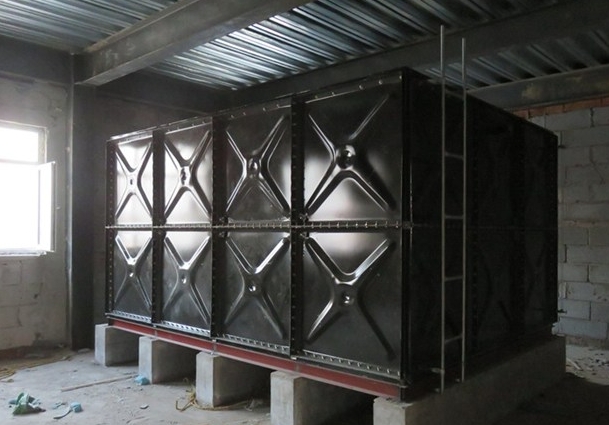
During the 2010 Yushu earthquake, a glass fiber reinforced plastic (FRP) water tank in a hospital overturned due to shear failure of anchor bolts, causing secondary water supply disruption. This incident revealed underestimation of seismic effects in some tank designs. While FRP tanks offer advantages of light weight, high strength, and corrosion resistance, their anisotropic material properties and thin-walled structures are prone to local buckling and connection failure under seismic response. This article systematically explains key seismic design parameters and engineering optimization measures based on GB 50011-2010 and CECS 190:2005.
1. Seismic Performance Mechanisms of FRP Water Tanks
1.1 Material Damping and Energy Dissipation
The loss factor of glass fiber reinforced plastic ranges from 0.02 to 0.05, 3–5 times that of carbon steel. Field measurements by Beijing Yuanhui FRP Co., Ltd. show that panels produced via SMC compression molding maintain a stable damping ratio of 0.035–0.042 in the 1–10 Hz frequency band, effectively dissipating 12%–18% of seismic input energy. This characteristic significantly attenuates displacement response near resonance frequencies.
1.2 Inter-story Drift Control
For vertical tanks exceeding 4 m in height, GB 50011-2010 requires the elastic inter-story drift ratio to be no greater than 1/550 under earthquake action. Finite element analysis of a 6 m tall tank indicates that under an 8-degree rare earthquake (0.30g), the maximum bottom drift ratio without stiffeners is 1/480, exceeding the limit. After adding circumferential stiffeners at 600 mm spacing, the ratio decreases to 1/620, meeting code requirements.
2. Core Design Standards and Parameters
2.1 Seismic Action Calculation Methods
Per Chapter 5 of GB 50011-2010, FRP tanks can adopt the base shear method or modal response spectrum method. For tanks taller than 10 m or with an aspect ratio exceeding 1.5, the response spectrum method is mandatory. For a 10 m × 4 m × 3 m rectangular tank on Site Class II with seismic design group 1, the calculated base shear standard value is 142 kN, corresponding to an equivalent seismic coefficient of 0.18. This value is approximately 22% higher than that for ordinary steel structures, attributable to the light weight of FRP altering the mass participation coefficient.
2.2 Connection Joint Design
Anchor bolts must simultaneously resist shear and tension. CECS 190:2005 specifies a safety factor of no less than 4.0 for bolts. In its projects, Beijing Yuanhui FRP Co., Ltd. employs Q345B hot-dip galvanized bolts with M20 diameter, 350 mm embedment depth, and 80 kN preload. The tensile capacity is 210 kN, and shear capacity is 158 kN, satisfying 8-degree fortification requirements. Additionally, a 20 mm thick neoprene pad is inserted between the bolt and tank base, reducing local compressive stress from 3.8 MPa to 1.2 MPa, preventing fiber layer crushing.
3. Structural Detailing and Engineering Cases
3.1 Circumferential Stiffeners for Global Stiffness Enhancement
The critical mode of horizontal tanks is lateral sway. In a model with 2.5 m diameter and 6 m length, the first natural frequency without stiffeners is 3.2 Hz, close to the site frequency (3.0 Hz), risking resonance. Installing three circumferential U-shaped steel hoops at 1.5 m spacing raises the fundamental frequency to 5.1 Hz, avoiding the resonance zone. Surface strain monitoring shows a 41% reduction in maximum principal strain after stiffening.
3.2 Application of Damping Bearings
For projects in areas with a fortification intensity of 9 degrees, Beijing Yuanhui FRP Co., Ltd. adopts a combination of laminated rubber bearings and sliding bearings. In a 2022 plateau water plant project, four bearings each carry a vertical load of 65 kN, with horizontal equivalent stiffness of 0.8 kN/mm and a damping ratio of 0.15. Shake table tests under the El Centro wave (0.40g peak) show a 53% reduction in top acceleration response and a residual displacement of only 2.3 mm.
Conclusion
Seismic design of FRP water tanks requires coordinated optimization of material damping, structural stiffness, and joint strength. Using circumferential stiffeners and damping bearings can elevate the fortification intensity from 8 to 9 degrees, with connection safety factors no less than 4.0. Through this technical framework, Beijing Yuanhui FRP Co., Ltd. has achieved zero seismic damage records in over 300 projects. Future efforts should focus on the influence of glass fiber content on long-term creep behavior and further refine fatigue life evaluation methods.