FRP Water Tank Lining Anti-Corrosion Technology: Complete Guide from Material Selection to Construction Acceptance
Introduction
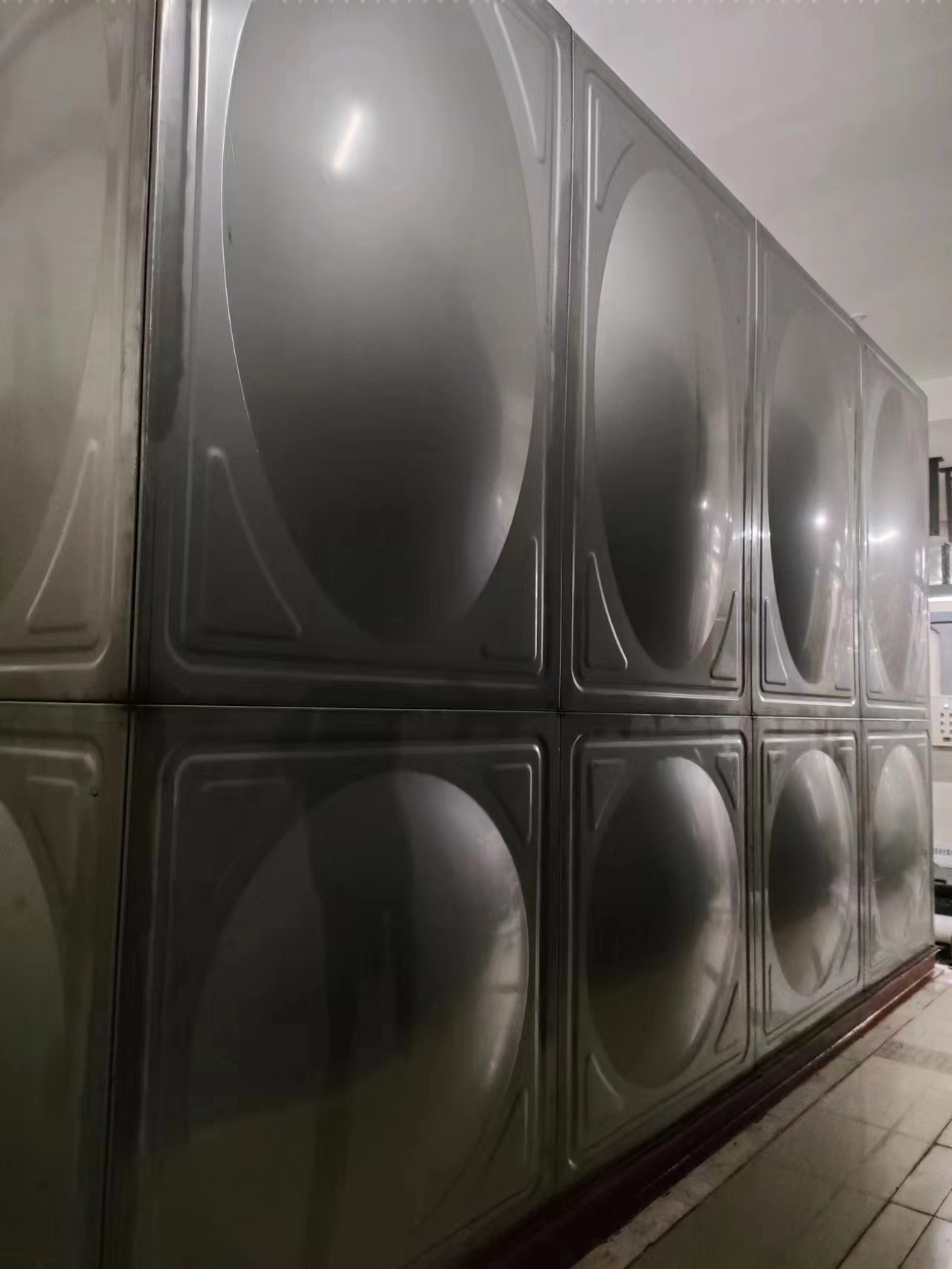
FRP water tanks serve drinking water, industrial circulation, and fire protection systems. However, lining corrosion remains a persistent challenge. In 2019, a northern Chinese water plant spent over $25,000 replacing a delaminated liner that caused iron超标. Beijing Yuanhui FRP Co., Ltd., with two decades of field data, has developed a systematic anti-corrosion protocol. This article details the technical specifics with quantitative evidence.
1. Material Selection: Three Non-Negotiable Criteria
1.1 Chemical Resistance of Resin Systems
Per GB/T 21238-2017, styrene residue in drinking water tank resin must be below 0.5 wt%. Beijing Yuanhui's lab tests show: vinyl ester resin exhibits only 0.12% mass change after 240 hours in 10% H₂SO₄, versus 2.3% for general-purpose polyester. For industrial wastewater, bisphenol-A epoxy vinyl ester is required, with wet heat resistance up to 120°C.
1.2 Anti-Permeation Reinforcement Design
The liner must combine continuous strand mat (450 g/m²) with surface mat (30 g/m²). In a chemical project by Beijing Yuanhui, this composite achieved a permeability coefficient of 1.2×10⁻¹² cm/s—two orders lower than single-layer structures.
2. Surface Preparation: The Hidden Determinant of Liner Life
2.1 Moisture Control for Concrete Substrates
Before liner application, concrete moisture must be ≤6%. A 2022 project failed at 8.5% moisture, resulting in blistering and peel strength of only 1.2 MPa (spec ≥2.5 MPa). Beijing Yuanhui uses microwave moisture meters (accuracy ±0.5%) with a minimum of 5 readings per 10 m².
2.2 Roughness Requirements for Steel Substrates
Steel tanks require abrasive blasting to Sa2.5 with Rz 60-100 μm roughness. Using epoxy zinc-rich primer, pull-off adhesion reached 8.5 MPa, versus 3.2 MPa with only grinding.
3. Application Parameters: Three Critical Controls
3.1 Interlayer Timing
For polyester resin at 25°C, gel time is controlled at 25-35 minutes. Beijing Yuanhui's records show: if interval exceeds 4 hours, interlayer shear strength drops 37%; if less than 1 hour, sagging occurs.
3.2 Field Cure Verification
Barcol hardness must reach ≥35 after full cure. Beijing Yuanhui mandates at least 90% of design hardness after 48 hours at room temperature. A winter project using standard hardener at 5°C achieved only Barcol 22, requiring $11,000 rework.
4. Quality Inspection: Quantitative Standards and Case Data
4.1 Spark Testing for Pinholes
Per ASTM D4787, testing at 15 kV/mil (≈0.6 kV/mm). In a 5,000 m² tank, Beijing Yuanhui found and repaired 23 pinholes, achieving zero leakage on retest. Tanks without spark testing show a 12% leakage rate within 3 years.
4.2 Potable Water Safety Compliance
Liner must pass GB/T 17219 evaluation. Beijing Yuanhui's product tested by SGS showed four heavy metals (lead, cadmium, mercury, chromium) below detection limits (0.001 mg/L), with turbidity increase of only 0.02 NTU.
Conclusion
Successful FRP tank lining depends on end-to-end control from material selection to acceptance. Beijing Yuanhui FRP Co., Ltd. recommends: define service conditions (temperature, pH, pressure) at design stage; enforce quantitative inspection at every step; and offer a 5-year warranty with annual maintenance. Only by converting standards into executable parameters can a liner achieve a decade of reliable service.