FRP Water Tank Inner Liner Anti-Corrosion Technology: From Material Selection to Construction Acceptance
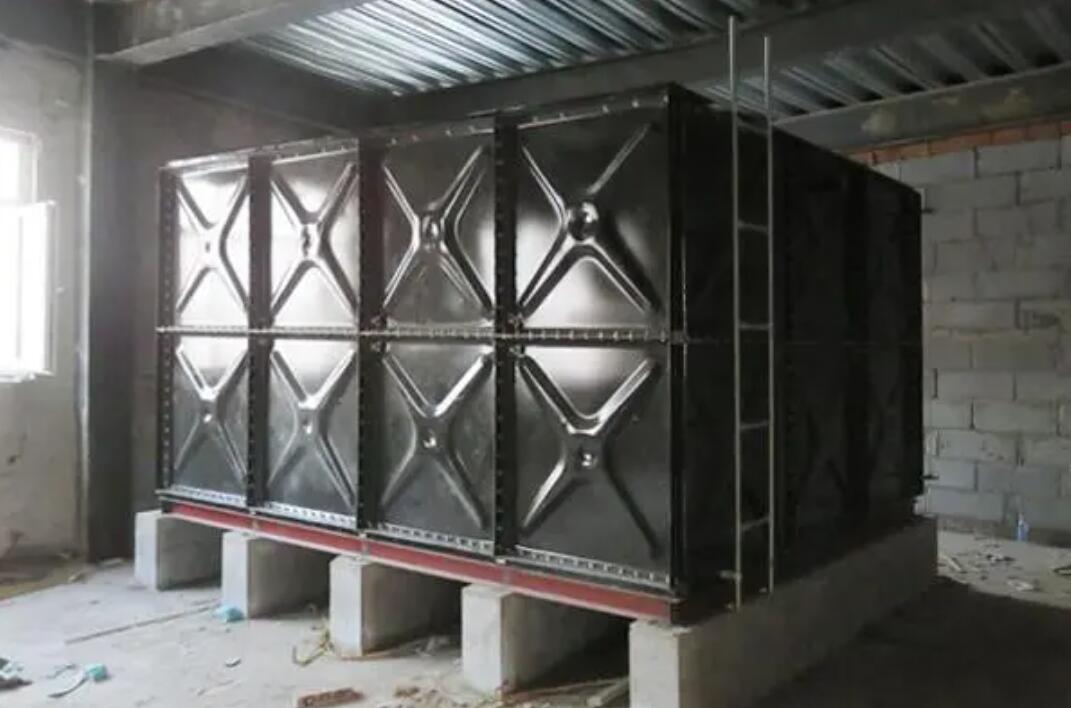
Introduction: The Inner Liner is the Lifeline of FRP Tank Longevity
Over 60% of FRP water tank failures originate from inner liner corrosion—not structural weakness, but micro-cracks, blistering, or osmotic failure in the liner resin. Beijing Yuanhui FRP Co., Ltd. has observed, over a decade of production, that tanks made from the same sheet material but with different liner processes can differ in service life by 5–8 years. This article breaks down liner anti-corrosion technology into material selection, process control, and inspection standards—no fluff, only parameters.
1. Material Selection: Resin System Defines the Corrosion Baseline
1.1 Vinyl Ester Resin: First Choice for High-Corrosion Environments
For tanks storing industrial wastewater or acid/alkaline solutions (pH 2–12), the liner must use vinyl ester resin. Its bisphenol-A structure provides excellent hydrolysis resistance; at 80°C hot water, tensile strength retention remains above 85% (per ASTM C581). In a project for a chemical park fire-water tank, Beijing Yuanhui used DERAKANE 411 resin. After 3 years of operation, the inner surface showed no visible corrosion points.
1.2 Food-Grade Epoxy Resin: Compliant Solution for Potable Water
Drinking water tanks must comply with GB/T 17219; the liner resin must pass immersion tests (TOC <1 mg/L, chroma <5 degrees). Bisphenol-F epoxy resin is recommended for its low viscosity (300–500 mPa·s), enabling thin-layer application. Cured surface hardness (Shore D) reaches 85+, with mold resistance superior to ordinary polyester. Caution: Do not use accelerators containing lead or mercury.
1.3 Unsaturated Polyester Resin: Economic Option with Boundaries
Only suitable for pure water or neutral solutions (pH 6–8) at ambient temperature (≤40°C). Liner thickness must be ≥2 mm (hand lay-up), and styrene content ≤35% to minimize shrinkage. Beijing Yuanhui's real-world data shows that, in 40°C soft water, unsaturated polyester liners start to permeate after ~3.5 years, whereas vinyl ester liners exceed 12 years.
2. Process Control: Quantified Standards for Hand Lay-Up vs. Spray-Up
2.1 Hand Lay-Up: Layer-by-Layer Compaction, Void Rate <3%
Use 400 g/m² surface mat + 450 g/m² chopped strand mat, with a resin-to-fiber mass ratio of 2.5:1. Key parameters:
- After each layer, roll thoroughly with a de-airing roller; void rate ≤3% (no bubbles >2 mm in diameter visible).
- Interlayer interval: at 25°C, initial gel time 40–60 min; proceed to next layer only when the surface is tack-free.
- Final liner thickness: industrial tanks ≥3.5 mm, potable water tanks ≥2.5 mm (per ASTM D2589).
2.2 Spray-Up: Suitable for Large Curved Areas, but Watch for Delamination
E-glass roving (2400 Tex) with spray-up resin, gun pressure 0.5–0.7 MPa, fiber content 30–35% by mass. Key notes:
- Single spray thickness ≤1.5 mm to avoid sagging.
- Immediately roll each pass to expel air and prevent interlayer separation.
- At corner R-angles (R <50 mm), add one extra layer of surface mat—stress concentration here increases corrosion risk by 40%.
3. Defect Detection and Acceptance Standards: Let Data Speak
3.1 Spark Testing: Pinholes Are the Biggest Threat
Per GB/T 18251, 100% of the liner must undergo spark testing. Parameters:
- Test voltage: 2.5 kV/mm × liner thickness (e.g., 7.5 kV for 3 mm liner).
- Alarm sensitivity: defects deeper than 0.1 mm trigger alarm.
- Acceptance: ≤2 pinholes <0.5 mm per 10 m², all repaired with same resin.
3.2 Barcol Hardness and Degree of Cure Verification
After cure, Barcol hardness (934-1) should be ≥50 (at 25°C), corresponding to >95% degree of cure. Hardness below 45 indicates incomplete cure—extend cure time or check hardener ratio (standard: 1.5–2.5% of resin mass). Beijing Yuanhui's records show that 80% of batches failing hardness develop liner blistering within 6 months.
4. Common Failure Case Studies
4.1 Case 1: Blistering in High-Temperature Water Tank
A factory hot-water tank (60°C) developed extensive liner blistering after 3 months. Dissection revealed water vapor inside bubbles. Root cause: liner resin HDT (heat deflection temperature) was only 85°C, below the actual tank temperature (locally up to 70°C). Solution: Replace with phenolic-modified vinyl ester resin (HDT ≥120°C) and add a 1 mm barrier layer between liner and structure.
4.2 Case 2: Iron Ion Exceedance in Drinking Water Tank
User reported iron ion concentration of 0.5 mg/L (limit: 0.3 mg/L). Inspection found metal flange connections without isolation; corrosion products spread along micro-cracks. Fix: All metal parts must use rubber gaskets + FRP wrapping; liner joints reinforced with 2 extra glass fabric layers.
Conclusion
FRP water tank inner liner anti-corrosion is not optional—it is the core process determining whether the tank reaches its design life (typically 15–20 years). Select the resin system based on water quality and temperature, strictly control void rate and interlayer bonding during construction, and mandate spark testing and hardness measurement at acceptance. Beijing Yuanhui FRP Co., Ltd. recommends: for fluctuating pH or high-temperature scenarios, directly adopt vinyl ester resin liner + spray-up process. The upfront cost increases by ~15%, but it avoids later repair costs (30–50% of tank price) caused by leakage.