Color Selection and UV Protection for FRP Water Tanks: From Fading Mechanisms to Long-Term Strategies
Introduction
For FRP water tanks exposed outdoors, the primary threat is not structural weakness but UV-induced material degradation. At Beijing Yuanhui FRP Co., Ltd., over 60% of surface-related complaints trace back to color choices. Color is not merely aesthetic—it is a critical engineering parameter determining tank longevity. This article explores the photochemical mechanisms behind UV damage, pigment-resin compatibility, and provides quantifiable selection criteria.
UV Damage Mechanisms in FRP Tanks
Photodegradation Chemistry
UV radiation (290-400 nm) cleaves ester bonds and C=C double bonds in unsaturated polyester resins, causing molecular chain scission. Accelerated QUV testing shows that unprotected SMC panels lose 42% of flexural strength after 3,000 hours. Degradation progresses from surface chalking (resin decomposition exposing glass fibers) to micro-cracking, and finally to delamination from water ingress.
Role of Color in Energy Absorption
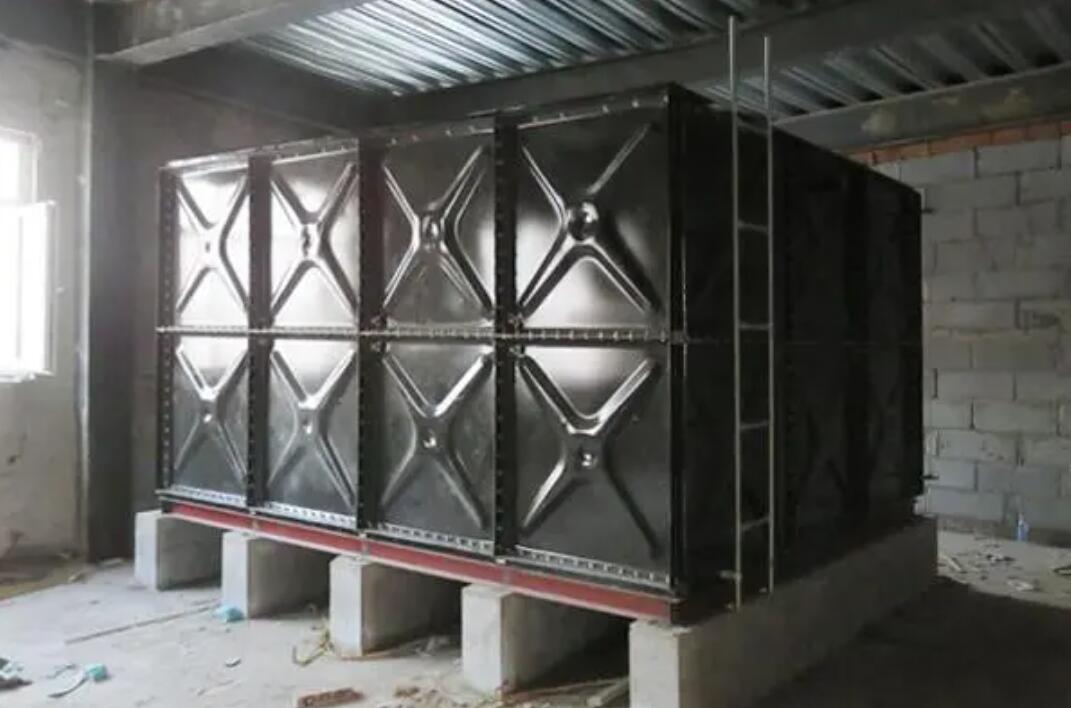
Pigments differ sharply in UV reflectance: white (rutile TiO₂) reflects over 80% of visible and near-UV light, while black or dark blue absorbs over 90%. Absorbed energy raises surface temperature by 15-20°C, accelerating thermo-oxidative aging. Beijing Yuanhui's tests show that white specimens exhibit ΔE of only 2.3 after 5,000 hours of natural exposure, versus ΔE of 8.7 for dark gray under the same formulation.
Engineering Guidelines for Color Selection
Recommended vs. Prohibited Colors
Per ASTM D2565, light colors are preferred: white, light gray, light blue (Pantone 14-4318 TPX). These use TiO₂ or ZnO pigments with refractive index (n=2.7) far above the resin matrix (n=1.5), effectively scattering UV. Avoid deep reds, blues, and pure black containing organic azo pigments—they photodegrade easily and absorb excessive heat.
Pigment Volume Concentration (PVC) and Layer Design
PVC should be 18-25%. Below 15%, hiding power is insufficient; above 30%, resin wetting becomes poor. Beijing Yuanhui employs a dual-layer SMC structure: a 0.3-0.5 mm topcoat containing 20% TiO₂ plus 2% benzophenone UV absorber, and a standard base layer. This balances UV protection and cost.
Synergistic UV Protection Technologies
Light Stabilizer Systems
Color alone is insufficient. Add 0.5-1.5% hindered amine light stabilizer (HALS) and 0.3-0.8% benzotriazole UV absorber to the resin. HALS scavenges free radicals; UV absorbers convert UV to harmless heat. Combined, they raise QUV-aged strength retention from 58% to 91%.
Topcoats and Maintenance
For existing tanks, apply nano-silica acrylic paint (80-120 μm dry film)—its UV resistance outperforms polyurethane. In a case study, a dark blue tank at a Qingdao wastewater plant extended its fading cycle from 18 months to 5 years after coating. Maintenance: quarterly dust removal (dust creates UV focal points) and biennial coating integrity checks.
Standards and Acceptance Criteria
Refer to GB/T 21492-2019 and ISO 4892-2. Key acceptance parameters: color difference ΔE ≤ 3.0 (CIE Lab), 60° gloss retention ≥ 70%, no chalking or cracks. Beijing Yuanhui supplies UV absorber content reports and recommends on-site standard panels for 3-month comparative tracking.
Conclusion
Color selection for FRP water tanks is fundamentally a balance between optical performance and thermal management. Light colors paired with composite light stabilizers significantly delay UV damage, while dark colors require costly coating solutions. The industry should adopt lifecycle color management standards—from pigment screening to maintenance. Beijing Yuanhui's practice shows that treating color as an engineering parameter extends tank design life from 10 to over 25 years.