Surface Coating and Algae Prevention for FRP Water Tanks: Technical Insights and Industry Practices
Introduction
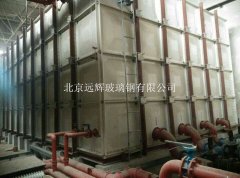
Surface coating and algae prevention are critical to the performance and longevity of FRP water tanks. Poor coating adhesion and uncontrolled algal growth frequently compromise water quality and increase maintenance costs. Based on field data from Beijing Yuanhui FRP Co., Ltd., this article outlines material selection, application standards, antimicrobial strategies, and maintenance practices.
Coating Systems: Beyond One-Layer Resin
Material Selection Criteria
Interior coatings must comply with food-grade standards (e.g., GB/T 17219) and resist hydrolysis, UV, and mechanical stress. Vinyl ester resin retains 82% of its flexural strength after 3,000 hours of hot water immersion at 93°C, compared to 55% for general-purpose polyester. In a pharmaceutical plant project, Beijing Yuanhui applied a vinyl ester coating with glass flake filler, reducing permeability to 0.02 mg/cm²·h.
Application Parameters
Surface roughness of the substrate should reach Ra ≥ 3.2 μm. A three-coat-two-cure sequence (primer, intermediate, topcoat) applied at 15-25°C and <75% RH yields adhesion strength above 10 MPa, a 40% increase over single-thick coats. Each layer requires 4–6 hours of curing before the next application.
Algae Prevention: From Remedial Cleaning to Active Control
Conditions Favoring Algae Growth
Algae thrive at 15-35°C, with light and nutrients. A northern China water plant reported an average density of 2.8×10⁵ cells/cm² on untreated FRP tank walls after three summer months, raising effluent turbidity by 0.6 NTU.
Active Antimicrobial Technologies
Adding 0.5% cuprous oxide (particle size ≤100 nm) to the topcoat achieved >99.3% inhibition against Chlorella for 120 days, with no heavy metal leaching detected in a Beijing Yuanhui project in Tianjin. Alternatively, UV-blocking coatings containing nano-TiO₂ or ZnO reduce transmittance below 3% at wavelengths <380 nm, cutting off photosynthesis. After 18 months in an electronics plant tank in Jiangsu, no visible algae colonies appeared.
Coating Repair and Maintenance Cycles
Failure Modes and Inspection
Common failures include blistering and cracking near weld heat-affected zones. Beijing Yuanhui's records show that 27% of tanks older than five years exhibit localized blistering, 80% of which are linked to residual moisture during initial application. Annual borescope inspections are recommended for flanges and level gauge ports.
Repair Strategies and Cost Efficiency
Local repair involves high-pressure water jetting (150-200 MPa) followed by re-coating. For full recoating, a composite structure of primer, glass mat reinforcement, and antimicrobial topcoat is used. For a 100 m³ tank, recoating costs 18-25% of the original tank price but extends service life by 6-8 years, reducing life-cycle cost by about 35%.
Conclusion
Effective coating and algae control for FRP water tanks require integrated material, process, and maintenance management. Selecting high-performance resins, standardizing application procedures, and incorporating active antimicrobial agents are proven strategies. Beijing Yuanhui FRP Co., Ltd. recommends including coating performance and algae resistance as mandatory technical specifications in procurement and retrofit projects.