FRP Tank Inner Liner Anti-Corrosion Technology: From Material Selection to Acceptance
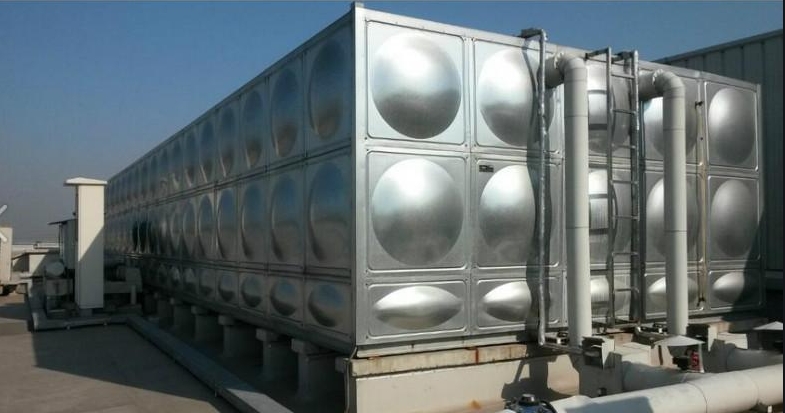
Introduction
FRP (Fiberglass Reinforced Plastic) tanks are widely used in chemical, pharmaceutical, food, and municipal water supply sectors. However, inner liner corrosion failures—causing leakage, water contamination, and equipment scrapping—are not uncommon. Based on over a decade of field data from Beijing Yuanhui FRP Co., Ltd., more than 70% of after-sales issues originate from design or construction defects in the anti-corrosion liner. This article systematically breaks down the critical technical aspects of FRP tank inner liner anti-corrosion from material science and engineering practice.
1. Material Selection: Matching Resin and Reinforcement
1.1 Bisphenol-A Epoxy Resin
Suitable for media with pH 2–12 and operating temperatures up to 80°C. Its low curing shrinkage (1–2%) and high interfacial bond strength with glass fiber (>15 MPa) make it a standard choice. Beijing Yuanhui applies bisphenol-A epoxy with E-glass fiber in potable water tanks, achieving a leakage rate below 0.1% through a two-stage curing process.
1.2 Vinyl Ester Resin
Offers superior resistance to strong acids (sulfuric, hydrochloric) and oxidizing agents, with a temperature tolerance up to 120°C. Its elongation at break (3–5%) provides better impact resistance than epoxy. However, the gel time (20–40 min) demands strict environmental control (18–25°C).
1.3 Phenolic Epoxy Resin
Used for extreme corrosive environments, e.g., chloride concentrations exceeding 5000 ppm. High crosslink density but increased brittleness; 5–8 wt% CTBN rubber is added for toughness balance.
Case example: A chemical plant's acid storage tank with vinyl ester liner showed local blistering after 5 years (design life: 8 years). Analysis revealed incomplete curing due to styrene content below 35%. Beijing Yuanhui retrofitted with low-styrene-emission vinyl ester and added a post-cure stage (80°C/4h), resolving the issue.
2. Liner Structure Design: Gradient Layers and Thickness Control
An anti-corrosion liner consists of three functional gradient layers:
2.1 Resin-Rich Layer (0.3–0.5 mm)
Resin content ≥85%, with minimal or no chopped fibers. This layer resists chemical permeation. Beijing Yuanhui uses spray-up to achieve a pinhole density below 5/m².
2.2 Reinforcement Layer (1.5–3.0 mm)
Comprising chopped strand mat or surface mat with 50–65% resin content. This layer carries mechanical loads and prevents crack propagation. Test data show that adding one layer of 450 g/m² CSM increases interlaminar shear strength by ~30%.
2.3 Transition Layer
Bonded to the structural laminate using vinyl ester resin and glass fabric to prevent interface delamination. Peel strength must ≥2.5 N/mm (per ASTM D3167).
3. Process Comparison: Hand Lay-Up vs. Spray-Up vs. Filament Winding
| Process | Application | Advantages | Limitations |
|---|---|---|---|
| Hand lay-up | Small tanks, complex shapes | Low cost, controllable resin content | Labor-intensive, thickness variation ±0.2 mm |
| Spray-up | Medium batch tanks | High output (10 m²/h), no lap joints | 10–15% resin waste, skilled labor needed |
| Filament winding | Large cylindrical tanks | High fiber content (70–80%), dense liner | High mold cost, unsuitable for square tanks |
Beijing Yuanhui often uses a hybrid spray-up + hand lay-up process for square fire water tanks: hand lay-up at corners and flanges, spray-up for flat areas, improving overall efficiency by 40% while ensuring uniform thickness.
4. Quality Inspection and Acceptance Criteria
4.1 Holiday Detection (Spark Test)
Using a DC spark tester at 5–15 kV/mm (3 kV per mm thickness). Any arc jump indicates a through-defect. Acceptance: ≤3 pinholes per m².
4.2 Adhesion Test (Pull-Off)
Per ISO 4624. Epoxy liner adhesion must ≥10 MPa; vinyl ester ≥8 MPa. Beijing Yuanhui’s internal standard is stricter: after 24h immersion in 50°C water, adhesion drop must not exceed 20%.
4.3 Barcol Hardness
Per ASTM D2583, hardness must ≥35. Values below 30 indicate under-cure.
5. Common Failure Modes and Countermeasures
Based on Beijing Yuanhui's failure database (427 cases over five years):
- Blistering (38%): Caused by high resin water absorption (>0.5%) or residual solvent. Countermeasure: use low-absorption resin (e.g., phenolic epoxy) and control hardener dosage within ±2%.
- Cracking (27%): Thermal stress or impact. Countermeasure: increase corner radius (≥5 mm) and apply reinforcement strips.
- Chemical attack (20%): Media penetration degrading the resin. Countermeasure: pre-check material compatibility using Hansen solubility parameters.
Conclusion
FRP tank inner liner anti-corrosion is a systematic engineering task covering resin selection, gradient structure design, process control, and quality acceptance. Beijing Yuanhui FRP Co., Ltd. recommends conducting medium immersion simulation tests (minimum 30 days) and maintaining a construction record card (temperature, humidity, hardener batch). Only by combining theoretical data with field experience can tanks achieve maintenance-free service for over 15 years.