FRP Water Tank Lining Anti-Corrosion Technology: From Material Selection to Construction
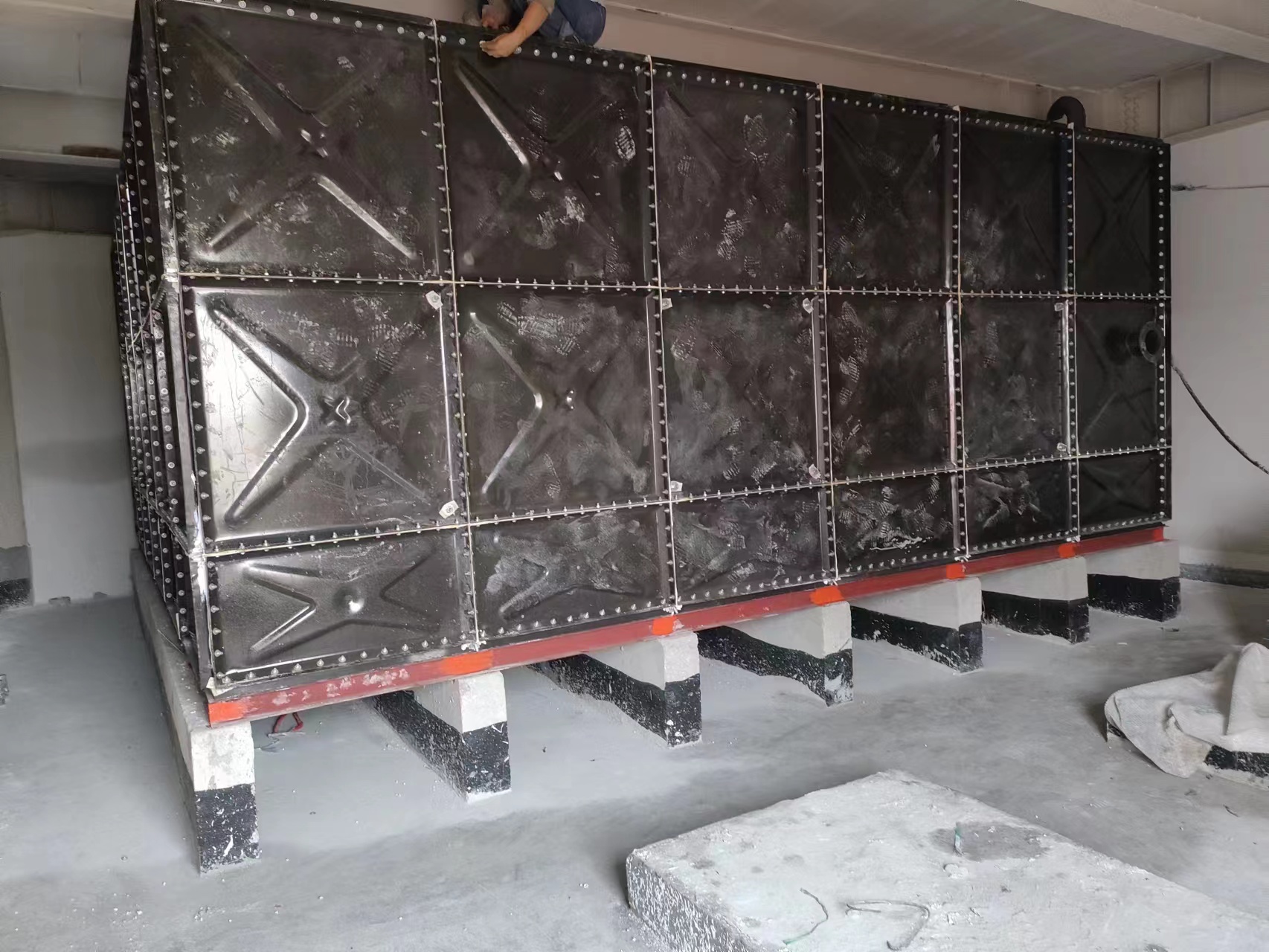
Introduction
Beijing Yuanhui FRP Co., Ltd. has over 15 years of field experience in FRP water tank manufacturing. The lining anti-corrosion technology directly determines tank lifespan. A real case: a tank using standard epoxy lining showed pitting after 3 years of storing chlorinated tap water, while another with vinyl ester lining remained intact after 8 years. This article breaks down the four core elements of lining anti-corrosion.
Resin Selection: The First Defense
The matrix resin is the primary barrier against corrosion. Selection depends on the stored medium:
1. Standard Bisphenol-A Epoxy
Suitable for pH 4-10 water. It offers >92% chloride ion (Cl⁻) barrier efficiency (per ASTM D543). However, hydrolysis accelerates in water >60°C or strong acid/alkali.
2. Vinyl Ester Resin
For drinking water with chlorine disinfectants (active chlorine ≤200ppm), phenolic vinyl ester is recommended. Its lower ester density provides 30-50% better chemical resistance than epoxy. Beijing Yuanhui used this resin in a municipal project; the tank showed no leakage after 5 years.
3. Modified Polyester Resin
Only for neutral water (e.g., fire tanks). Cost is 20% lower than epoxy, but poor alkali resistance leads to delamination under saponification.
Reinforcement Materials: Beyond Glass Fiber
Traditional chopped strand mat or woven roving is insufficient for anti-corrosion layers. The design includes:
Surface Veil (C-Glass)
Borosilicate glass veil (0.3-0.5mm thick) creates a resin-rich layer (>75% resin content) that directly contacts the corrosive medium.
Anti-Permeation Interlayer
Adding a carbon fiber or polyester membrane between the surface and structural layers reduces NO₃⁻ permeability from 8.7×10⁻¹⁴ to 1.2×10⁻¹⁴ m²/s (ISO 15148).
Construction Process: Three Critical Controls
Beijing Yuanhui’s process emphasizes:
1. Surface Preparation
Grind to Ra≥3.2μm and clean with acetone. Do not apply if humidity >75%—interface bond strength drops by 40%.
2. Interlayer Curing
Apply reinforcement within 20-30 minutes before gelation. Use step-curing: 2h at room temp → 2h at 40°C → 4h at 60°C. This raises Tg from 65°C to 82°C compared to natural curing.
3. Defect Repair
Use 5MHz ultrasonic scanning. Any bubble or dry spot >0.5mm must be excavated and refilled. A food factory tank ignored a small defect; a 30cm crack developed within a year, requiring full relining.
Quality Testing & Case Study
Three mandatory tests for lining acceptance:
- Barcol Hardness: ≥45 (ASTM D2583). Lower indicates incomplete curing.
- Spark Testing: 15kV pulse scanning, zero leakage points allowed.
- Immersion Test: Sample in 5% H₂SO₄ at 80°C for 168h, weight change ≤0.5%.
Case: Chemical Plant Wastewater Tank
Medium: 15% HCl + 1% HF. Original phenolic epoxy + glass mat failed after 14 months. Beijing Yuanhui replaced with vinyl ester + carbon fiber interlayer + post-curing. The tank has operated for 3 years without issues.
Conclusion
FRP tank lining anti-corrosion is a system of resin, reinforcement, construction, and testing. Users should choose a solution based on water analysis (pH, chloride, temperature). Beijing Yuanhui FRP Co., Ltd. offers customized linings for harsh conditions, ensuring no structural corrosion failure within 5-10 years.