Complete Process Analysis of FRP Water Tank Production: Key Technical Points from Raw Materials to Finished Products
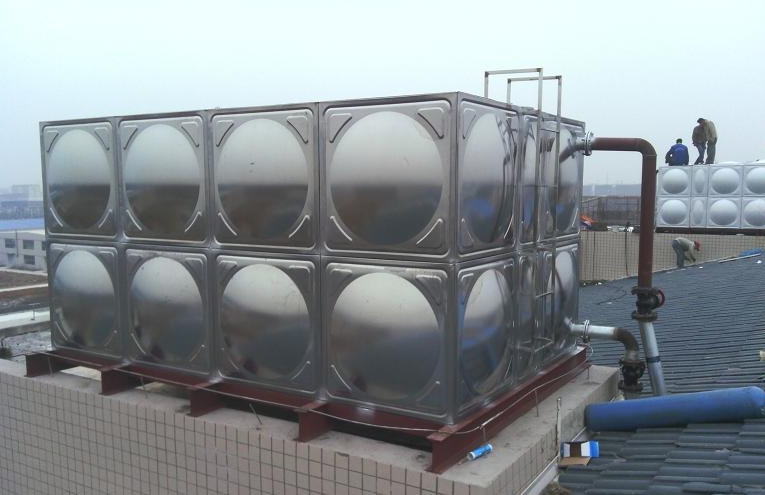
Introduction: The Importance of FRP Water Tank Production Process
FRP (Fiberglass Reinforced Plastic) water tanks are widely used in construction, municipal water supply, and fire protection due to their light weight, high strength, corrosion resistance, and long service life. Beijing Yuanhui FRP Co., Ltd. has delivered over 3,000 tanks in the past decade, with a single maximum capacity of 500 cubic meters. The stability of the production process directly determines mechanical performance, sealing integrity, and service life. This article breaks down the full process from raw materials to finished products, focusing on the differences between hand lay-up and spray-up molding, curing parameters, and defect prevention.
1. Raw Material Selection and Pretreatment
1.1 Resin System Selection
Unsaturated polyester resin (e.g., 196# grade) is the matrix material, with a heat deflection temperature above 65°C, suitable for ambient drinking water conditions. For fire-resistant tanks, isophthalic resin is recommended, achieving V-0 flame retardancy. The resin-to-catalyst ratio (MEKP) is strictly controlled at 100:2.0–2.5 by weight. When ambient temperature drops below 15°C, cobalt naphthenate accelerator dosage is increased by 0.2%.
1.2 Reinforcement Specifications
E-glass chopped strand mat (EMC450 g/m²) and roving (2400 tex) are primary reinforcements. Surface veil (30 g/m²) is used for the inner layer to prevent leakage. Beijing Yuanhui FRP Co., Ltd. controls fiber moisture content below 0.1%, drying at 40°C for 4 hours before use, avoiding moisture-induced curing defects or white spots.
1.3 Additives and Mold Release
ATH filler (5–10 μm) improves flame retardancy; pigment paste (e.g., TiO₂) is 3–5% of resin weight. Semi-permanent mold release (e.g., PMR) is sprayed once, enabling 5–8 releases per coating without silicone migration.
2. Mold Preparation and Demolding System
2.1 Mold Design
FRP molds are preferred for thermal expansion match. Surface roughness is Ra ≤ 3.2 μm, with corner radii ≥ 5 mm to avoid stress concentration. Molds are cleaned with acetone and coated with three layers of mold release wax with 15-minute intervals.
2.2 Demolding Optimization
For large panels (>6 m²), pneumatic ejection with 0.05–0.1 MPa pressure prevents deformation. Molds are repolished every 50 cycles.
3. Core Molding Processes
3.1 Hand Lay-Up Process
First, a resin layer (300 g/m²) is applied, surface veil is laid, and bubbles are removed with a roller. Then, EMC450 mat is layered with resin (800–1000 g/m² per layer), achieving 28–32% fiber content. For a 10 mm thick panel, 4 mat layers + 1 veil layer are used, resulting in Barcol hardness ≥ 35. Key parameters: temperature 18–30°C, humidity <75%, gel time 25–40 minutes.
3.2 Spray-Up Process
For large panels (≥4 m²), spray-up improves efficiency by 50%. A dual-nozzle system mixes resin and catalyst at the gun tip, with 25 mm long fibers sprayed. Fiber content reaches 35–40%, but void content is 2–3%, requiring immediate roller de-airing. Beijing Yuanhui FRP Co., Ltd. incorporates vacuum-assisted technology (VARTM) to reduce voids below 0.5%, meeting ASTM D2734 standards.
3.3 Curing and Post-Curing
Gel at room temperature (1–2 hours), then post-cure at 60°C for 4 hours, achieving ≥95% crosslinking. Test data: flexural strength ≥150 MPa, interlaminar shear strength ≥12 MPa. Demolding before full cure causes warpage or microcracks.
4. Quality Inspection and Defect Prevention
4.1 Acceptance Standards
Per JC/T 658-2017, each batch undergoes visual inspection (no bubbles, white spots, fiber exposure), dimensional tolerance (±2 mm/m), hydrostatic test (24 hours at full capacity), and Barcol hardness ≥ 35. Beijing Yuanhui FRP Co., Ltd. adds ultrasonic thickness measurement (5 points/m²) and acetone immersion (4 hours, no softening) as internal controls.
4.2 Common Defects and Solutions
Bubbles: caused by high resin viscosity or insufficient de-airing; reduce viscosity with 5% styrene or increase roller passes. White spots: poor fiber wet-out; raise resin temperature to 25–30°C or extend impregnation time. Delamination: interlayer contamination or over-curing; control lay-up intervals within 30 minutes.
Conclusion
The production of FRP water tanks requires precise coordination of materials science, mold engineering, and process control. Beijing Yuanhui FRP Co., Ltd. achieves a first-pass yield of 98.5% by optimizing hand lay-up and spray-up processes, introducing VARTM, and enforcing strict post-curing. Future trends include automated spraying and inline monitoring for precision manufacturing.